Ghana's New Anti-Corruption Plan Faces Skepticism Amidst Deep-Rooted Challenges
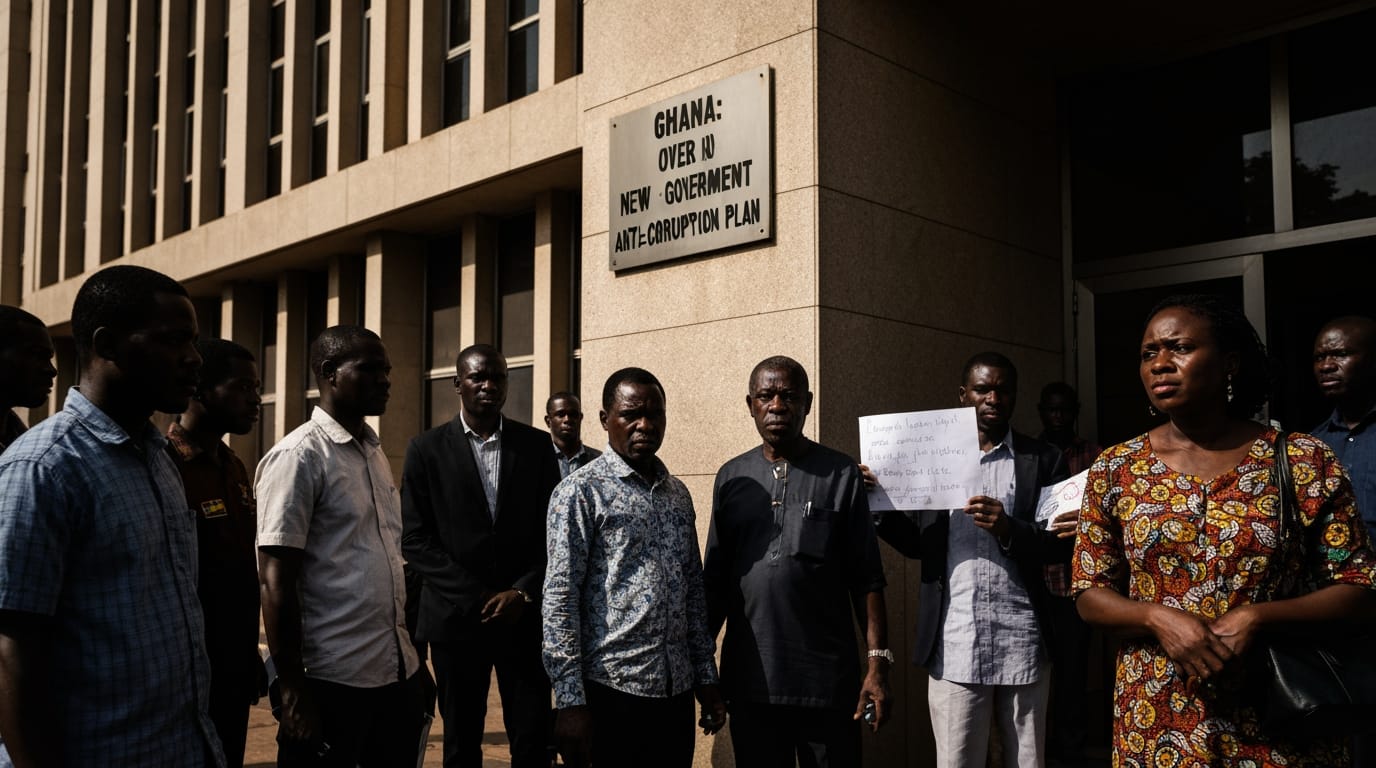
ACCRA, GHANA – Ghana has recently unveiled a new National Ethics and Anti-Corruption Action Plan (NEACAP) for the period 2026 to 2030, a comprehensive strategy aimed at bolstering integrity, transparency, and accountability across both public and private sectors. However, the ambitious launch is met with considerable skepticism from various quarters, as the nation grapples with a persistent history of corruption and previous anti-graft initiatives that have yielded limited tangible results. The effectiveness of this latest blueprint will hinge on overcoming entrenched systemic weaknesses, a lack of political will, and the consistent enforcement gaps that have plagued Ghana's fight against corruption for decades.
A Fresh Blueprint Against a Persistent Foe
The newly introduced NEACAP 2026-2030 aims to be a cornerstone in Ghana's ongoing battle against corruption, succeeding the previous 10-year National Anti-Corruption Action Plan (NACAP), which ran from 2015 to 2024. President John Dramani Mahama has publicly reinforced his government's commitment to this new strategy, emphasizing the need for transparency and accountable governance. The plan's objectives are multifaceted, designed to promote integrity and accountability, rationalize actions across various government functions, and ultimately rebuild national integrity by addressing the pervasive effects of corruption. It represents a strategic intent to move beyond previous shortcomings, incorporating lessons learned from past efforts. The development of NEACAP involved extensive consultations with over 400 institutions, encompassing civil society, the private sector, and religious bodies, signaling an effort towards broad-based ownership and implementation. This inclusive approach is critical, as many stakeholders believe the fight against corruption cannot be solely the government's responsibility.
Echoes of Past Efforts and Present Doubts
Despite the renewed vigor behind the NEACAP, a cloud of uncertainty looms large, largely due to the track record of previous anti-corruption efforts. Critics and civil society organizations point to the limited impact of the preceding NACAP, highlighting Ghana's largely stagnant performance on Transparency International's Corruption Perception Index (CPI). Since 2017, Ghana's CPI score has hovered around 40-43, with a notable decline from 48% in 2014 to 42% in 2024. This persistent stagnation underscores a worrying trend that corruption remains a significant obstacle to equitable development, investor confidence, and public trust.
An International Monetary Fund (IMF) Governance Diagnostic Assessment sharply criticized Ghana's anti-corruption efforts, concluding that corruption in the country is "systemic and is worsening." The report, issued in November 2025, made a dozen "Priority Recommendations," focusing on the need for stronger financial autonomy for anti-corruption agencies, enhanced asset declaration systems, and improved external audit functions. These assessments fuel the public's skepticism about whether the new plan will truly deliver meaningful reform or merely become another document on the shelf without robust implementation.
Systemic Weaknesses Undermining Progress
The core challenge for the NEACAP lies in overcoming the systemic weaknesses that have consistently hampered previous anti-corruption initiatives. A major impediment identified by various reports is the lack of budget and fiscal autonomy for anti-corruption institutions. Agencies such as the Commission on Human Rights and Administrative Justice (CHRAJ), the Economic and Organised Crime Office (EOCO), and even the highly touted Office of the Special Prosecutor (OSP) often find themselves under-resourced, making them vulnerable to political interference and impeding their ability to investigate and prosecute cases effectively. Political will has frequently been cited as a missing ingredient, with governments passing laws but failing to provide the necessary resources for enforcement.
Ghana possesses a strong anti-corruption legal framework on paper, but a significant "implementation gap" exists in practice. This gap is evident in various sectors, particularly public procurement, which the IMF diagnostic describes as a substantial source of corrupt financing through "side payments, bribes, kickbacks, non-enforcement of contract terms, and judgment debt." Weak budgetary processes and inadequate transparency requirements further exacerbate these vulnerabilities. Moreover, the Right to Information law is noted as "incomplete," with broad exemptions that hinder transparency, and mechanisms for enforcement often prove ineffective. Political parties themselves are widely perceived as among the most corrupt institutions, further complicating efforts to instill integrity across governance structures.
The Crucial Role of Civil Society and Public Expectation
In the face of these formidable challenges, civil society organizations (CSOs) remain a critical force in Ghana's anti-corruption landscape. Groups like the Ghana Anti-Corruption Coalition (GACC), the Ghana Integrity Initiative (GII), and the Ghana Centre for Democratic Development (CDD-Ghana) are actively engaged in advocacy, public awareness campaigns, and even investigative journalism to expose wrongdoing. They have been instrumental in drafting anti-corruption legislation and providing legal assistance to victims and witnesses of corruption. CSOs have also played a crucial watchdog role, for instance, by evaluating the effectiveness of the previous NACAP.
These organizations highlight that fighting corruption is a "hydra-headed" problem requiring serious commitment and consistent enforcement through the justice system. Their work often fills critical gaps left by state institutions, pushing for accountability in areas such as asset declaration by public officials, which has seen direct impact from their investigative efforts. The government's decision to involve CSOs and other stakeholders in the drafting of the new NEACAP indicates a recognition of their indispensable role. Public expectation for genuine change is high, and citizens are increasingly looking to both government and civil society to deliver measurable results in recovering stolen assets, prosecuting corruption cases, and significantly reducing opportunities for graft.
A Defining Moment for Ghana's Integrity
Ghana's launch of the NEACAP 2026-2030 arrives at a critical juncture. While the plan offers a structured approach to tackling corruption, its ultimate success will be measured not by its lofty goals but by the concrete actions taken to address the deep-seated issues that have undermined previous initiatives. The challenge extends beyond policy formulation to robust enforcement, adequate resourcing of anti-corruption bodies, genuine political will, and a steadfast commitment to transparency and accountability. The engagement of civil society and the sustained demand for accountability from the public will be pivotal in pushing this new plan beyond rhetoric. For Ghana, a nation often lauded as a beacon of democracy in West Africa, the effective implementation of the NEACAP is not just about improving governance; it is about reinforcing the integrity of its democratic institutions and fostering sustainable development for all its citizens.


