China's Reserved Stance Casts Shadow Over Renewed Ukraine Peace Push
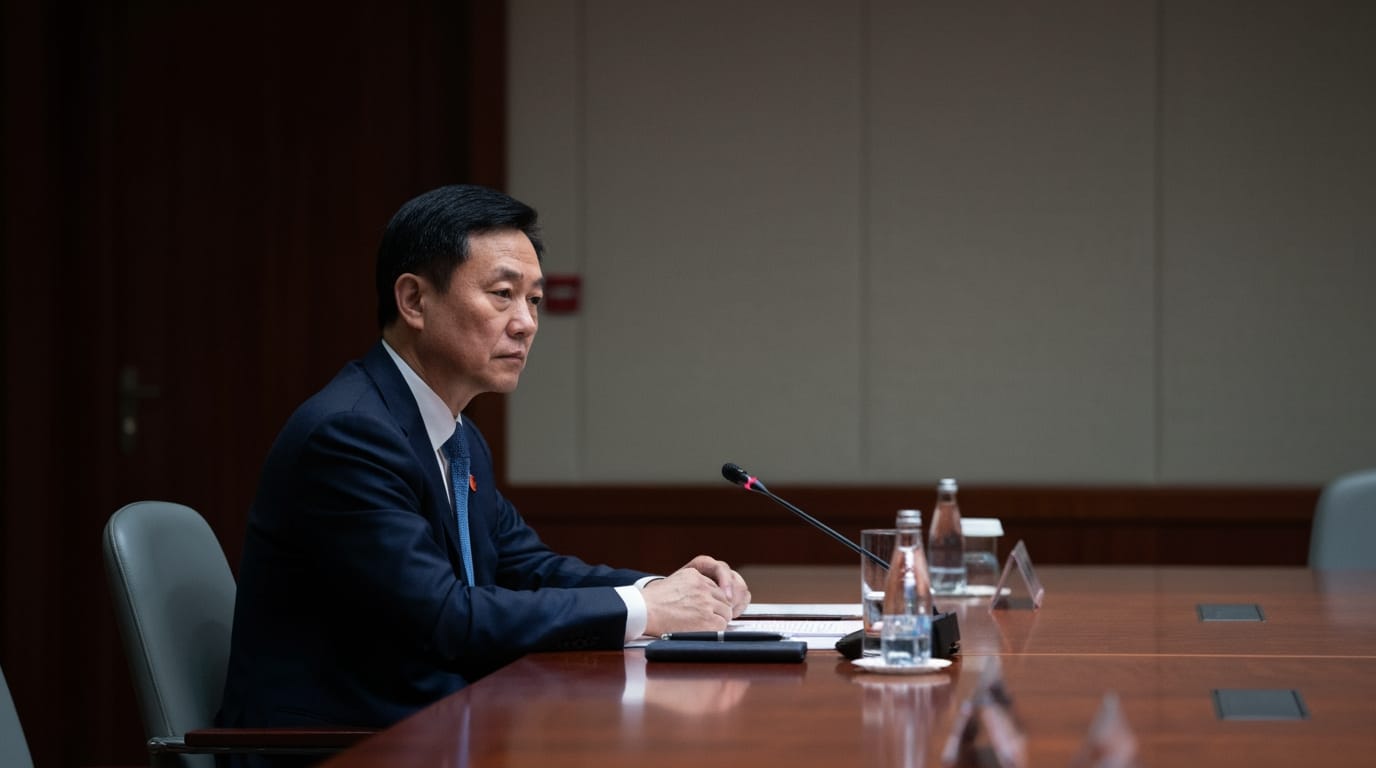
London, UK – As a flurry of high-stakes diplomatic efforts intensifies to broker a peace deal in the nearly four-year-old conflict in Ukraine, the silence from Beijing has become increasingly conspicuous. While the United States, alongside key European allies, engages in urgent negotiations with both Kyiv and Moscow, China, a crucial global player with significant ties to Russia, maintains a consistent but largely passive public position, raising questions about its true commitment to ending the protracted war.
Recent weeks have seen an escalation of peace talks, primarily spearheaded by the administration of US President Donald Trump, who has made securing an agreement a foreign policy priority. US Special Envoy for Ukraine, Keith Kellogg, recently stated that efforts to resolve the conflict were in "the last 10 metres," albeit the hardest part. These renewed negotiations involve a complex web of demands, counter-demands, and geopolitical maneuvers, with Ukraine staunchly refusing to cede territory and European partners seeking robust security guarantees. Yet, as the diplomatic tempo quickens, China's refrain of supporting "all efforts conducive to peace" appears to mask a deeper, more calculated detachment from the immediate process.
The US-Led Diplomatic Offensive
The current push for peace has been largely driven by Washington. In April 2025, the US presented what it termed "final" proposals for a peace agreement between Ukraine and Russia. These initial US drafts, however, were met with skepticism, particularly from Ukraine and some European capitals, as they were perceived to be unduly favorable to Moscow. Reports indicated that early versions of the US plan suggested Ukraine cede territory in the eastern Donbas region, limit the size of its military, and relinquish its NATO aspirations – conditions closely echoing Russia's maximalist demands.
Despite these concerns, US envoys, including Trump's son-in-law Jared Kushner and special envoy Steve Witkoff, have engaged in direct talks with both Ukrainian and Russian officials. President Volodymyr Zelenskyy acknowledged these discussions as "constructive, although not easy," while reiterating Ukraine's unwavering stance against surrendering any territory. Zelenskyy stressed that Ukraine has "no legal or moral grounds" for giving up its land, a position supported by several European leaders.
Europe's Balancing Act and Kyiv's Red Lines
As the US-led initiatives unfold, European leaders have been working to coordinate their strategy and reinforce support for Kyiv. On December 8, 2025, President Zelenskyy met with British Prime Minister Keir Starmer, French President Emmanuel Macron, and German Chancellor Friedrich Merz in London. These talks aimed to strengthen Ukraine's hand, particularly in the face of US pressure for a quick settlement that might involve territorial concessions. Leaders underscored the necessity of a "just and lasting peace" for Ukraine, including robust security guarantees against future Russian aggression.
Discussions also revolved around the possibility of utilizing frozen Russian assets to aid Ukraine's reconstruction, an initiative gaining traction among European nations despite some resistance, notably from Belgium. While European leaders expressed solidarity with Ukraine, some, like Germany's Merz, voiced "scepticism" over the US proposals, and EU foreign policy chief Kaja Kallas warned against "walking into Russian traps" by putting undue pressure on Ukraine to make concessions. The European stance emphasizes that Ukraine must determine its own future, with Starmer asserting he "won't be putting pressure" on Zelenskyy to accept an unfavorable settlement.
China's "Performative Neutrality"
Amidst this intense diplomatic activity, China's role has been notably understated, characterized more by rhetorical support for peace than by active mediation in these specific talks. Beijing has consistently reiterated its "consistent and clear" position that "dialogue and negotiations are the only possible way to resolve the Ukrainian crisis" and that it supports "all efforts aimed at achieving peace." Chinese Foreign Ministry spokesperson Lin Jian stated in May 2025 that China "stands ready" to play its role in achieving a lasting peace. In August, President Xi Jinping reportedly told Russian President Vladimir Putin that China would continue to promote peace talks regardless of how the situation evolves.
However, this professed neutrality and desire for peace are viewed with skepticism by Kyiv and many Western observers. Ukrainian President Zelenskyy openly stated on December 9, 2025, that he sees "no real desire" from China to help end the war, attributing this to Beijing's strategic rivalry with Washington. This sentiment aligns with a broader perception that China's "dual-track policy" involves maintaining close economic and technological ties with Moscow while verbally advocating for peace to the West.
NATO has previously labeled China a "decisive enabler" of Russia's aggression, citing evidence of economic and military support. Experts argue that Beijing's strategy extends beyond mere support for Moscow, aiming to undermine the US-led international order and enhance its own geopolitical influence. While China has offered a 12-point peace plan in the past, focusing on sovereignty and territorial integrity, it simultaneously avoids terminology that would antagonize its Russian ally. The lack of proactive, direct Chinese engagement in the current US-led peace initiatives, beyond generic statements, therefore signals a strategic choice to remain on the periphery of these specific negotiations, observing rather than actively shaping the immediate outcomes.
Implications of Beijing's Restraint
China's reserved approach at this critical juncture carries significant implications. While its stated position supports a political resolution, its practical non-engagement in the direct US-Ukraine-Russia peace efforts reinforces the perception that its priority lies with its strategic partnership with Russia and its broader geopolitical objectives. This calculated distance allows China to avoid direct pressure from either side to compromise its relationship with Moscow, while still publicly maintaining a stance of advocating for peace.
The absence of a strong, actively mediating Chinese voice in these direct talks means that the delicate balance of negotiations rests largely on the US and European powers, alongside the deeply entrenched positions of Ukraine and Russia. For Kyiv, China's silence is a missed opportunity for a powerful potential mediator to exert influence on Moscow. For Washington and its allies, it underscores the persistent challenge of engaging China constructively in global crises where its strategic interests diverge from those of the West. As the talks continue, China's quiet observation will remain a significant, albeit understated, factor in the complex equation of achieving peace in Ukraine.


