China's Unprecedented Military Drills Stoke Invasion Fears in Taiwan Strait
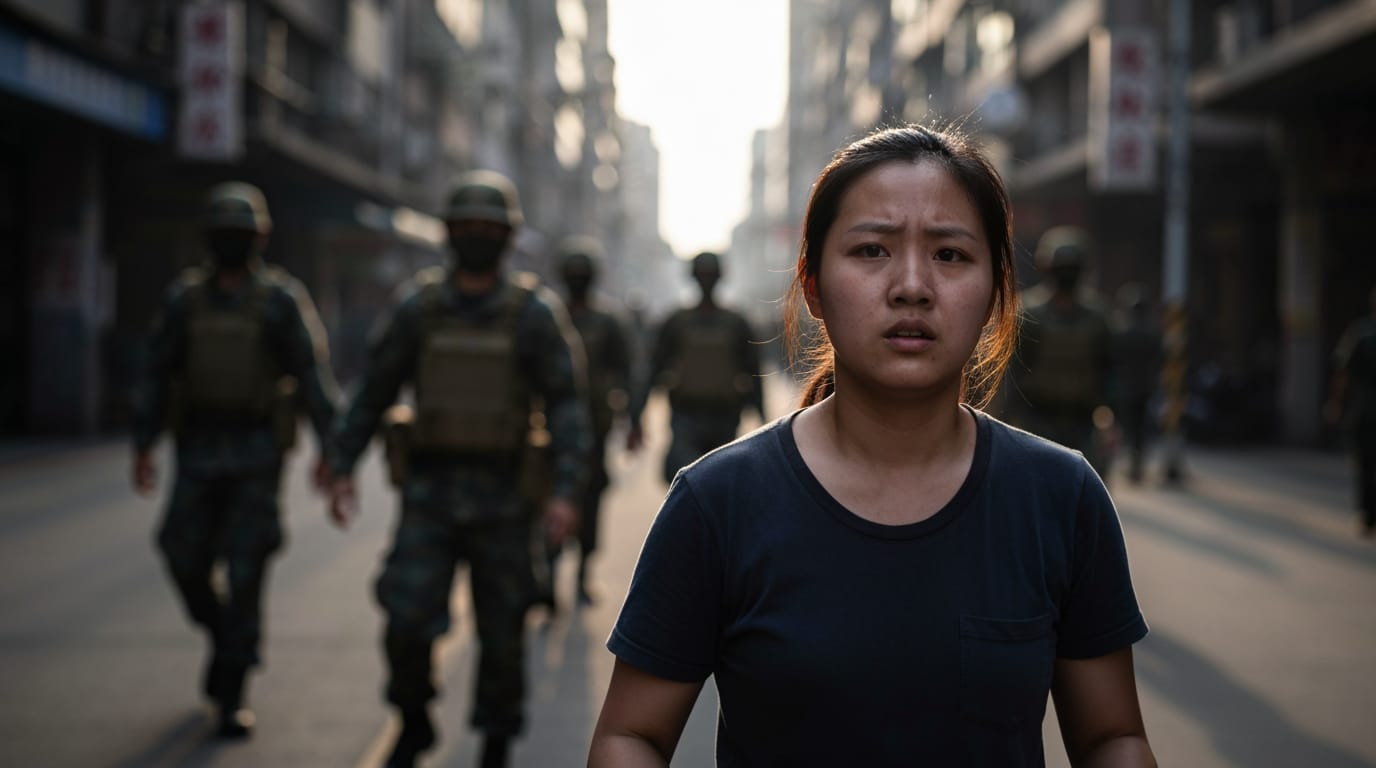
TAIPEI (December 29, 2025) – The Taiwan Strait is once again gripped by heightened tensions as China's People's Liberation Army (PLA) launched its "Justice Mission 2025" military drills today, encircling Taiwan with a massive display of force that Taipei condemned as a blatant act of aggression. These latest exercises, involving ground, naval, air, and rocket forces, underscore Beijing's escalating pressure on the self-governing island and have amplified long-standing fears of a potential invasion, sending ripples of concern across the Indo-Pacific and global economy.
Escalating Drills: A New Normal in the Taiwan Strait
"Justice Mission 2025," announced by the PLA Eastern Theater Command, marks the sixth major round of Chinese war games around Taiwan since August 2022. The drills encompass temporary sea and airspace restrictions around Taiwan, simulating a comprehensive blockade of key ports, assaults on maritime targets, and fending off what Beijing terms "external interference." With destroyers, frigates, fighters, bombers, drones, and long-range missiles deployed in close proximity to the island, China's military explicitly stated the exercises are designed to test joint operational capabilities, including "sea-air combat readiness patrol, joint seizure of comprehensive superiority, and all-dimensional deterrence outside the island chain." Taiwan's Ministry of National Defense reported detecting 28 navy and coastguard ships and at least 89 warplanes, making it the largest daily tally in over a year. This follows a pattern of increasing frequency, scope, and ambition in PLA exercises since 2022, evolving from symbolic gestures to full-spectrum rehearsals of a potential invasion scenario. The August 2022 drills, triggered by then-U.S. House Speaker Nancy Pelosi's visit, were particularly notable for launching ballistic missiles over Taiwan, some landing in Japan's exclusive economic zone, and effectively simulating a blockade.
Beijing's Red Lines and Taipei's Resolve
Beijing views Taiwan, officially the Republic of China, as an inalienable part of its territory under its "One China" principle, reserving the right to use force to achieve "reunification" if necessary. The PLA characterized the "Justice Mission 2025" as a "stern warning against 'Taiwan independence' separatist forces and external interference forces," directly linking them to recent approval of a substantial U.S. arms sale to Taiwan and remarks from Japan's Prime Minister suggesting potential military involvement in a cross-strait crisis. Taiwanese President Lai Ching-te and other officials have consistently condemned these drills as "military intimidation" and "blatant provocations" that undermine regional peace and challenge international order. Despite the increasing military pressure, Taiwan maintains its democratic identity and rejects Beijing's sovereignty claims, asserting that only its people can decide its future. Taiwanese leadership emphasizes a commitment to maintaining the status quo, while simultaneously stressing that peace "must be backed by real strength."
Economic and Geopolitical Ripple Effects
The constant military posturing in the Taiwan Strait carries significant geopolitical and economic implications for the entire world. A conflict or even a sustained blockade would lead to catastrophic economic repercussions, potentially causing a global GDP loss estimated by Bloomberg Economics to be between $5 trillion and $10 trillion in the first year alone – a figure surpassing the impacts of the Ukraine war, the COVID-19 pandemic, and the 2009 global financial crisis. Taiwan's critical role in the global semiconductor industry, producing nearly 80% of the most advanced microchips, means any disruption would severely impact technology companies worldwide, causing massive price hikes and supply chain breakdowns across industries from electronics to automobiles.
Internationally, responses to China's escalating drills have been varied but consistently reflect deep concern. The United States, a key security partner for Taiwan, is legally bound to assist Taipei with its defense, a commitment underscored by recent large-scale arms sales. While adhering to a "One China Policy" that acknowledges Beijing's claim but also maintains robust unofficial relations with Taipei, the U.S. has stressed its commitment to preserving peace and stability in the Taiwan Strait. Japan has also voiced strong condemnation, particularly after Chinese missiles landed in its exclusive economic zone during the 2022 drills, with Japanese officials expressing concerns about regional security. The "Justice Mission 2025" drills are seen as a signal from Beijing directed at deterring such "external intervention" in a Taiwan crisis.
Taiwan's "Porcupine" Defense and Future Preparedness
In response to the growing threat, Taiwan has intensified its focus on developing an asymmetric warfare capability, often referred to as a "porcupine" defense strategy. This approach aims to make any potential invasion prohibitively costly for Beijing by leveraging enhanced missile and drone capabilities, mobile coastal defenses, and dispersed defensive systems. Recent Han Kuang military exercises, Taiwan's largest-ever drills, have focused on realistic simulations of how the island would defend itself against a Chinese assault, including scenarios of "gray zone" operations and full-scale invasion. These drills have also increasingly involved "whole-of-society" participation, preparing civilians for potential conflict. Taiwan is actively acquiring advanced weaponry from the U.S., such as Harpoon and Stinger missiles and High Mobility Artillery Rocket System (HIMARS) launchers, while also investing in indigenous defense production. Despite public desensitization to routine Chinese military activities, Taiwan's government is working to raise awareness and ensure preparedness, understanding that a strong defense is crucial for deterring aggression.
A Precarious Balance
The recurrent and increasingly sophisticated military drills by China in the Taiwan Strait signify a hardening resolve from Beijing to assert its claims over Taiwan, with some intelligence reports indicating China's military aims to be capable of seizing Taiwan by 2027. Taiwan, a vibrant democracy and critical global economic player, continues to bolster its defenses and seeks international support to maintain its self-governance. The delicate balance in the Taiwan Strait, characterized by constant military maneuvers and diplomatic sparring, presents one of the most significant flashpoints in global geopolitics. The ongoing "Justice Mission 2025" drills serve as a stark reminder of the ever-present threat of escalation and the immense stakes involved for regional stability and the intricately connected global order.


