Shadows in the Sky: Unearthing Lufthansa's Complex Past Amid the Holocaust
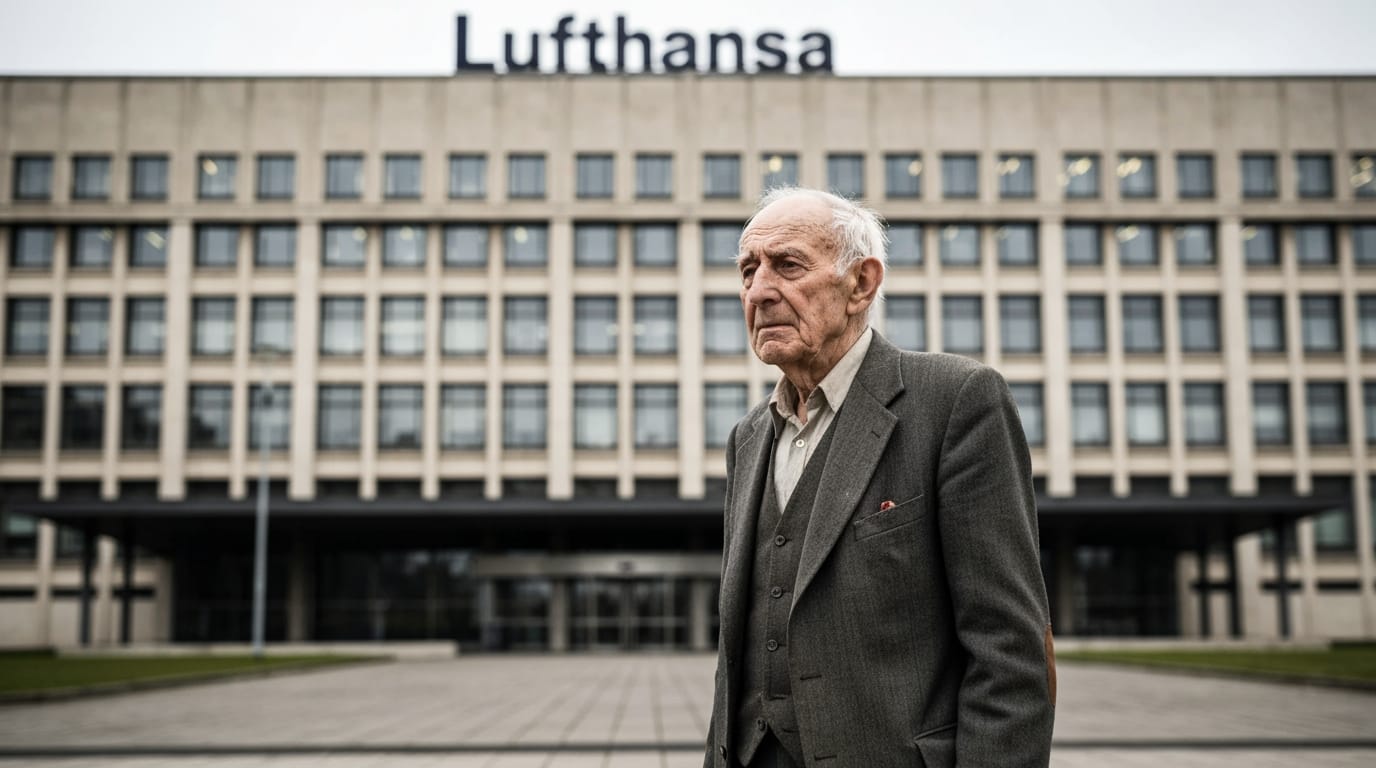
The history of Germany's corporate giants during the Nazi era is a landscape fraught with moral ambiguities, complicity, and the indelible stain of the Holocaust. Among these powerful entities, Deutsche Luft Hansa, the predecessor to today's Lufthansa, stands as a stark reminder of how seemingly civilian enterprises became deeply entangled in the machinery of a genocidal regime, providing critical support and profiting from the persecution of millions. Its narrative is not merely one of survival in a totalitarian state, but one of active collaboration, extensive utilization of forced labor, and a post-war struggle with its own harrowing past.
From Commercial Venture to Nazi Air Arm
Deutsche Luft Hansa, founded in 1926, was Germany's national airline and a symbol of national pride in the years leading up to World War II. However, its trajectory took a sinister turn with the rise of the Nazi Party. The airline's leadership quickly aligned itself with the burgeoning regime, offering direct support to Adolf Hitler's ascent to power. Notably, Luft Hansa provided free air travel for Hitler's election campaigns, enabling him to rapidly traverse Germany and disseminate his propaganda, an unprecedented use of air power in political campaigning at the time. Erhard Milch, who had served as the head of the airline since 1926, was appointed to lead the Aviation Ministry by Hermann Göring in 1933, further cementing the airline's ties to the Nazi hierarchy.
During the 1930s, Deutsche Luft Hansa expanded its international network but also secretly served as a "front organization for armament," functioning as an air force in disguise until 1935. This dual role meant that while ostensibly a civilian carrier, it was simultaneously fostering the manpower and infrastructure for future military aggression. The company's loyalty was rewarded by Hitler, who assigned it the lucrative task of repairing aircraft for the Luftwaffe, Germany's air force, in the event of war.
The Exploitation of Forced Labor
With the outbreak of World War II, Deutsche Luft Hansa's operations shifted dramatically. Regular civilian flights largely ceased, and its assets were effectively transferred to the Luftwaffe, with the airline concentrating on aircraft maintenance and repair, a vital function for the Nazi war effort. It was during this period that the airline became heavily reliant on forced labor, a practice widespread across German industry.
More than 10,000 forced laborers, including many children and specifically Jewish laborers between 1940 and 1942, were compelled to work for Deutsche Luft Hansa. These individuals, often from occupied territories, were used to install and maintain radar systems, and to assemble, repair, and maintain both military and civilian aircraft. The conditions endured by these workers were appalling. Forced laborers were housed in barracks run by Luft Hansa, particularly at Berlin's Tempelhof Airport, which was surrounded by barbed wire and guarded by armed authorities. Sanitation was poor, and medical care and nutrition were severely inadequate. Archaeological research has even identified the outlines of these forced labor camp barracks belonging to Lufthansa at Tempelhof. The "extermination through labor" was a grim reality in many German corporations, where slave laborers were seen as expendable, with high mortality rates due to brutal treatment, starvation, and disease.
This reliance on forced labor was not unique to Luft Hansa, but rather a systemic feature of the Nazi economy. Corporations like I.G. Farben, Siemens, Krupp, and Daimler-Benz also extensively utilized concentration camp prisoners and other forced laborers, profiting immensely from their unpaid toil and often working them to death.
Post-War Reckoning and Lingering Questions
Following Germany's defeat in 1945, Deutsche Luft Hansa was liquidated, its aircraft and infrastructure seized by Allied forces. However, the name and legacy resurfaced in 1953 when a new entity, Aktiengesellschaft für Luftverkehrsbedarf (Luftag), was founded by former Deutsche Luft Hansa staff. This new airline adopted the familiar "Lufthansa" name and logo in 1954, despite claiming no direct legal connection to its Nazi-era predecessor.
For decades, the modern Lufthansa largely remained silent about the full extent of its predecessor's wartime activities. However, in 1999, the airline acknowledged the use of forced labor by Deutsche Luft Hansa and participated in a German initiative aimed at addressing wartime misdeeds. This included reportedly paying tens of millions of German marks into a compensation fund. A historical study was also commissioned to shed light on this controversial period. Yet, even after these steps, some critics argue that the company's engagement with its past has been insufficient, with a lack of overt acknowledgment on its official website, for example.
The broader issue of corporate complicity during the Holocaust highlights a complex interplay of profit motives, state coercion, and individual decisions. While some businesses initially resisted aspects of "Aryanization," many ultimately complied, driven by self-interest and the desire to maintain operations and profits. The Nazi regime's policies shifted from merely encouraging the removal of Jews from economic life to enforcing it, using raw material allocations and government contracts as leverage. This created an environment where corporate leaders, even those not fervent Nazis, often prioritized their enterprises' survival and profitability, leading to profound moral compromises.
The Enduring Imperative of Memory
The history of Lufthansa and other German businesses during the Holocaust serves as a powerful illustration of how economic ambition can intersect with political extremism, leading to devastating human consequences. The systematic exploitation of forced labor and the expropriation of Jewish assets were not merely byproducts of war but integral to the Nazi regime's economic and genocidal policies, with corporations playing a central, often indispensable, role.
While the modern Lufthansa has taken steps to confront its past, the ongoing discussions reflect a broader societal imperative for historical transparency and accountability. Many German corporations continue to grapple with their wartime legacies, some more openly than others, facing accusations of "Holocaust denial through silence, evasion, and repression of acknowledging the truth." The lessons from this dark chapter underscore the critical importance of journalistic integrity, historical research, and continuous remembrance to prevent such atrocities from fading into obscurity or being minimized. The story of Deutsche Luft Hansa is thus more than just aviation history; it is a profound testament to the ethical responsibilities of business and the enduring need to confront historical truths, however uncomfortable they may be.


