Christmas Day Fury: California Hammered by Powerful Atmospheric River, Leaving Deaths, Flooding, and Widespread Chaos
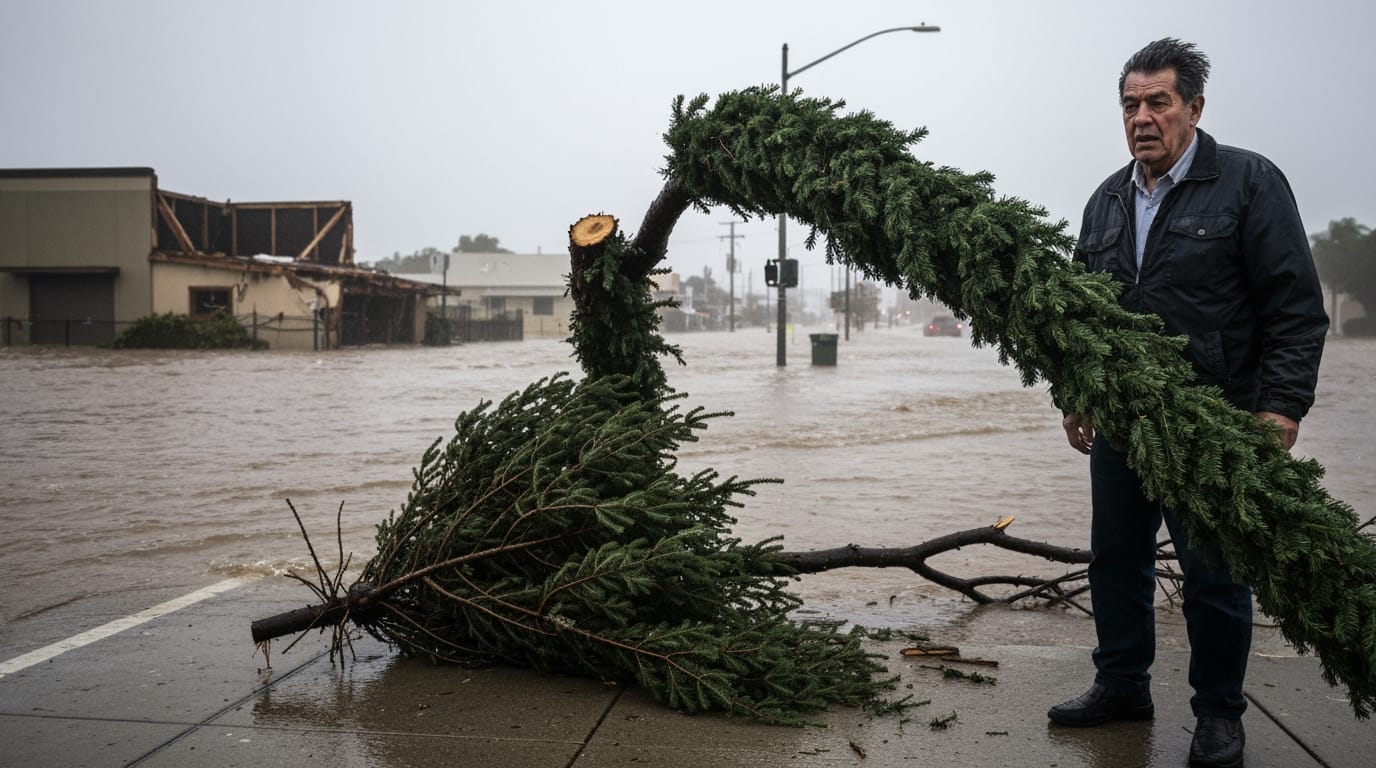
California faced a tumultuous Christmas Day as a powerful atmospheric river, often dubbed the "Pineapple Express," unleashed torrential rains, fierce winds, and widespread destruction across the state. The severe winter storm, which commenced days earlier, intensified on Christmas, leading to flash flooding, dangerous mudslides, and extensive power outages that disrupted holiday celebrations for hundreds of thousands of residents. State and local officials declared emergencies, while emergency crews conducted numerous rescues amidst the escalating hazards.
The Deluge Descends on a Holiday
The relentless storm, characterized by a moisture-laden atmospheric river originating in the tropics, brought a profound and dangerous shift to California's holiday season. Forecasters had warned that the state could experience one of its wettest Christmases in years, a prediction that materialized with devastating accuracy. Southern California, typically receiving only half an inch to one inch of rain in late December, saw astounding totals ranging from 4 to 8 inches, with some mountain areas accumulating up to 10-11 inches in a short span. This exceptional rainfall triggered a Level 3 of 4 flood risk for over 12 million people, prompting flash flood warnings across numerous counties, including Santa Barbara, Ventura, San Mateo, Los Angeles, and San Bernardino. Downtown Los Angeles alone could experience several months' worth of rainfall within a single week. The National Weather Service (NWS) underscored the severity, warning of "life-threatening floods and rock/mud slides" and emphasizing that "lives and property are in great danger" as the storm peaked.
A State Under Siege: Power Outages and Perilous Conditions
The storm's fury extended beyond rainfall, manifesting in destructive wind gusts and widespread power failures. Overnight on Christmas Eve and into Christmas Day, peak wind gusts reached 92 mph in northwestern San Mateo County and 73 mph at San Francisco International Airport, downing trees and power lines across vast areas. Statewide, approximately 158,000 homes and businesses were without power overnight, a number that fluctuated throughout Christmas Day, with over 110,000 customers still in the dark on Christmas morning. Mendocino County alone reported over 5,600 customers without electricity, with Fort Bragg, Point Arena, and Anderson Valley among the hardest-hit areas. By Thursday afternoon, over 70,000 people statewide remained without power.
Travel became treacherous, if not impossible, across much of the state. Portions of Interstate 5 near Burbank Airport and Highway 24 in Orinda were closed due to flooding. In Northern California, heavy snowfall and gusts created "near white-out conditions" in the Sierra Nevada, leading to treacherous mountain pass travel and "considerable" avalanche risks around Lake Tahoe, where a winter storm warning remained in effect until Friday morning. The combination of saturated ground and powerful winds left behind a trail of downed trees, submerged vehicles, and impassable roads, turning festive travel plans into urgent detours or forced cancellations.
Human Cost and Unprecedented Response
Tragically, the Christmas Day storm claimed at least three lives, with authorities indicating more deaths might be weather-related. A 64-year-old San Diego man died after being struck by a falling tree. Earlier in the week, a Sacramento sheriff's deputy was killed in a weather-related vehicle crash on a wet road, and a person trapped in a vehicle died in rising floodwaters near Redding.
In response to the escalating crisis, Governor Gavin Newsom declared a state of emergency across six counties—Los Angeles, Orange, Riverside, San Bernardino, San Diego, and Shasta—on Christmas Eve. This declaration enabled the rapid deployment of state resources and activated emergency authorities to protect communities. Los Angeles Mayor Karen Bass also declared a local emergency.
Emergency crews worked tirelessly through the holiday. In the resort town of Wrightwood in the San Gabriel Mountains, firefighters rescued people from cars trapped by mud and debris flows, and conducted door-to-door checks as the area faced a shelter-in-place order. Evacuation orders were issued for areas like Lytle Creek and communities near burn scar zones, particularly those affected by the January 2025 Palisades and Eaton fires in Los Angeles, which are highly susceptible to rapid runoff and debris flows. The San Bernardino County Fire Protection District expressed its devastation that many families could not be home for Christmas due to the ongoing impacts, with crews remaining committed to supporting the community.
A Christmas Interrupted, Risks Endure
For many Californians, the joyous anticipation of Christmas was overshadowed by the immediate dangers and disruptions brought by the storm. Holiday travel was severely impacted, and the widespread power outages meant many families spent the day in the dark, unable to prepare meals or enjoy festive lights. Misty Cheng, a Wrightwood resident, described her experience with mud and rock flowing through her home on Wednesday as a "nightmare before Christmas," highlighting the human toll of the severe weather, particularly for those living near fire-scarred areas.
While the brunt of the storm began to taper off in some regions by late Christmas Day, the National Weather Service warned that significant risks, particularly flash flooding and mudslides, would persist into Friday. Officials urged residents to avoid flooded roads, heed remaining evacuation orders, and remain vigilant, noting that debris flows and rockslides could occur days after the rain subsides.
The Christmas Day storm of 2025 will be remembered not only for its timing but also for its intensity and widespread impact. As California moves into the aftermath, the focus shifts to recovery, infrastructure repair, and assisting affected communities in rebuilding from a holiday season unexpectedly dominated by nature's raw power. The exceptional atmospheric river event serves as a stark reminder of the state's vulnerability to extreme weather and the critical importance of preparedness and rapid emergency response.