Cities Race Against the Glow to Restore the Night Sky
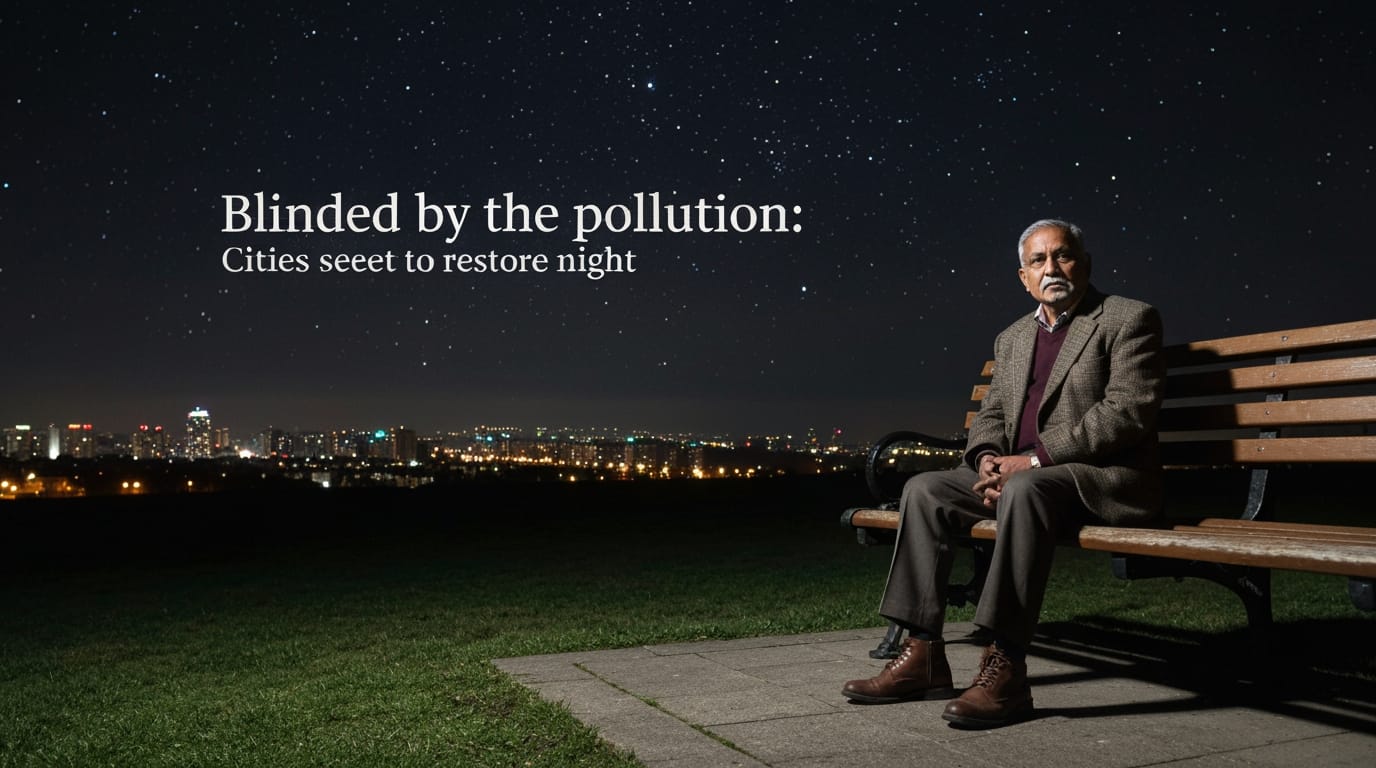
Across the globe, a silent, pervasive form of pollution is steadily eclipsing one of humanity's oldest inheritances: the pristine night sky. Light pollution, the excessive and misdirected use of artificial light, is not merely an aesthetic concern for astronomers; it is a rapidly escalating environmental issue with profound and far-reaching consequences for human health, wildlife, and the global economy. As an estimated 80% of the world's population now lives under a "lit sky" and artificially illuminated areas expand by at least 2.2% annually, cities worldwide are beginning to acknowledge the urgency of the problem and embark on ambitious initiatives to reclaim the darkness.
The Invisible Threat: A World Bathed in Unwanted Light
Light pollution manifests in several forms, each contributing to the degradation of natural darkness. Skyglow, the diffuse luminance of the night sky over urban areas, is perhaps the most recognizable. Other forms include light trespass, where unwanted light spills onto neighboring properties; glare, the excessive brightness that causes visual discomfort; over-illumination, the use of more light than necessary; and light clutter, excessive groupings of light sources. These various forms of artificial light at night (ALAN) have surged dramatically, increasing by 49% globally between 1992 and 2017, and a further 16% from 2014 to 2022. This relentless expansion means that for vast swathes of humanity, the Milky Way has become a distant, theoretical concept rather than a visible spectacle.
Ecological Fallout: Disrupted Rhythms of Life
The introduction of artificial light fundamentally alters the Earth's predictable cycle of day and night, a rhythm upon which all life has relied for billions of years. This disruption affects myriad species, whose behaviors are intricately linked to natural light cues.
Migratory birds, many of which navigate by the stars and moon, are particularly vulnerable. Disoriented by city lights, millions perish annually from collisions with illuminated buildings, or are thrown off course, depleting their energy reserves and making them susceptible to predation. Cities like Toronto have initiated "Bird-Friendly Development Guidelines" and "Lights Out" programs to mitigate these tragic impacts.
Nocturnal insects, including moths, glow-worms, and dung beetles, are irresistibly drawn to artificial lights, often to their demise. This fatal attraction leads to exhaustion, increased predation, and a disrupted ability to navigate and mate, causing significant declines in insect populations. Given insects' crucial roles in pollination and food webs, these declines have cascading effects throughout ecosystems. Other creatures, from amphibians whose breeding rituals are interrupted by artificial glare, to sea turtle hatchlings that become disoriented and crawl inland instead of towards the ocean, face severe threats to their survival. For nocturnal animals, the sudden omnipresence of light has been described as the "most drastic change human beings have made to their environment."
Beyond wildlife, light pollution poses significant risks to human health. Artificial light at night disrupts the human body's natural circadian rhythm, an essential biological imperative that regulates sleep-wake cycles and hormone production. This interference can lead to a host of issues, including sleep disorders like insomnia and fragmented sleep. Crucially, it can suppress the production of melatonin, a hormone with important anti-inflammatory and tumor-inhibiting properties. Research has linked chronic exposure to ALAN with an increased risk of chronic conditions such as depression, hypertension, obesity, diabetes, and heart disease. Disturbingly, epidemiological studies suggest a correlation between high levels of light pollution and higher rates of hormone-sensitive cancers, including breast, colon, and prostate cancers, and even a higher risk for some forms of childhood leukemia.
The Economic and Cultural Shadow
The environmental and health costs of light pollution are compounded by substantial economic repercussions. The International Dark-Sky Association (IDA) estimates that approximately one-third of all outdoor lighting is wasted, translating to an annual cost of $2.2 billion in the United States alone due to unnecessary electricity charges. Globally, inefficient outdoor lighting contributes significantly to carbon emissions, with coal-fueled power plants expelling around 15 million tons of carbon dioxide pollution annually just to generate this wasted electricity. Broader economic analyses suggest that the total cost of light pollution to the world economy could be as high as $3.4 trillion each year, equivalent to approximately 3% of the gross global product. This figure accounts not only for wasted energy but also for the decrease in the value of ecosystem services, which can be reduced by up to 40% in highly light-polluted areas.
Culturally, the loss of a dark night sky represents an immeasurable impoverishment. For centuries, the cosmos has inspired art, science, and philosophical thought. Today, for many urban dwellers, the celestial tapestry is obscured by an omnipresent glow, disconnecting them from this fundamental aspect of the natural world.
Reclaiming the Night: Solutions and City Initiatives
Despite the challenges, a growing global movement is demonstrating that light pollution is a solvable problem, often "with the flick of a switch." Cities, communities, and organizations are implementing a range of technological, policy, and educational solutions to restore natural darkness.
Technological advancements in lighting play a crucial role. The widespread adoption of fully shielded light fixtures, which direct illumination downwards to where it is needed and prevent light from escaping upwards into the sky, is highly effective in reducing skyglow and glare. Smart lighting systems, incorporating motion sensors, timers, and dimmers, ensure that lights are only on when and where necessary, leading to significant energy savings and reduced light output. Furthermore, shifting from blue-rich white LEDs to warmer color temperatures (3000K or lower) minimizes the disruptive effects on both human health and wildlife. Cities can also conduct lighting audits to determine and implement appropriate illumination levels, avoiding over-illumination.
Policy and planning initiatives are proving equally vital. The International Dark-Sky Association (now DarkSky International) has spearheaded the "International Dark Sky Places" program, certifying communities, parks, and reserves that demonstrate a commitment to preserving and protecting dark sites through responsible lighting policies and public education. Flagstaff, Arizona, became the world's first International Dark Sky City in 2001, showcasing how a city of over 70,000 can maintain dark skies. Other cities are following suit; Boulder City, Nevada, for example, received a $1.9 million grant to retrofit its municipal streetlights with energy-efficient, dark-sky-friendly fixtures. Bee Cave, Texas, and Beverly Shores, Indiana, are also recognized Dark Sky Communities, demonstrating that balancing urban development with natural darkness is achievable. Countries like France have seen a 33% reduction in light pollution through policy changes. Cities globally are engaging in various proactive measures, including using satellite imagery to measure light pollution (Strasbourg, Montpellier), conducting citizen surveys (Helsinki, Tallinn), implementing strict regulatory frameworks with penalties (Seoul), and even appointing "light and darkness managers" (Amsterdam).
A Return to Darkness
The growing recognition of light pollution as a multifaceted environmental, health, and economic crisis is driving a global shift towards smarter, more responsible lighting practices. From sophisticated smart lighting systems and shielded fixtures to progressive urban planning and dedicated Dark Sky initiatives, cities are demonstrating that it is possible to balance necessary illumination with the preservation of natural darkness. By collectively embracing these solutions, communities can not only safeguard nocturnal wildlife, protect human health, and realize substantial energy savings, but also restore humanity's profound connection to the awe-inspiring beauty of the cosmos. The movement to bring back the night is not about eliminating light, but about using it wisely, ensuring that the stars, and the benefits of darkness, remain a shared heritage for generations to come.