Civilian Lives Shattered: Airstrike Claims 100 at Nigerian Market, Amnesty International Alleges
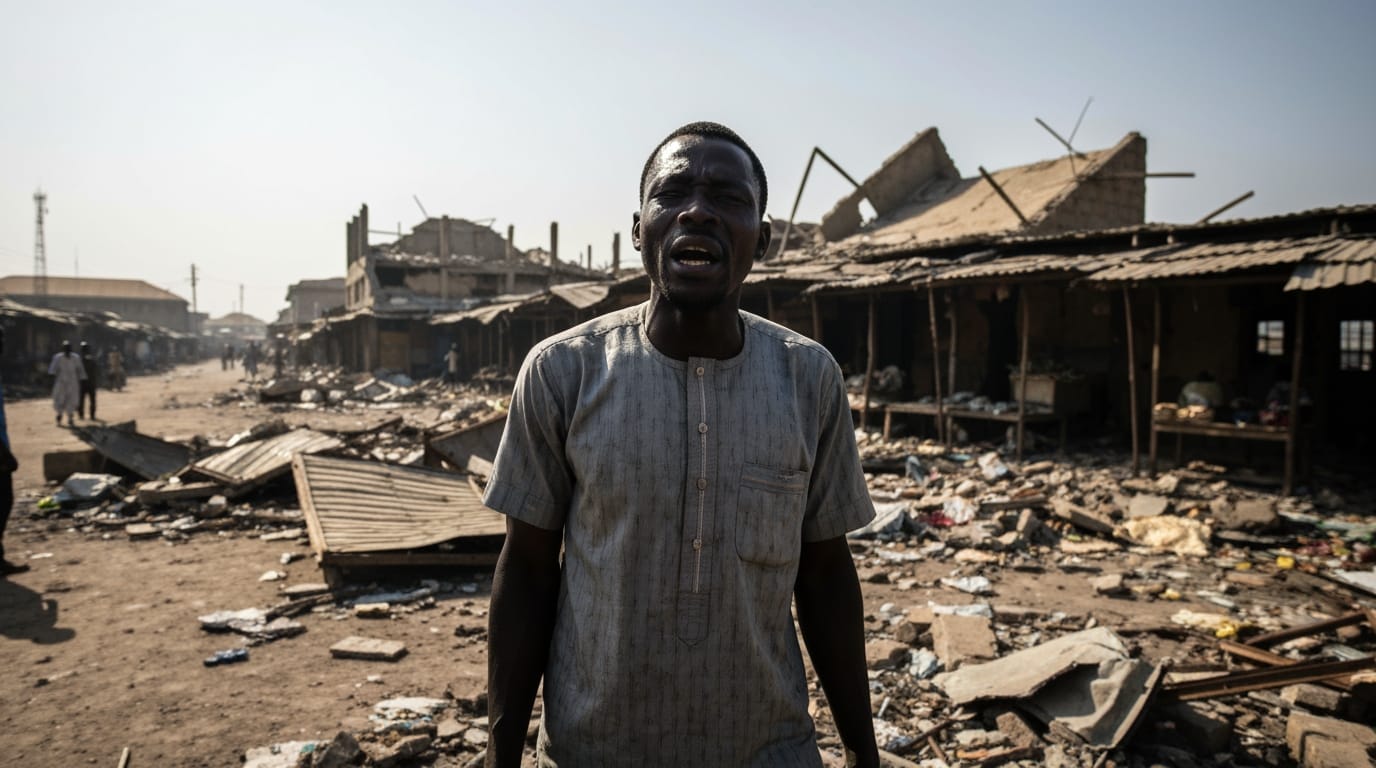
BAUCHI, Nigeria – A Nigerian military airstrike on a bustling market in the remote Tumfa village of Zamfara state on Sunday reportedly killed at least 100 civilians, many of them women and girls, according to a scathing report from Amnesty International. The human rights organization is urgently calling for an immediate and impartial investigation into the incident, which marks the second such deadly aerial attack on a crowded market in northern Nigeria within a month. The strike has reignited profound concerns over the military's operational conduct in civilian-dense areas and the escalating toll on non-combatants caught in the nation's protracted conflicts.
The Deadly Strike on Tumfa Market
The tragic incident unfolded on Sunday at the Tumfa market in the Zurmi district of northwest Zamfara state, a region grappling with persistent banditry. Amnesty International, citing witness accounts, reported that military jets were observed hovering over the area around midday. Approximately two hours later, the aircraft returned to strike the crowded market, leaving a trail of death and devastation. Initial assessments by Amnesty International indicate that at least 100 lives were lost in the bombardment. Many of those counted among the dead were identified as women and girls, underscoring the indiscriminate nature of the attack. In the immediate aftermath, dozens of injured individuals were rushed to hospitals in Zurmi and the nearby town of Shinkafi, where medical personnel are working to treat the wounded. This devastating event has sent shockwaves through local communities, with residents expressing profound and growing anxiety over the increasing frequency of civilian fatalities resulting from military raids and airstrikes across Nigeria's northern regions.
Conflicting Narratives and Official Silence
In the wake of the Tumfa market tragedy, the Nigerian military has yet to issue an immediate, detailed response regarding the specific incident. Historically, the military has consistently refuted allegations of intentionally targeting civilians, maintaining that its airstrikes are meticulously intelligence-led and exclusively aimed at militant targets. While some reports indicate that the military confirmed an airstrike took place, they concurrently stated that "no verifiable evidence of civilian casualties as being suggested in the media has been established". This assertion stands in stark contrast to the grim casualty figures and witness testimonies compiled by Amnesty International. The prevailing lack of transparency and the military's consistent denials in the face of mounting evidence of civilian harm have fueled a deep mistrust among the populace and human rights advocates, who argue that these responses often obscure the true human cost of military operations.
A Disturbing Pattern: Echoes of Past Tragedies
The airstrike in Zamfara is not an isolated event but rather fits into a disturbing and escalating pattern of civilian casualties stemming from Nigerian military operations. Just a month prior, in April, a similar airstrike resulted in a massive loss of life at a weekly market in Jilli, Yobe state, located in northeastern Nigeria. That incident claimed an estimated 200 civilian lives, with reports indicating more than 100 fatalities and 35 severely injured individuals. Following international outcry, the military announced an internal probe into the Jilli incident. However, such investigations have often been criticized for their slow pace and lack of public accountability. In that earlier strike, the Nigerian Air Force asserted that its operation was based on sustained intelligence and targeted a "terrorist enclave and logistics hub". The Governor of Borno state, which neighbors Yobe, also stated that the Jilli market had been officially closed years prior due to its alleged use by terrorists as a logistics hub. These repeated incidents underscore the immense challenges faced by Nigeria's military in distinguishing between combatants and non-combatants in areas where insurgent groups often blend into civilian populations or exploit public spaces. The country's military forces have been engaged in a protracted 17-year Islamist insurgency in the northeast, primarily against Boko Haram and the Islamic State West Africa Province (ISWAP), and are also battling widespread banditry in the northwest.
Urgent Calls for Accountability and Human Rights Protection
Amnesty International has unequivocally condemned the latest airstrike, describing it as "unlawful" and a demonstration of "shocking disregard for civilian life". The organization emphasized that this recurring pattern of human rights violations has become increasingly normalized, with villagers frequently caught in the crossfire of atrocities committed by both armed groups, bandits, and the military alike. Amnesty has called for an "urgent and impartial" investigation into the Tumfa market attack, advocating for accountability and justice for the victims. Rights groups and international observers have long highlighted the devastating impact of these conflicts on civilian populations, noting that poorly executed military operations exacerbate humanitarian crises and erode trust in state institutions. The repeated instances of civilian deaths due to military "misfires" or alleged intelligence failures point to systemic issues within the operational framework, including potential loopholes in intelligence gathering and insufficient coordination between ground troops and air assets. Since 2017, an estimated 500 civilians have died in such "misfires," according to an Associated Press tally, indicating a persistent and deadly problem.
The catastrophic loss of life at the Tumfa market in Zamfara state serves as a stark and tragic reminder of the perilous reality faced by Nigerian civilians living in conflict-affected regions. The consistent reports from human rights organizations like Amnesty International paint a grim picture of military operations that, despite their stated intent to combat insurgency and banditry, too often result in devastating consequences for innocent communities. The urgent calls for a thorough, transparent, and impartial investigation into this latest tragedy, as well as previous incidents, are not merely bureaucratic demands but essential steps towards ensuring justice for the victims, rebuilding shattered trust, and preventing future recurrences of such heart-wrenching loss. Until genuine accountability is established and operational protocols are rigorously re-evaluated to prioritize civilian protection, the shadow of violence will continue to loom large over Nigeria's most vulnerable populations.