Columbine Echoes at Teotihuacan: Gunman's Attack Leaves Tourist Dead, Sparks Security Review
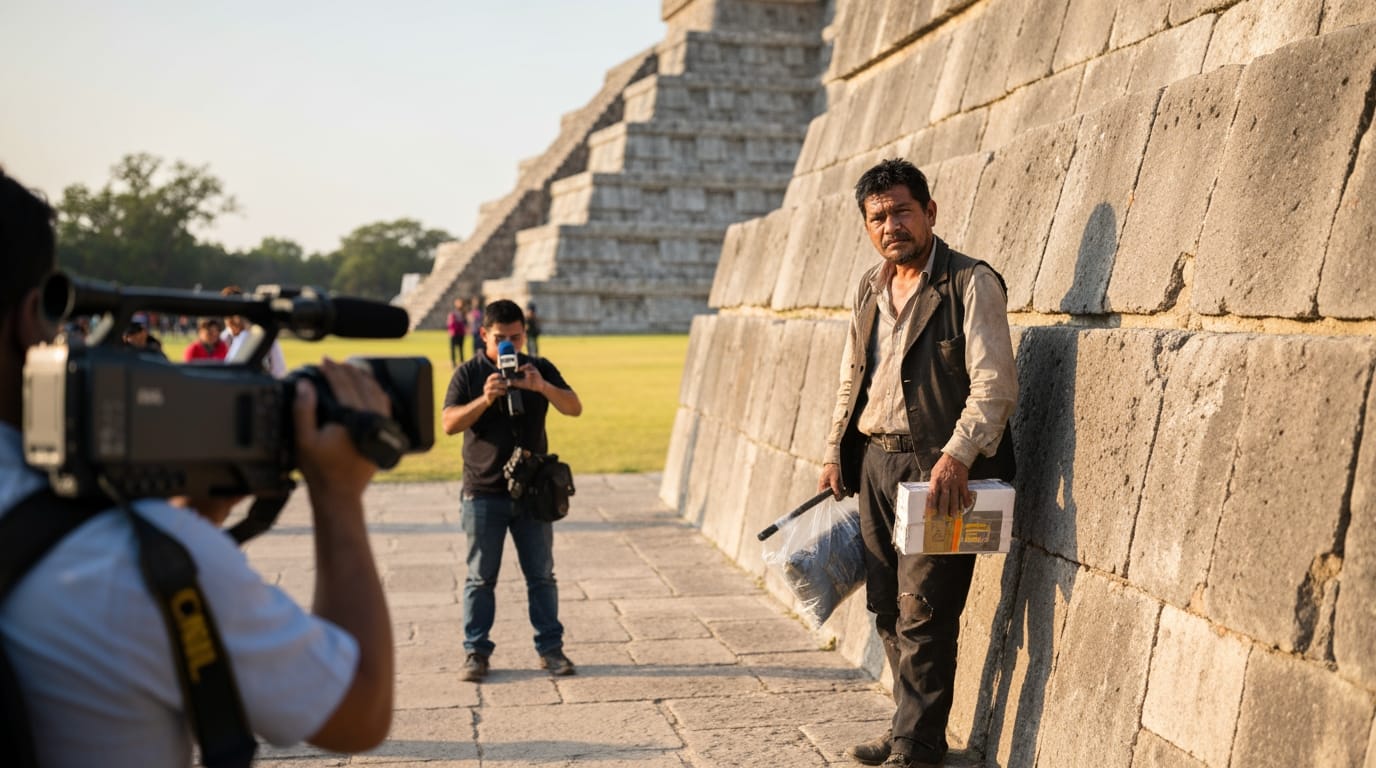
MEXICO CITY – A solemn day marking the 27th anniversary of the Columbine High School massacre turned tragically violent on Monday at Mexico’s ancient Teotihuacan pyramids, where a lone gunman opened fire on tourists, killing a Canadian woman and injuring at least 13 others. The assailant, identified by authorities as 27-year-old Mexican national Julio César Jasso Ramírez, reportedly carried a cache of materials linked to the infamous 1999 Colorado school shooting, prompting immediate concerns over the global reach of such violent ideologies and sparking a comprehensive review of security protocols at major tourist destinations across Mexico.
The serene setting of Teotihuacan, one of Mexico's most iconic and visited archaeological sites, was shattered shortly after 11:30 a.m. when Jasso Ramírez began shooting from atop the Pyramid of the Moon. Witnesses described a scene of terror and chaos as gunshots echoed across the ancient city, sending hundreds of visitors, including families and international tourists, scrambling for cover. Many suffered injuries not directly from gunfire, but from falls sustained while attempting to descend the steep pyramid steps in a desperate bid to escape the assailant. Among those caught in the melee were citizens from Colombia, Russia, the United States, Brazil, the Netherlands, and Canada. A Canadian woman tragically succumbed to her injuries, while seven people sustained gunshot wounds.
The most disturbing revelation emerged following the rapid deployment of security forces: the gunman possessed an array of materials eerily similar to those associated with the Columbine massacre. Authorities discovered several books and handwritten notes that explicitly referenced the April 1999 attacks in the United States. Compounding the chilling parallel, investigators also found a photo, seemingly modified by artificial intelligence, depicting Jasso Ramírez alongside the Columbine perpetrators. Furthermore, the assailant's attire included a shirt emblazoned with the phrase "Disconnect and Self-Destruct," a slogan linked to online subcultures known to glorify mass violence in the wake of the Columbine tragedy. Mexican Attorney General of the State of Mexico, José Luis Cervantes, stated the attack was planned, the assailant acted alone, and the discovery of these materials strongly suggests "an interest in replicating previous ones in what is known as a copycat" phenomenon, often referred to as the "Columbine effect." The attack’s timing on April 20, the precise anniversary of the Columbine massacre, further underscores this disturbing connection.
The identity of the gunman, Julio César Jasso Ramírez, a 27-year-old Mexican national, was quickly established. Following his rampage, Jasso Ramírez took his own life at the scene. At the site, security officials recovered a hunting weapon, a knife, ammunition, and additional documents with references to the former Soviet Union, indicating a complex and potentially ideologically driven mindset. While Mexican officials have not yet offered a definitive motive beyond the apparent fascination with past mass violence, the meticulous planning and the nature of the collected materials point towards a premeditated act rooted in deeply troubling influences.
In the immediate aftermath, Mexican authorities moved swiftly to secure the site and provide assistance to the wounded. Canadian Foreign Minister Anita Anand expressed profound condolences for the Canadian national killed and the wounded, confirming that consular officials were providing assistance to affected families. The incident prompted high-level responses from Mexican officials, with President Claudia Sheinbaum emphasizing the urgent need to bolster security protocols and critically analyze "external influences" that could provoke such violence within the country. Mexican security secretary Omar García Harfuch announced that major tourist destinations across Mexico would see an increased presence of both ground forces and digital "cyber patrols" to prevent future threats. This heightened alert comes less than two months before Mexico is set to co-host the 2026 FIFA World Cup, a major international event that will draw millions of visitors. Authorities have already confirmed that security measures at all of the country's archaeological sites have been significantly strengthened.
While such attacks are uncommon in Latin America, the incident at Teotihuacan underscores a global concern regarding the impact of online subcultures and the replication of past acts of violence. The "Columbine effect," a term describing the inspiration and emulation of the 1999 shooting, has been linked to mass violence incidents in various countries, including Finland, Sweden, and Brazil. This tragedy serves as a stark reminder that even ancient, historically significant sites are not immune to the modern challenges of radicalization and the pervasive influence of violent online communities. The swift and coordinated response by Mexican authorities, coupled with the immediate commitment to enhanced security, aims to reassure both citizens and international visitors that their safety remains a paramount concern.
The investigation into the full scope of Jasso Ramírez's motivations and the extent of his connections to extremist ideologies is ongoing. This isolated yet profoundly impactful event at Teotihuacan has not only cast a shadow over an iconic cultural heritage site but has also ignited a critical dialogue about protecting public spaces from individuals inspired by the darkest chapters of global violence, particularly as Mexico prepares to welcome the world for a major international event.