Crackdown on Dissent Shadows NATO Summit in Ankara
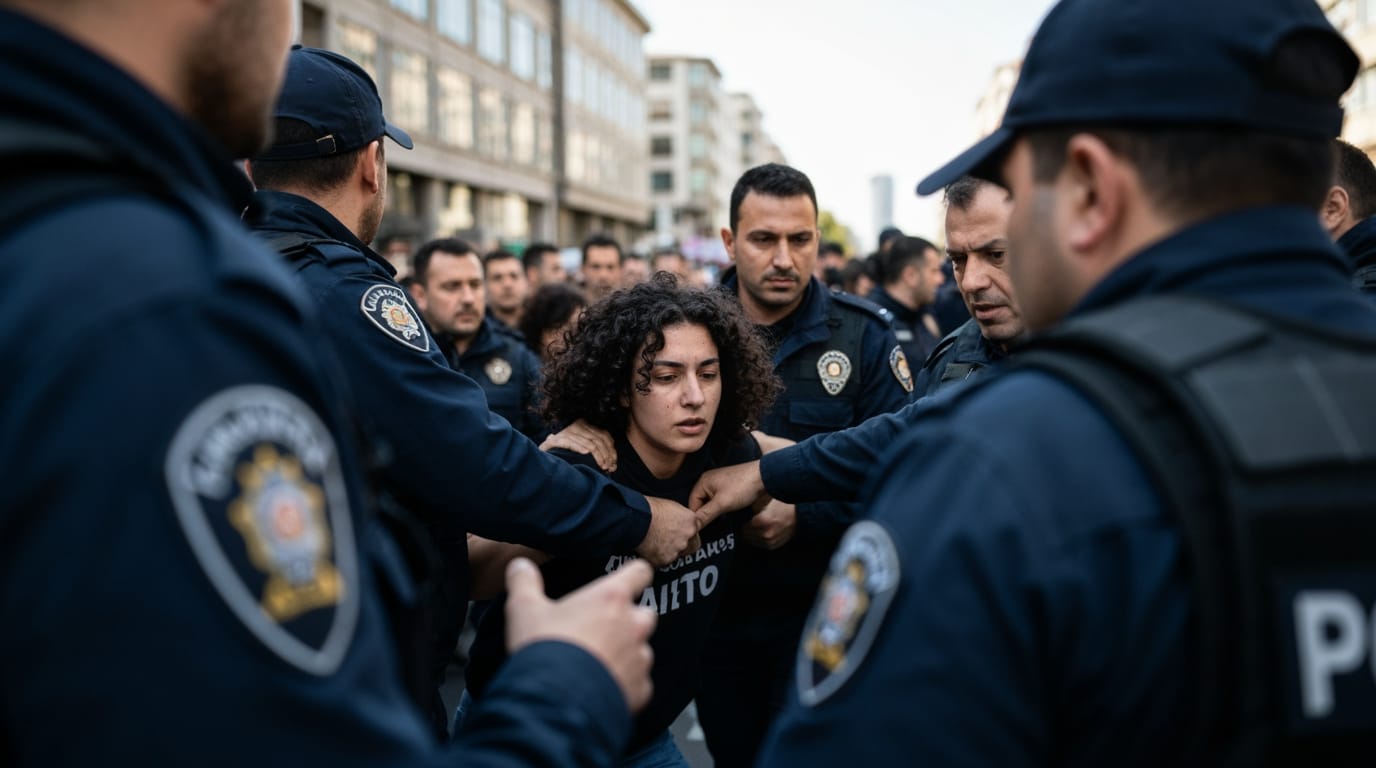
Ankara, Turkey – As Turkey prepares to host the 36th NATO Summit on July 7-8, 2026, a sweeping crackdown on activists, journalists, academics, and civil society representatives has cast a long shadow over the international gathering. Turkish authorities have arrested hundreds of individuals in a series of pre-dawn raids, citing anti-terrorism operations, while human rights organizations vehemently condemn the actions as a calculated effort to silence dissent and suppress freedom of expression ahead of the high-profile event. The arrests and widespread bans on public assembly have drawn sharp criticism internationally, raising significant concerns about Turkey's commitment to democratic values within the transatlantic alliance.
The Sweeping Crackdown on Civil Society
In the days leading up to the NATO Summit, Turkish security forces launched extensive operations, initially detaining over 200 people. As of June 26, the Ankara Public Prosecutor's office announced that 178 of these individuals were sent to pretrial detention, while an additional 34 were placed under house arrest, with only six being released. Those targeted in these operations represent a diverse cross-section of Turkish civil society, including political activists, lawyers, academics, journalists, trade unionists, students, and environmentalists.
Among the notable detainees are Yıldız Tar, a journalist and prominent LGBTQ+ rights activist, and Emel Memiş Parmaksız, an academic from Ankara University. Strikingly, 14 members of the TEMA Foundation, a well-known nature conservation organization focused on reforestation, were also among those jailed, including elderly environmental volunteers, some in their 60s, 70s, and even 79 years old, who were reportedly detained after a birdwatching trip. Opposition figures, such as CHP lawmaker Suat Özçağdaş, have criticized these arrests, suggesting that the government is attempting to portray environmental defenders as criminals without concrete evidence.
Turkish prosecutors have justified these mass detentions as part of investigations into various "terrorist organizations," including the far-left Revolutionary People's Liberation Party/Front (DHKP/C), the Marxist-Leninist Communist Party (MLKP), the Communist Party of Turkey/Marxist-Leninist (TKP/ML), and even elements alleged to be linked to the Islamic State. However, many of those detained, such as Yıldız Tar, have stated they had never heard of the organizations they are accused of belonging to. Rights groups and opposition parties argue that the NATO summit is being used as a pretext to broaden these "counter-terrorism" categories and suppress legitimate political and civic activities.
Ankara Under Siege: Extensive Security Measures and Protest Bans
Beyond the arrests, Ankara has witnessed an unprecedented escalation of security measures. The Ankara Governor's Office announced a 13-day blanket ban on all public assemblies, demonstrations, press conferences, leaflet distribution, and banner displays across the province, effective from June 28 until July 10. This extensive prohibition, justified on grounds of "national security" and "public order" related to the NATO summit, effectively neutralizes any potential anti-war or anti-NATO protests during the event.
The capital has been transformed into what observers describe as a "fortress." Authorities have deployed more than 40,000 security personnel and activated domestic short- and medium-range missile defense systems, placed F-16 fleets on high alert, and utilized drones and anti-drone systems. Extensive perimeter controls, traffic restrictions, and even urban aesthetic adjustments—such as repainting railings and fixing asphalt along delegation routes—are part of the elaborate security and public relations effort.
Adding to concerns about freedom of expression, numerous journalists from independent and opposition-leaning Turkish media outlets have been denied accreditation to cover the summit. Outlets like Cumhuriyet, Sözcü, Halk TV, T24, and Medyascope have reported rejections without explanation or recourse. While NATO has stated it relies on the host nation's assessment for domestic accreditation, this stance has been criticized by media freedom groups as potentially allowing domestic pressures to influence an independent credentialing process.
International Outcry and Diplomatic Nuances
Human rights organizations have been quick to condemn Turkey's actions. Human Rights Watch denounced the arrests, stating they demonstrate Turkey's "ruthless intolerance of freedom of speech and assembly." Benjamin Ward, deputy Europe and Central Asia director at Human Rights Watch, emphasized that "the misuse of terrorism laws to conduct mass arrests and silence people in the run-up to a NATO summit flies in the face of the founding values of the alliance." Amnesty International has likewise called for the immediate release of those arbitrarily detained and urged the lifting of the protest ban, labeling it an "excessive and unjustifiable attack" on the rights to peaceful assembly and expression.
Despite these strong condemnations from rights groups, the official international response from NATO member states has been notably muted. An EU delegation, led by foreign policy chief Kaja Kallas, met with President Erdoğan amidst the criticism, yet public statements on the crackdown have been limited. This perceived silence reflects a broader trend among Western allies, who, particularly since Russia's full-scale invasion of Ukraine, have largely avoided publicly raising concerns about Turkey's human rights record. This strategic pivot prioritizes security ties with Turkey, a key regional military power and arms exporter, over direct criticism of its internal democratic backsliding. Critics argue that this silence risks encouraging authoritarian tendencies and ignoring NATO's foundational principles of democracy and rule of law.
Implications for Turkey and the Alliance
The recent surge in arrests and restrictive measures underscore the deepening challenges to civil liberties and democratic institutions within Turkey. The government's justification of "terrorism-related activity" for detaining a wide array of non-violent actors, including environmentalists and academics, is seen by many as an attempt to stifle any form of opposition or critical voice under the guise of security. This approach not only shrinks civic space but also exacerbates internal divisions and erodes public trust.
For NATO, hosting a summit in a member state actively suppressing fundamental freedoms poses a delicate dilemma. The alliance's stated values include democracy, individual liberty, and the rule of law. The crackdown in Ankara forces NATO leaders to navigate a complex diplomatic landscape where security imperatives sometimes appear to overshadow these core principles. The summit's agenda, which includes discussions on defense spending and continued support for Ukraine, risks being overshadowed by concerns over the host nation's domestic human rights record.
As global leaders gather in Ankara, the stark contrast between the summit's aims of collective defense and democratic solidarity, and the Turkish government's actions against its own citizens, will undoubtedly be a central point of quiet contention and international observation. The events leading up to the NATO summit highlight the ongoing tension between national security concerns and the universal principles of human rights, leaving many to question the long-term implications for Turkey's democratic trajectory and its standing within the international community.


