Cross-Strait Dialogue Rekindled: Taiwan Opposition Leader's China Visit Sparks Hope and Skepticism
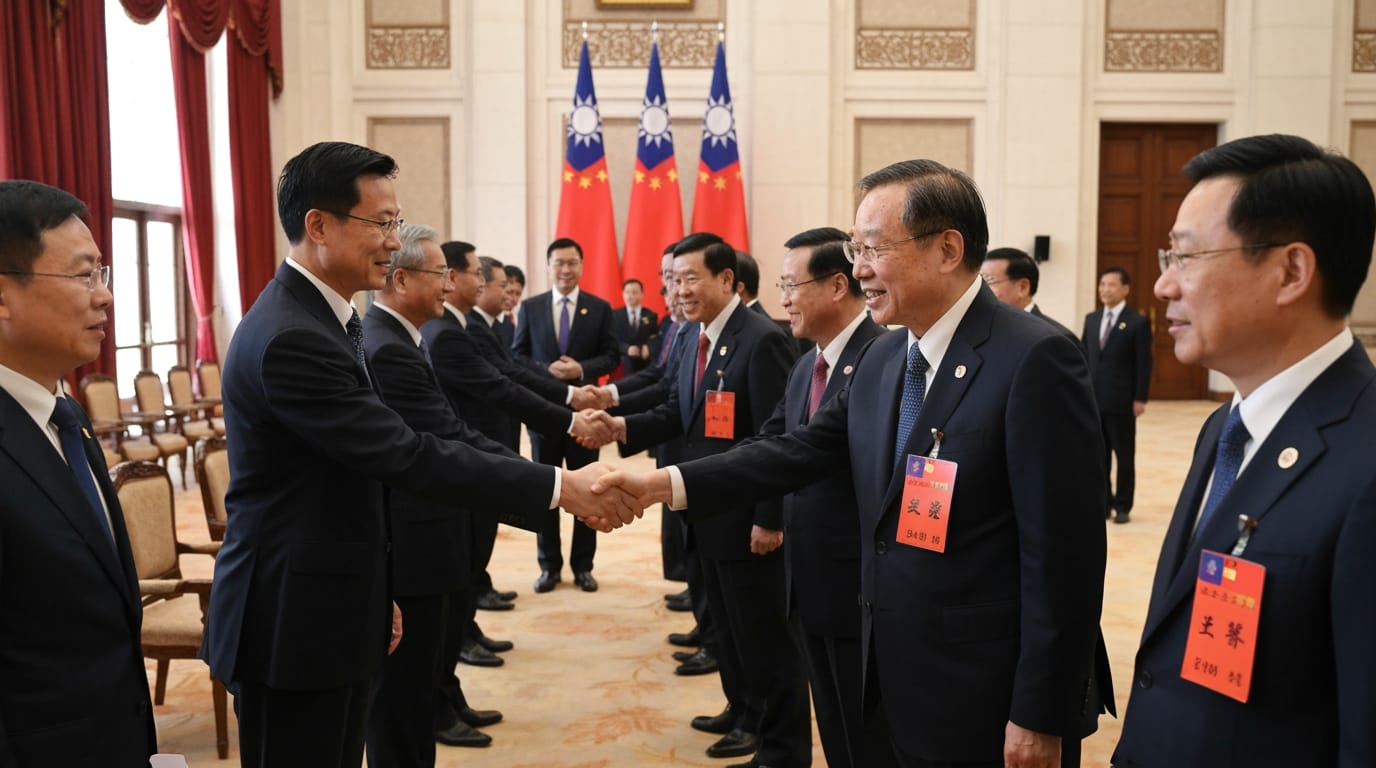
BEIJING – In a significant diplomatic development, China has announced enhanced measures to foster cross-strait exchanges following a rare visit by Taiwan's main opposition leader, Kuomintang (KMT) Chairwoman Cheng Li-wun. Her "peace mission" to the mainland, which included a high-profile meeting with Chinese President Xi Jinping, marks the first such engagement by a sitting KMT leader in a decade and signals a potential, albeit fragile, opening for dialogue amidst escalating regional tensions. The visit has been met with a mix of cautious optimism and pointed criticism, underscoring the deep political fissures within Taiwan regarding its relationship with Beijing.
The Pursuit of Peace: High-Level Engagement in Beijing
KMT Chairwoman Cheng Li-wun embarked on her six-day visit to China in early April 2026, describing it as a "journey for peace" aimed at easing tensions across the Taiwan Strait. Her itinerary included stops in Shanghai and Nanjing before culminating in Beijing, where she met with President Xi Jinping at the Great Hall of the People on April 10. During their discussions, Xi reaffirmed China's unwavering stance against Taiwan independence, stating Beijing would "never tolerate" such a move and labeling it the "chief culprit that undermines peace across the Taiwan Strait". Despite this firm declaration, the Chinese leader expressed a willingness to boost dialogue and exchanges with various political parties in Taiwan, including the KMT, based on the shared political foundation of opposing Taiwan independence. Cheng, for her part, reportedly aligned with Xi in her remarks, emphasizing the need for both sides to establish more resilient and institutionalized mechanisms for dialogue and cooperation. She stressed that preserving peace is paramount to preserving Taiwan, advocating for goodwill and mutual trust to be built incrementally between the two sides.
Beijing's Strategic Overture Amidst Geopolitical Shifts
China's readiness to engage with Cheng Li-wun is viewed by many as a strategic move to project an image of open dialogue with Taiwan, particularly at a time when Beijing faces increasing international scrutiny and seeks to improve relations with key diplomatic partners. By hosting a prominent Taiwanese opposition figure, Beijing aims to demonstrate that communication across the Strait remains possible, despite the current ruling Democratic Progressive Party's (DPP) refusal to endorse the "1992 Consensus" – an understanding that acknowledges "one China" but allows for differing interpretations. The visit also coincided with a period of intensified military pressure from Beijing around Taiwan, including near-daily deployments of fighter jets and warships, and large-scale military drills. Engaging with the KMT allows China to highlight a Taiwanese political voice that advocates for closer ties and shared Chinese heritage, potentially undermining efforts by the DPP to solidify Taiwan's separate identity and bolster its defense capabilities with international support. Chinese state media lauded the visit as having a "significant" and "positive impact" on maintaining peace and stability in the Taiwan Strait.
Taiwan's Internal Divisions and External Realities
The KMT chairwoman's trip has intensified an already complex political landscape within Taiwan. While Cheng positioned her visit as a crucial step towards preventing conflict, it has drawn sharp criticism from the ruling Democratic Progressive Party (DPP). The DPP, which considers Taiwan a sovereign nation and rejects Beijing's territorial claims, views such engagements as part of Beijing's "United Front" tactics aimed at cultivating political influence and dividing Taiwan. The DPP has cautioned against negotiating with Beijing without official authorization and warned that engagement without deterrence could compromise the island's security. Current Taiwanese President Lai Ching-te, whom Beijing regards as a "separatist," has consistently affirmed that Taiwan's future must be determined by its people and has called for stronger defense capabilities in response to China's growing military activities. The visit also occurred amidst a domestic political standoff, with the opposition-controlled legislature reportedly stalling a proposed US$40 billion defense spending package, raising concerns about Taiwan's preparedness against potential aggression. Critics within Taiwan, and even some within the KMT, have accused Cheng of being overly pro-China, suggesting her visit could be exploited by Beijing to serve its political agenda.
A Pattern of Cross-Strait Engagement
Cheng Li-wun's visit is not an isolated event but rather follows a pattern of KMT leaders engaging with Beijing, particularly in times of heightened cross-strait tensions. In April 2024, former Taiwanese President Ma Ying-jeou, also affiliated with the KMT, undertook an 11-day trip to China with a student delegation, focusing on social and cultural links and historical sites. Ma's visit included a call for young people to "remember their Chinese roots" and there was speculation of a meeting with Xi Jinping, which ultimately occurred. This echoed his historic 2015 meeting with Xi in Singapore, the first between leaders of China and Taiwan in more than half a century, which, while producing few tangible outcomes, set a precedent for high-level dialogue. The KMT has historically advocated for closer ties with mainland China, grounded in its historical legacy and the "1992 Consensus," in contrast to the DPP's emphasis on Taiwan's distinct identity and sovereignty. These visits highlight the KMT's continuous efforts to maintain channels of communication with Beijing, even as political dynamics and public sentiment in Taiwan evolve.
The latest engagement between KMT Chairwoman Cheng Li-wun and Chinese President Xi Jinping underscores the intricate and often paradoxical nature of cross-strait relations. While Beijing's announcement of enhanced exchanges suggests a willingness to use such visits to advance its "one China" principle, it also offers a potential avenue for de-escalation and dialogue. However, the deep mistrust and divergent political aspirations between Taiwan's ruling party and Beijing, coupled with internal divisions within Taiwan, mean that any "boost" in ties facilitated by the opposition is likely to remain contentious. The future of cross-strait relations will continue to be a delicate balance between calls for peace and the unwavering assertion of sovereignty, shaped by both internal Taiwanese politics and the broader geopolitical landscape.


