Devastating Airstrike Kills Hundreds at Nigerian Village Market, Raising Questions on Civilian Protection
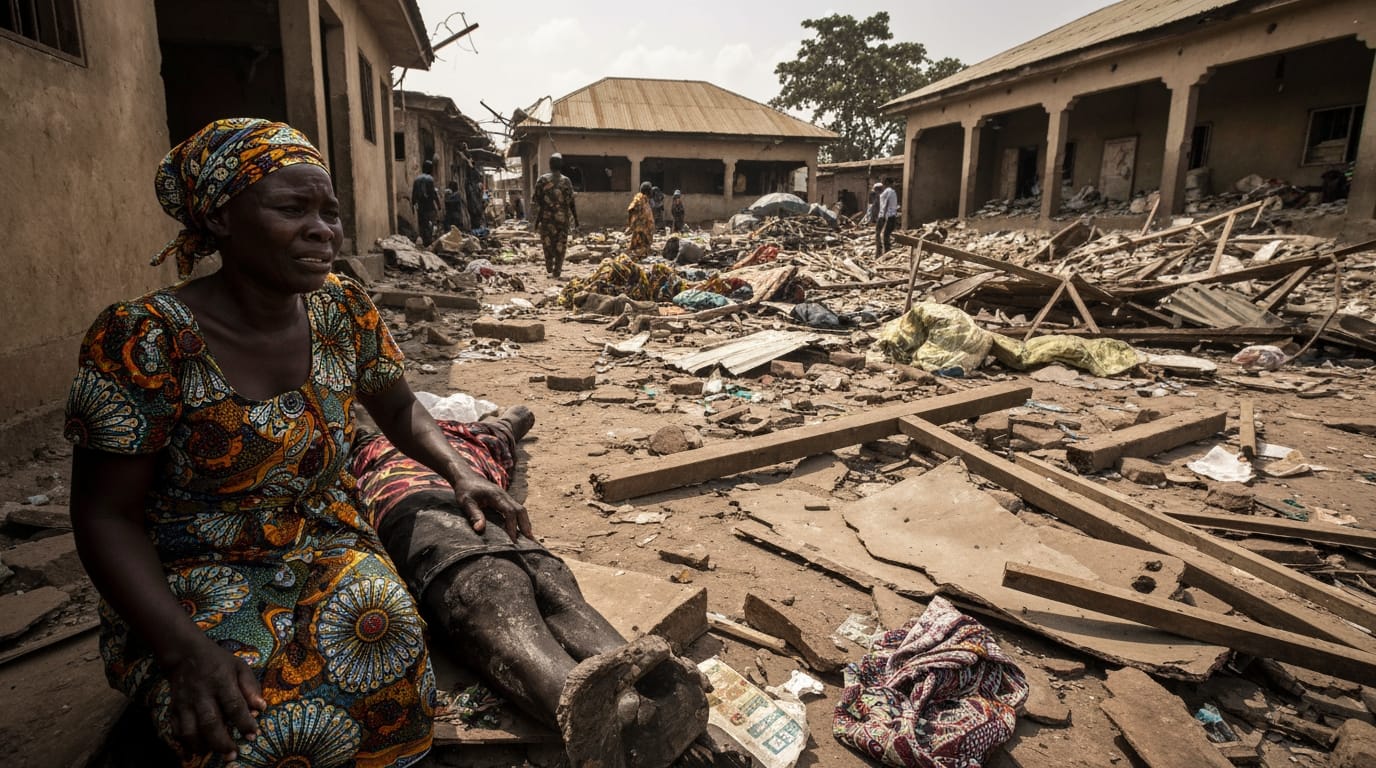
Jilli Market, Yobe State, Nigeria – A Nigerian military airstrike targeting Islamist militants has tragically resulted in the deaths of hundreds of civilians at a bustling village market in northeastern Nigeria, according to local officials and eyewitnesses. The devastating incident, which occurred Saturday night at Jilli Market in Yobe State, near the border with Borno State, has reignited urgent concerns over civilian casualties in the military's ongoing counter-insurgency operations.
Initial reports indicate a death toll that could exceed 200, with many more injured, as military jets struck the popular trading center while it was filled with traders and buyers from surrounding communities. The Nigerian Air Force confirmed operations against Boko Haram in the Jilli axis of Borno State but did not acknowledge hitting a market in its public statement, prompting calls for transparency and a thorough investigation into the tragic misfire.
The Catastrophic Saturday Night Strike
The tranquility of Saturday evening at Jilli Market, typically a vibrant hub for commerce, was shattered by the sudden and violent airstrike. Residents and local authorities describe a scene of unimaginable horror, with bodies scattered amidst the debris of market stalls. A local councillor, Lawan Zanna Nur Geidam, stated that over 200 people are feared dead, a figure corroborated by other residents and an official from an international humanitarian agency. Another report from Amnesty International, based on survivor accounts, indicated at least 100 fatalities, while other media outlets reported "scores" or "over 30" initially, with eyewitnesses counting 56 corpses themselves.
The victims, including women and children, were ordinary citizens engaged in daily trade when the bombs fell. The injured are currently being transported to hospitals in both Yobe and Borno states as emergency response efforts are activated by the Yobe State Emergency Management Agency (SEMA). The incident underscores the severe and immediate risks faced by civilians living in areas affected by the protracted conflict with insurgent groups in Nigeria's northeast.
Conflicting Narratives: Military Intent vs. Civilian Reality
The Nigerian military's stated objective in the region is to combat Islamist militant groups, including Boko Haram, who have waged a decadelong insurgency. Sources close to the military operation suggested that the airstrike was launched during a pursuit of suspected Boko Haram insurgents. Some reports indicated that the militants might have been visiting the market to collect levies from traders or to obtain supplies, or that the fighter jet was tracking a group but missed its intended target.
However, the catastrophic outcome directly impacted a civilian population. The Nigerian Air Force's statement confirmed operations against Boko Haram but conspicuously omitted any mention of the market bombing, an omission that has fueled public distress and skepticism. This disparity between the military's official narrative and the grim reality on the ground has become a recurring pattern in similar incidents. Human rights groups and affected communities consistently call for greater accountability and transparency from the armed forces.
A Troubling History of "Accidental" Bombings
This latest tragedy at Jilli Market is not an isolated event but rather another grim chapter in a series of "accidental" bombings by the Nigerian military resulting in significant civilian casualties. Over the years, hundreds of civilians have been killed in such misfires, raising serious questions about the military's intelligence gathering, target identification protocols, and operational coordination.
Notable past incidents include the January 2017 airstrike on a refugee camp in Rann, Borno State, which killed at least 112 people displaced by the conflict. More recently, in December 2023, an army drone strike mistakenly killed at least 85 civilians, many of them women and children, gathered for a religious celebration in Tudun Biri village, Kaduna State. Reports from human rights organizations, such as Amnesty International, indicate that at least 500 civilians have died in accidental airstrikes since 2017 alone. Critics point to loopholes in intelligence gathering and insufficient coordination between ground troops and air assets as contributing factors to these repeated errors. Despite military assurances of steps to curb these accidents, they continue to occur, eroding trust between the armed forces and the civilian population they are meant to protect.
Calls for Justice and Enhanced Civilian Protection
The recurrent nature of these tragedies has intensified calls from international and local human rights organizations for comprehensive investigations and accountability. President Bola Ahmed Tinubu had previously ordered an investigation into the Tudun Biri incident, describing it as "disturbing." However, rights groups have often expressed skepticism regarding the transparency and outcomes of such inquiries, noting that mistakes are rarely punished, leaving victims' families without justice or compensation.
The international community, including the United States which has provided military assistance and training to Nigeria, continues to monitor the situation. While the U.S. military has stated its troops will not engage in combat or have a direct operational role, emphasizing Nigerian command authority, the persistent civilian casualties highlight the critical need for improved operational discipline and adherence to international humanitarian law.
The latest market bombing is a poignant reminder of the immense human cost of conflict and the dire need for the Nigerian military to reassess its tactics to prevent further loss of innocent lives. For the countless families grieving their loved ones and the communities grappling with fear and distrust, the demand for justice, compensation, and, most importantly, effective measures to safeguard civilians remains paramount. Without concrete changes, the cycle of accidental bombings risks alienating the very populations the military aims to protect, inadvertently strengthening the narrative of the insurgents.