Czech Government's Bid to Scrap License Fee Ignites Independence Fears for Public Broadcasters
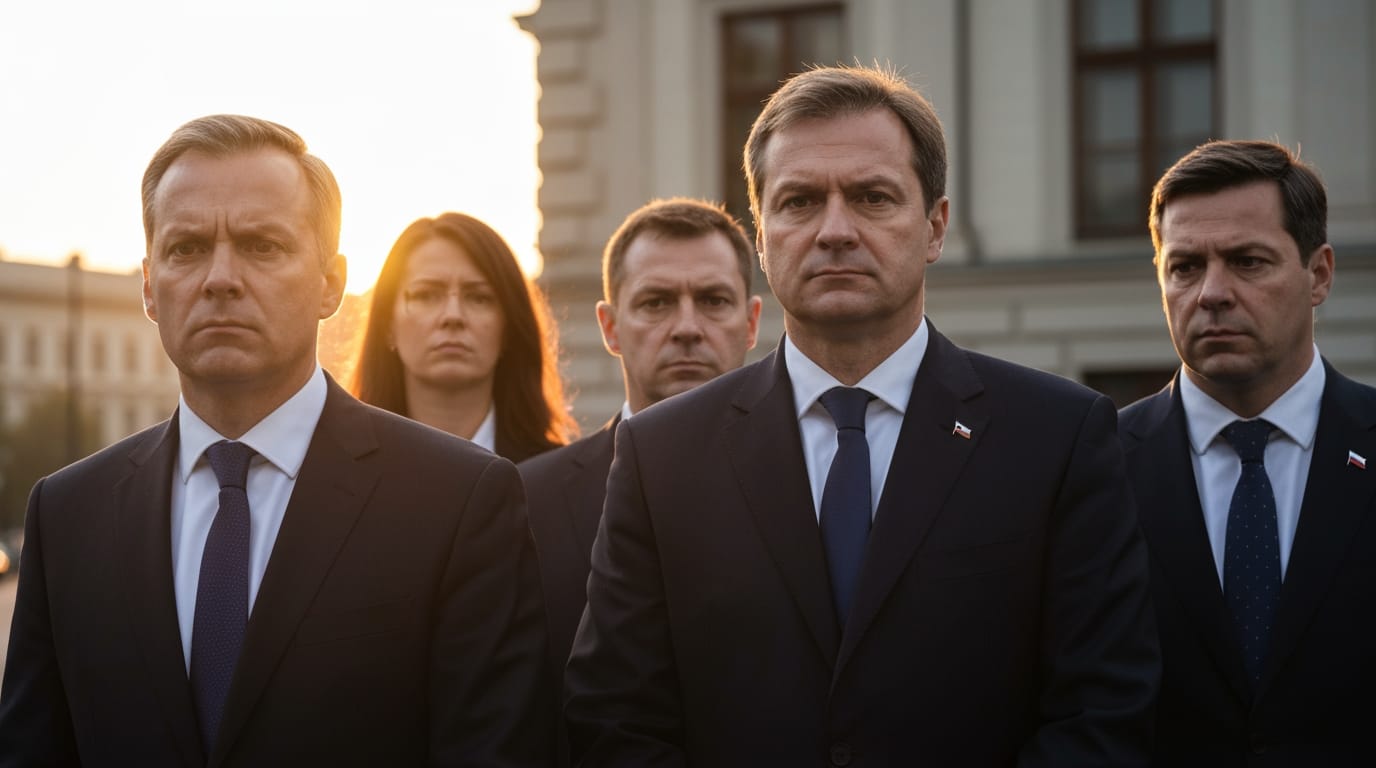
Prague, Czech Republic – A contentious move by the Czech government to abolish the long-standing license fee for public broadcasters, Czech Television (ČT) and Czech Radio (ČRo), and replace it with direct state funding, has triggered a wave of alarm across the nation and within international media circles. Approved by the cabinet and slated for implementation by January 1, 2027, the proposed reform is touted by the government as a modernization effort, but critics warn it could gravely undermine the editorial independence and financial stability of these vital public service institutions. The decision has united journalists, press-freedom advocates, opposition politicians, and thousands of ordinary citizens in opposition, all voicing concerns over potential political leverage and a chilling effect on journalistic autonomy.
The Government's Rationale: Modernization and Fiscal Prudence
Under the leadership of Prime Minister Andrej Babiš's populist ANO party, and with Culture Minister Oto Klempíř of the Motorists party at the forefront, the government has advanced a bill to fundamentally reshape how Czech public media is financed. The current system, which relies on a monthly license fee paid by households and businesses (currently 205 Czech crowns for both TV and radio), is deemed "obsolete" by the administration. Ministers argue that this reform aligns the Czech Republic with practices in other European Union member states that have already moved away from such fees.
Prime Minister Babiš has justified the shift by citing a perceived lack of oversight and cost-saving efforts within ČT and ČRo. He claims the public broadcasters have not pursued necessary economic measures, in contrast to media organizations elsewhere in Europe. Furthermore, abolishing the license fee was a key campaign promise, aiming to reduce the financial burden on citizens. The government insists that the proposed changes will not compromise editorial independence, stating that ČT and ČRo will remain independent legal entities. The new model proposes fixed annual sums for the broadcasters, based on their average license fee income between 2008 and 2024, with an automatic adjustment mechanism for inflation, capped at 5% annually from 2028. Additionally, the Supreme Audit Office (NKÚ) would be granted oversight over the broadcasters' financial management, a role currently performed by their respective broadcasting councils.
Public Broadcasters Sound the Alarm Over Funding Cuts and Autonomy
The government's proposal, however, entails significant financial reductions for both public broadcasters. Czech Television is projected to receive CZK 5.74 billion annually, a decrease of approximately CZK 1 billion from its current license fee income, while Czech Radio's funding would fall by about CZK 400 million to CZK 2.065 billion. This roughly 15% overall cut effectively reverses a fee increase that was implemented just last year, the first in 17 years for ČT.
The heads of ČT and ČRo have vehemently opposed the plan, describing it as "unacceptable" and "almost destructive" for public service broadcasting. They warn of dire consequences, including substantial job losses—estimated at 300-500 at ČT alone—and significant cutbacks in programming. Czech Radio's Director General René Zavoral specifically highlighted potential reductions in regional broadcasting, children's content, and the network of foreign correspondents. Employees of both broadcasters have staged a 24-hour work stoppage to protest the reform, fearing that direct state funding will inevitably lead to political influence over editorial decisions. Their primary concern is that annual allocations from the state budget would render them vulnerable to the ruling coalition's pressures, thereby eroding their hard-won independence.
Opposition and International Scrutiny: A Threat to Democracy?
The proposed media reform has ignited a political firestorm, drawing fierce criticism from opposition parties who pledge to use every available parliamentary tactic to fight the bill. They argue that the plan lacks a clear long-term vision and could amount to the "de facto nationalisation" of public media. Opposition figures frequently point to neighboring Slovakia, where the abolition of license fees was followed by the dissolution of its public broadcaster and its replacement by a new, government-controlled entity, as a chilling precedent.
International media freedom organizations have echoed these grave concerns. Reporters Without Borders (RSF), the International Press Institute (IPI), and other watchdogs have labeled the legislation "absurd," a "drastic funding cut," and a direct assault on the independence of Czech public media. They highlight potential violations of Article 5 of the European Media Freedom Act (EMFA), which mandates "adequate, sustainable and predictable" funding and robust safeguards for the editorial and functional independence of public service media. These organizations have urged the European Commission to scrutinize the bill's compatibility with EMFA principles. The mounting public discontent culminated in a large anti-government rally in Prague in March, where the proposed media reform featured prominently among the grievances of over 200,000 participants. This strong public reaction underscores the high regard in which ČT and ČRo are held, consistently ranking among the most trusted media outlets in the Czech Republic, with trust ratings as high as 59% in a 2025 Reuters Institute survey.
The Uncharted Path Ahead for Czech Public Broadcasting
The bill's journey is far from over. While it has cleared the cabinet, it must still navigate both chambers of the Czech legislature and receive presidential assent before it can become law. Opposition parties have already signaled their intent to employ obstructionist tactics and are considering a challenge to the Constitutional Court.
This proposed reform represents one of the most significant overhauls to Czech public broadcasting since the post-communist era. The government's push for financial efficiency and modernization clashes head-on with profound concerns over media independence and democratic principles. As the debate continues to unfold in parliament and public discourse, the future model and very character of public service media in the Czech Republic hang in the balance, with potentially far-reaching implications for its media landscape and democratic health.


