Germany's Rejuvenated Left Party Dreams of a Socialist Future
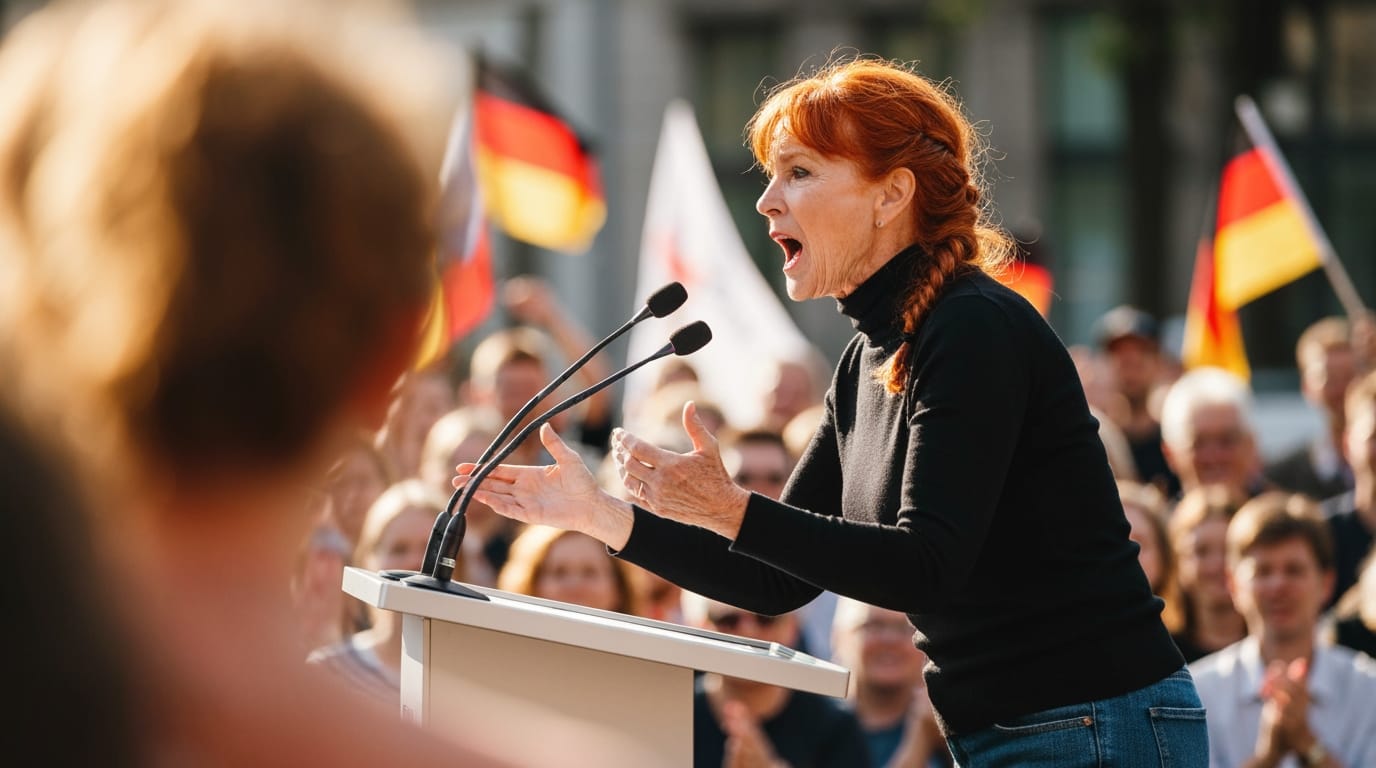
Berlin, Germany – Once on the brink of political irrelevance, Germany's post-communist Left Party, Die Linke, has staged a remarkable comeback, fueled by a surge of youth support and a bold reassertion of its socialist principles. Defying predictions of its demise, particularly after a damaging internal split, the party is now "dreaming big," aiming to fundamentally reshape the German political landscape with ambitious proposals ranging from comprehensive wealth redistribution to a pacifist foreign policy. Its unexpected revival in the 2025 federal election has positioned it as a significant force, challenging established centrist parties and presenting a distinct vision for the nation's future.
The Phoenix from the Ashes: A Surprising Resurgence
Just eighteen months ago, Die Linke appeared to be in terminal decline. The party, a direct descendant of East Germany's ruling Socialist Unity Party (SED), had been grappling with deep internal divisions, particularly over issues like NATO and Russia's war in Ukraine. This turmoil culminated in a dramatic split, with prominent figure Sahra Wagenknecht and nine other Members of Parliament (MPs) departing in October 2023 to form a rival party, the Bündnis Sahra Wagenknecht (BSW). Many observers believed this schism would be the death knell for Die Linke, with polls showing its support plummeting to as low as 3-5%, below the 5% threshold required for parliamentary representation. The party also lost its official parliamentary group status in the Bundestag due to these departures, impacting resources and visibility.
However, Die Linke defied these expectations with an unexpected and strong performance in the February 2025 federal election, securing 8.8% of the vote and 64 seats in the Bundestag. This was its best result since 2017. The turnaround was attributed to a disciplined campaign focused on core issues such as rent control and wealth redistribution, combined with skilled organization and effective outreach. Beyond electoral success, the party experienced a dramatic increase in membership, doubling to over 120,000 within months. This resurgence represents a significant shift, transforming what was once seen as a fading force into a vibrant, albeit still challenging, political entity.
A New Generation's Voice: The Youth Factor
Perhaps the most striking aspect of Die Linke's revival is its remarkable appeal to Germany's youth. In the 2025 federal election, Die Linke emerged as the most popular party among voters aged 18 to 24, capturing an impressive 25% of this demographic, and 27.3% according to some reports, significantly outperforming all other parties, including the far-right AfD and mainstream centrist options. This younger electorate is drawn to Die Linke's platform emphasizing social justice, economic equality, environmental protection, and anti-militarism.
Figures like Heidi Reichinnek, co-leader of Die Linke's parliamentary group and a social media personality, have played a pivotal role in connecting with this demographic. Her engaging style and direct communication resonate with young Germans who are increasingly concerned about issues such as the rising cost of living, climate change, and systemic inequalities. Many young voters express disillusionment with established parties, perceiving them as slow to address pressing social and economic issues. Die Linke's strong stance on LGBTQ+ rights and anti-racism further aligns with the values of a generation committed to inclusivity. This generational shift in political allegiance presents a significant challenge to Germany's traditional political order, forcing mainstream parties to confront the evolving priorities of younger voters.
Bold Policies for a "Better World"
Die Linke's ambitious agenda is rooted in a vision of "democratic socialism," aiming to create a society free from exploitation and oppression. The party advocates for extensive state intervention in the economy and a dramatic redistribution of wealth. Key policy proposals include:
- Wealth Redistribution: The party proposes reintroducing a wealth tax on millionaires and billionaires, with top rates potentially reaching 75% for the super-rich, openly stating a goal to "abolish billionaires." It also seeks a one-time wealth levy of up to 30% on the wealthiest 0.7% of Germans, aiming to generate significant state revenue.
- Affordable Housing: In response to Germany's housing crisis, Die Linke demands a nationwide rent cap, freezing rents for six years, and immediate reductions in high rents in areas with severe shortages. They also advocate for massive public investment in non-profit and cooperative housing construction. The party supports the expropriation of large real estate corporations with more than 3,000 units.
- Social Welfare and Labor Rights: Die Linke aims to increase the minimum wage to €15 per hour, limit the workweek to 40 hours, and advocate for a four-day workweek. They propose a universal public health insurance system, oppose hospital cutbacks, and call for free childcare and school lunches.
- Economic Relief: To address the rising cost of living, the party seeks to abolish VAT on staple foods and hygiene products, implement price controls for energy and food, and introduce "social climate money" of €320 annually. They also push for affordable base rates for electricity and heating, with higher costs for greater consumption, funded by the wealthy. Income tax reforms would significantly reduce burdens on lower earners, making income below €16,800 tax-free and raising the top tax rate to 53%.
- Pacifism and Foreign Policy: Die Linke maintains a staunch anti-militarist stance, rejecting increased defense spending, calling for a transformation of the Bundeswehr into a purely defensive army, and opposing arms exports. They advocate for peaceful conflict resolution, respect for international law, and an end to economic exploitation of the Global South.
These proposals signal a clear intent to challenge the capitalist system and prioritize social and ecological concerns over profit motives.
Navigating a Polarized Landscape: Challenges and Implications
Die Linke's resurgence occurs within a complex and increasingly polarized German political landscape. While the party has garnered significant support, particularly from the youth, it faces considerable hurdles. The simultaneous rise of the far-right Alternative for Germany (AfD) underscores a broader societal polarization. Die Linke actively differentiates itself from the BSW, emphasizing its socially liberal and anti-racist policies, contrasting with BSW's "left conservative" approach and socially conservative stances on immigration. The BSW, led by Sahra Wagenknecht, combines left-wing economic policies with skepticism towards Western sanctions on Russia and opposition to military aid for Ukraine, often drawing voters from both Die Linke and the SPD.
Despite its renewed strength, Die Linke still confronts the traditional reluctance of mainstream parties, such as the Christian Democratic Union (CDU) and the Social Democratic Party (SPD), to form coalitions with them due to ideological differences and historical baggage. However, as the political spectrum fragments, the possibility of Die Linke becoming a "kingmaker" in future coalition negotiations cannot be entirely dismissed. The party's ability to translate its newfound youth appeal into broader and sustained electoral success will be crucial. Furthermore, internal coherence remains vital, as the party must continue to clarify its positions and avoid the internal contradictions that plagued it in the past, particularly regarding participation in state governments that may implement austerity measures.
Conclusion
Germany's Die Linke has emerged from a period of existential crisis with a renewed sense of purpose and an unexpected surge in support, especially among younger generations. Its bold, unashamedly socialist platform, combined with a rejection of mainstream political compromises, has resonated with a demographic seeking fundamental change. While the path ahead is fraught with challenges in a fragmented and polarized political environment, Die Linke's current trajectory suggests it is no longer merely an echo of its communist past but a dynamic force with ambitious dreams for Germany's future, poised to play a potentially significant role in shaping the nation's political discourse and direction.


