Czech Government's Media Overhaul Sparks Fears for Public Broadcaster Independence
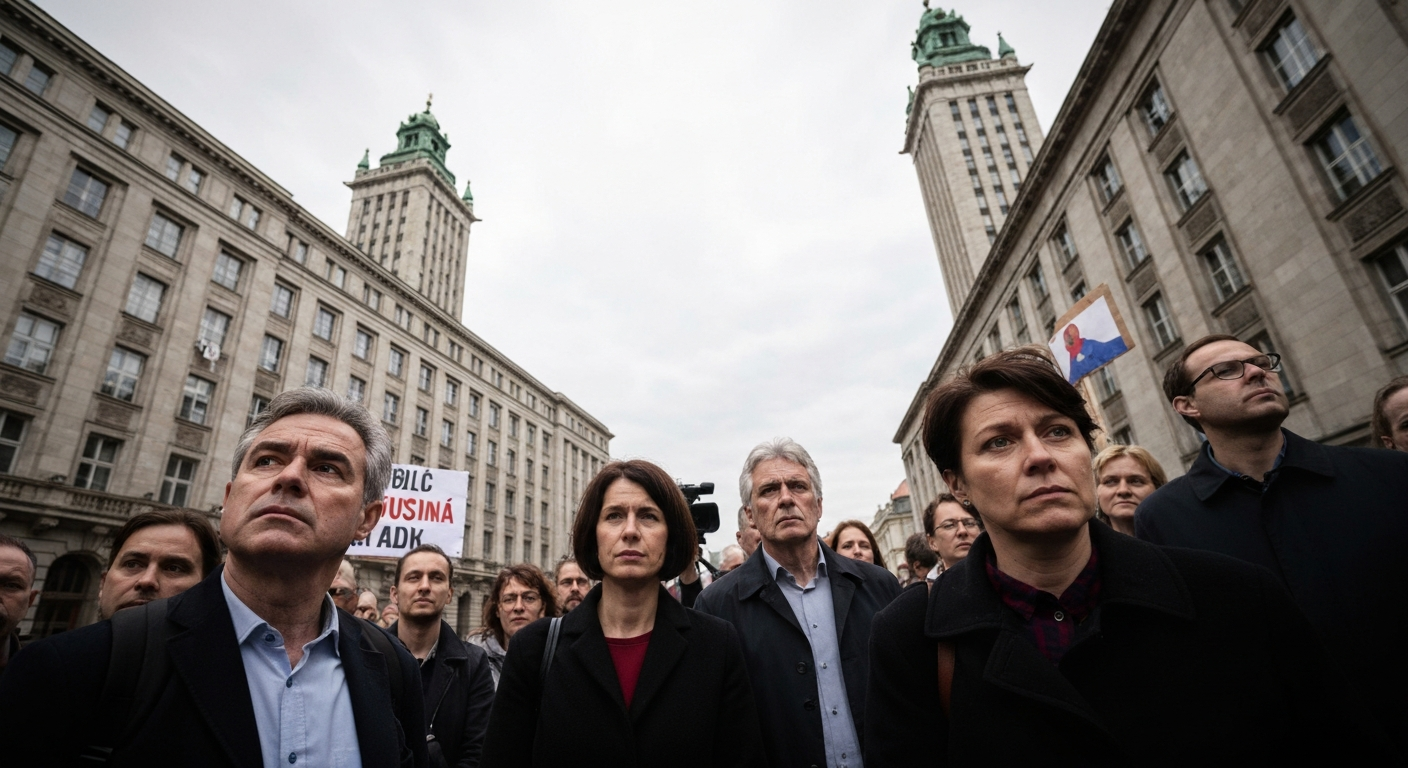
PRAGUE – The Czech Republic's governing coalition has ignited a contentious national debate with proposals to fundamentally alter the funding and governance of the nation's public broadcasters, Česká televize (ČT) and Český rozhlas (ČRo). These legislative initiatives, presented as essential modernizations to ensure the long-term viability and public accountability of media institutions, have simultaneously drawn sharp criticism from opposition parties, journalistic organizations, and international observers who warn of an unprecedented threat to media independence and democratic pluralism in the heart of Europe. As discussions intensify, the future landscape of independent public service media in the Czech Republic hangs in the balance, prompting concerns that a crucial pillar of democratic scrutiny could be undermined by political influence.
A New Era for Media Funding and Oversight
At the core of the government's proposed reforms are two significant changes: a revision of the public media financing model and an alteration to the process of appointing members to the supervisory councils of ČT and ČRo. For years, the license fee, set at 135 Czech crowns (approximately 5.40 euros) per month for television and 45 crowns for radio, has been a central pillar of funding, remaining unchanged since 2008 despite inflation and rising operational costs. The government, led by Prime Minister Petr Fiala's SPOLU coalition, argues that this outdated system has left public broadcasters financially vulnerable and unable to adequately invest in content and technology. Their proposal seeks to increase the monthly fee and broaden its scope to include households with internet access, regardless of television or radio ownership, reflecting the shift in media consumption habits. Proponents suggest this move would stabilize public media's financial footing and ensure its continued ability to provide diverse, high-quality programming across all platforms.
However, the more contentious aspect of the legislative package concerns the composition and appointment procedures for the councils overseeing ČT and ČRo. Currently, the Czech Parliament’s Chamber of Deputies elects members of these councils. The proposed changes would shift the power of appointment primarily to the government, or at least significantly alter the parliamentary election process, potentially reducing the number of parliamentarians required to approve candidates. While the government frames this as a measure to enhance expertise and depoliticize appointments, critics view it as a direct pathway for increased political control. Concerns are particularly acute regarding the potential for politically motivated appointments to key leadership roles within the broadcasters, thereby compromising their editorial autonomy and ability to act as independent watchdogs.
Echoes of Past Battles and the Pursuit of Independence
The current legislative push is not the first instance of political tension surrounding the Czech public media. The nation has a sensitive history regarding media independence, perhaps most notably exemplified by the "media war" of 2000-2001. During that period, an attempt by a politically appointed director to take control of ČT's newsroom led to widespread protests, international condemnation, and a prolonged standoff between journalists and political figures. That crisis ultimately solidified the importance of public media independence as a cornerstone of Czech democracy and a safeguard against authoritarian tendencies. For many, the current proposals evoke a chilling reminder of those times, raising questions about whether lessons from the past have been fully absorbed.
The government maintains that its intentions are benign, aimed at fostering greater transparency and ensuring public media serves the broader public interest more effectively. Culture Minister Martin Baxa has emphasized the need for a modern legal framework that ensures the financial stability of public service media while adapting to the digital age. He argues that the existing system, with its aging infrastructure and stagnant funding, puts ČT and ČRo at a disadvantage compared to commercial rivals and international broadcasters. The government also points to the need for public media to be more responsive to audience needs and technologically advanced, suggesting that the reforms will ultimately strengthen their ability to fulfill their public service mission.
Widespread Alarm from Media Advocates and Opposition
Despite the government's assurances, the proposed changes have been met with a chorus of alarm from a broad spectrum of civil society. Journalists' unions, media freedom organizations such as Reporters Without Borders, and the European Broadcasting Union have all voiced strong concerns, asserting that the reforms could dangerously erode the independence of public service media. They argue that any shift in control over appointments from a broad parliamentary consensus to a more politically concentrated decision-making body inherently risks politicization. Critics contend that these changes could lead to the selection of council members based on political allegiance rather than professional merit, potentially influencing editorial policy and news coverage.
Opposition parties, particularly the ANO movement, have also fiercely criticized the proposals, accusing the government of attempting to seize control of media outlets that have historically offered critical scrutiny of those in power. They highlight the potential for a chilling effect on journalistic independence, where fear of political reprisal could lead to self-censorship and a decline in investigative reporting. These concerns are amplified by the broader European context, where several countries have witnessed governments attempting to exert greater influence over public broadcasters, often leading to accusations of democratic backsliding and a weakening of press freedom. The current debate in the Czech Republic is thus seen not just as an internal matter but as a barometer for media freedom across the continent.
Financial Models, Digital Future, and Public Trust
Beyond the governance concerns, the proposed overhaul of the funding model also carries significant implications. While an increase in the license fee is broadly seen as necessary to ensure public media's financial health, the expansion of its reach to all households with internet access has sparked debate about fairness and practicality. Some argue it is a necessary adaptation to a digital world where traditional broadcast reception is no longer the sole means of content consumption. Others contend that it could unfairly burden households that do not actively consume public media content, or that it could be difficult to enforce equitably.
The long-term success of the reforms hinges not only on their legislative passage but also on their ability to maintain, and ideally enhance, public trust. Public broadcasters play a crucial role in providing impartial information, fostering civic discourse, and supporting cultural diversity. Should the reforms be perceived as a political takeover, rather than a genuine modernization, public confidence could plummet, diminishing the broadcasters' ability to fulfill their vital democratic function. The balancing act between ensuring financial stability, modernizing structures, and safeguarding independence remains the paramount challenge for the Czech government and its legislative partners.
A Critical Juncture for Czech Democracy
As the Czech Parliament grapples with the intricate details of the proposed media legislation, the stakes are undeniably high. The outcome of this debate will not only redefine the operational framework for Česká televize and Český rozhlas but also send a powerful signal about the Czech Republic's commitment to independent journalism and democratic principles. While the government asserts its aim is to fortify public media, its critics warn that the current proposals risk undermining the very foundations of its independence. The path forward demands careful consideration to ensure that any modernization efforts genuinely strengthen public service media without inadvertently paving the way for political influence that could diminish its critical role in a functioning democracy. The eyes of both the Czech public and the international community remain fixed on Prague as this crucial chapter in the nation's media landscape unfolds.
Related Articles

Mounting Frustration Grips Russia as Economic Hardship and War's Toll Deepen
Moscow, Russia – A palpable shift in public sentiment is emerging across Russia, with growing frustration among citizens fueled by a confluence of economic pressures, increasing internet restrictions, and the undeniable...

Germany's Strategic Calculus: Ukraine Aid is an Investment in European Security, Not Charity
Berlin – The ongoing provision of substantial aid to Ukraine by Germany and its allies is increasingly being framed not as an act of altruism, but as a crucial investment in European security and stability. This...