Czechia's Ukraine Stance Undergoes Seismic Shift as New Coalition Takes Helm
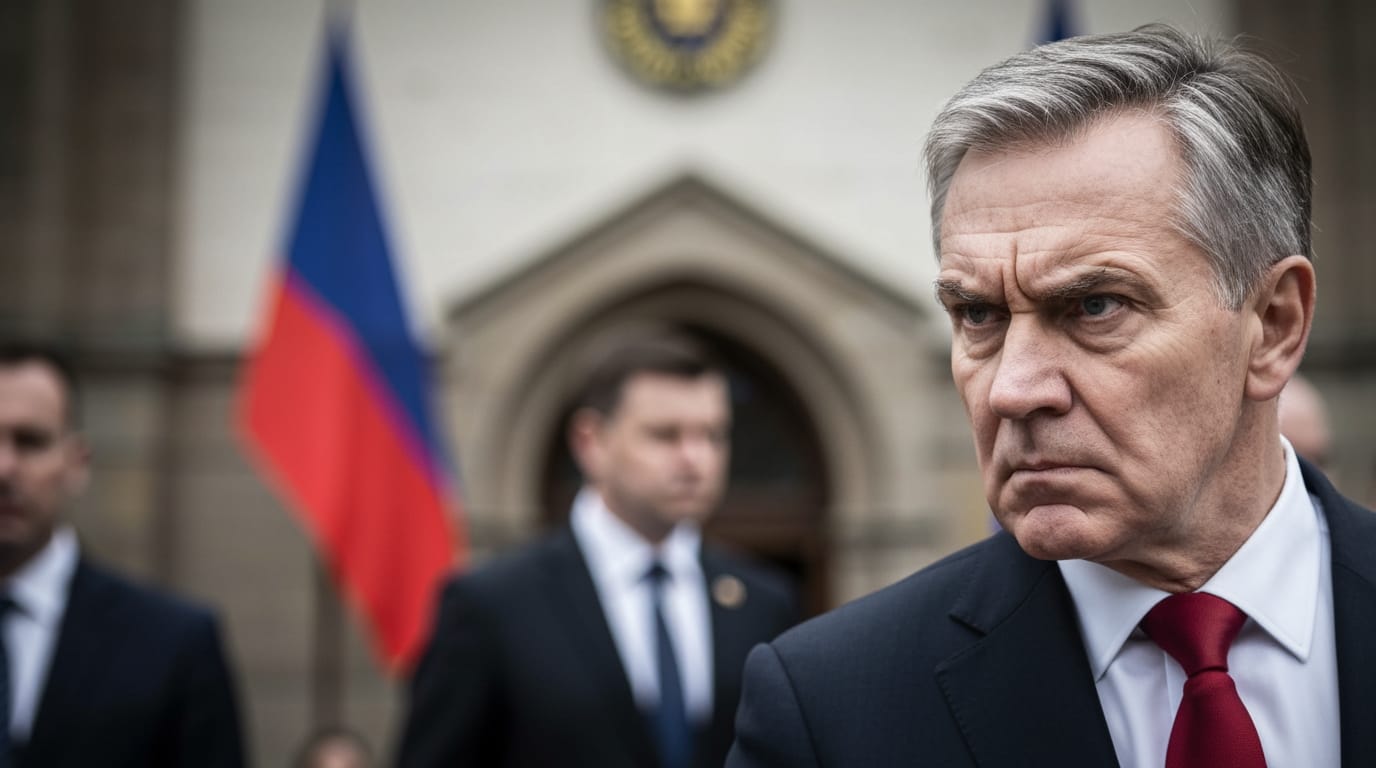
Prague, Czechia – A fundamental reorientation of Czech foreign policy is underway as a new ruling coalition, led by former Prime Minister Andrej Babiš, assumes power, signaling a potential rollback of the nation's staunch support for Ukraine. Following the parliamentary elections in October 2025, the populist ANO movement, in alliance with the far-right Freedom and Direct Democracy (SPD) and the Motorists for Themselves parties, has articulated a platform prioritizing domestic concerns and questioning the extensive aid previously extended to Kyiv. This political pivot, influenced by growing public fatigue and economic pressures, marks a significant departure from the robust pro-Ukrainian stance maintained by the preceding government, raising questions about Czechia's role in European solidarity and its commitment to countering Russian aggression.
A New Political Landscape: The Rise of Babiš and His Allies
The October 3-4, 2025 parliamentary elections ushered in a dramatic change in Czech political leadership. Andrej Babiš's ANO movement secured the most seats, paving the way for a coalition government with the far-right SPD and the Motorists for Themselves parties. This new alignment stands in stark contrast to the previous center-right government led by Petr Fiala, which had positioned Czechia as one of Ukraine's most steadfast European allies. The campaign rhetoric of the incoming coalition, particularly from Babiš, frequently questioned the efficacy and cost of supporting Ukraine, advocating instead for a "Czechia first" approach focused on internal economic recovery. During the election, Babiš explicitly stated his government would no longer contribute state budget funds for weapons to Ukraine and had repeatedly attacked Ukrainian refugees. Adding to the symbolic shift, the SPD, upon securing the chairmanship of the Chamber of Deputies, promptly ordered the removal of the Ukrainian flag from the parliament building.
This shift is not merely rhetorical. While the previous Fiala administration provided almost €286 million in military and humanitarian aid to Ukraine since 2022, and actively coordinated the critical ammunition initiative, the new government's approach is distinctly different. Prime Minister Babiš confirmed in January 2026 that Czechia would continue to coordinate the international ammunition initiative for Ukraine, but critically, it would do so without utilizing state funds. Funding for this pivotal program, which has seen the delivery of millions of artillery shells, is now expected to come exclusively from international partners. Babiš has also voiced opposition to sending Czech troops to Ukraine, emphasizing a preference for training Ukrainian soldiers instead. This strategic recalibration reflects a broader sentiment within the new coalition to distance the country's direct financial and military commitments from the conflict.
Public Sentiment: War Fatigue and Economic Strain
The political realignment in Czechia is deeply intertwined with a noticeable shift in public opinion. After nearly four years of conflict, a growing sense of "war fatigue" has taken hold among Czech citizens, alongside mounting economic concerns. Surveys conducted throughout 2025 revealed a significant decline in public interest in the war and an increasing skepticism toward military aid. A July 2025 STEM survey indicated that 46% of Czech citizens were either not very interested or not interested at all in events in Ukraine, and 49% considered military aid excessive, an increase from 43% in June 2024.
While humanitarian assistance continues to enjoy broad support, with 77% of Czechs backing it according to a February 2025 survey, military support has become a contentious issue. A significant majority, 61%, expressed a preference for a swift ceasefire, even if it meant Ukraine ceding some territory. Furthermore, an October 2025 poll found that approximately 40% of Czechs believed the new government should cease supplying military equipment and ammunition to Ukraine, with 44% also advocating for an end to direct financial assistance. Public interest in the war's developments had waned, with only 43% expressing interest in late 2024, and merely 36% approving of the government's defense-related aid. These figures illustrate a public increasingly prioritizing domestic issues over foreign military interventions.
The backdrop to this evolving sentiment is Czechia's challenging economic environment. High inflation, peaking at 17-18%, and declining real wages had a substantial impact on households, which were also grappling with the effects of high energy prices due to the country's 97% dependence on Russian gas in early 2022. This economic hardship fueled public dissatisfaction and created fertile ground for political narratives that questioned the cost of supporting Ukraine, positioning it as an external burden rather than a strategic imperative. Only 25% of Czechs believed that supporting Ukraine made their country safer, while nearly 50% held the opposite view in a September 2025 poll.
The Ammunition Initiative: A Test of European Coordination
The Czech ammunition initiative, launched under the previous Fiala government, gained international recognition as a vital mechanism for supplying critically needed artillery shells to Ukraine. By April 2025, Czechia had procured and delivered 400,000 shells, following 1.5 million in 2024, and Prague itself contributed €34 million to the effort. The initiative, bringing together over 15 countries, saw Czechia act as a coordinator and intermediary, a role so prominent that the United States reportedly asked Prague to lead the wider "Ammunition Syndicate" for Western supplies.
The new government's decision to continue coordinating the initiative but without state funding represents a nuanced, yet significant, shift. While Babiš's initial campaign rhetoric questioned the initiative as "rotten and overpriced," his current stance allows Czechia to maintain a visible, albeit non-financially contributory, role in this crucial European effort. This compromise likely stems from the strong advocacy for the initiative by figures like President Petr Pavel, who has consistently urged Czech parties to protect the initiative and the country's pro-European foreign policy. The long-term success of the initiative under this new funding model will depend entirely on the sustained commitment of international partners.
Implications for Europe and the Visegrad Group
Czechia's political trajectory and its revised stance on Ukraine have broader implications for European unity and the dynamics within Central Europe. Under the Fiala government, Czechia had emerged as a leading voice in Central Europe advocating for robust support for Kyiv, often contrasting with the more cautious or even obstructionist approaches of Hungary and Slovakia. The new Babiš-led coalition, with its "Czechia first" mantra and skepticism towards extensive aid, risks aligning Prague more closely with Budapest and Bratislava, potentially forming a new axis of "spoiler states" within the European Union.
This shift could complicate EU decision-making, particularly on sanctions against Russia and further aid packages for Ukraine, and could erode Czechia's credibility among its Western partners. Analysts suggest that while the new government may not question Czechia's fundamental membership in NATO and the EU, a scaled-back commitment to Ukraine is expected. The previous government had also approved the continuation of the "Ukraine Program" for 2026-2030, with an annual allocation of CZK 1 billion for humanitarian, stabilization, reconstruction, and economic assistance, involving Czech companies in rebuilding efforts. The extent to which the new government will fully embrace and fund this long-term commitment remains a critical question, despite Foreign Minister Lipavský's previous assertions that supporting Ukraine is key for Czechia's own security.
Conclusion
The change in Czechia's government marks a pivotal moment for the nation's foreign policy and its relationship with Ukraine. The preceding years saw Prague as a vocal and active supporter of Kyiv, playing a crucial role in mobilizing European assistance, particularly through its innovative ammunition initiative. However, the rise of a new coalition under Andrej Babiš, fueled by domestic economic challenges and public war fatigue, has ushered in an era of recalibration. While coordination of the vital ammunition initiative will continue, the withdrawal of direct state funding signals a clear shift towards prioritizing national interests and reducing overt financial commitment to the Ukrainian war effort. This new direction, while reflecting internal democratic processes and public sentiment, inevitably raises concerns about the future of European solidarity and the collective response to the ongoing conflict in Ukraine, placing Czechia at a crossroads in its international engagement.


