Danish PM Rejects U.S. Annexation of Greenland, Calls for Arctic Defense Partnership
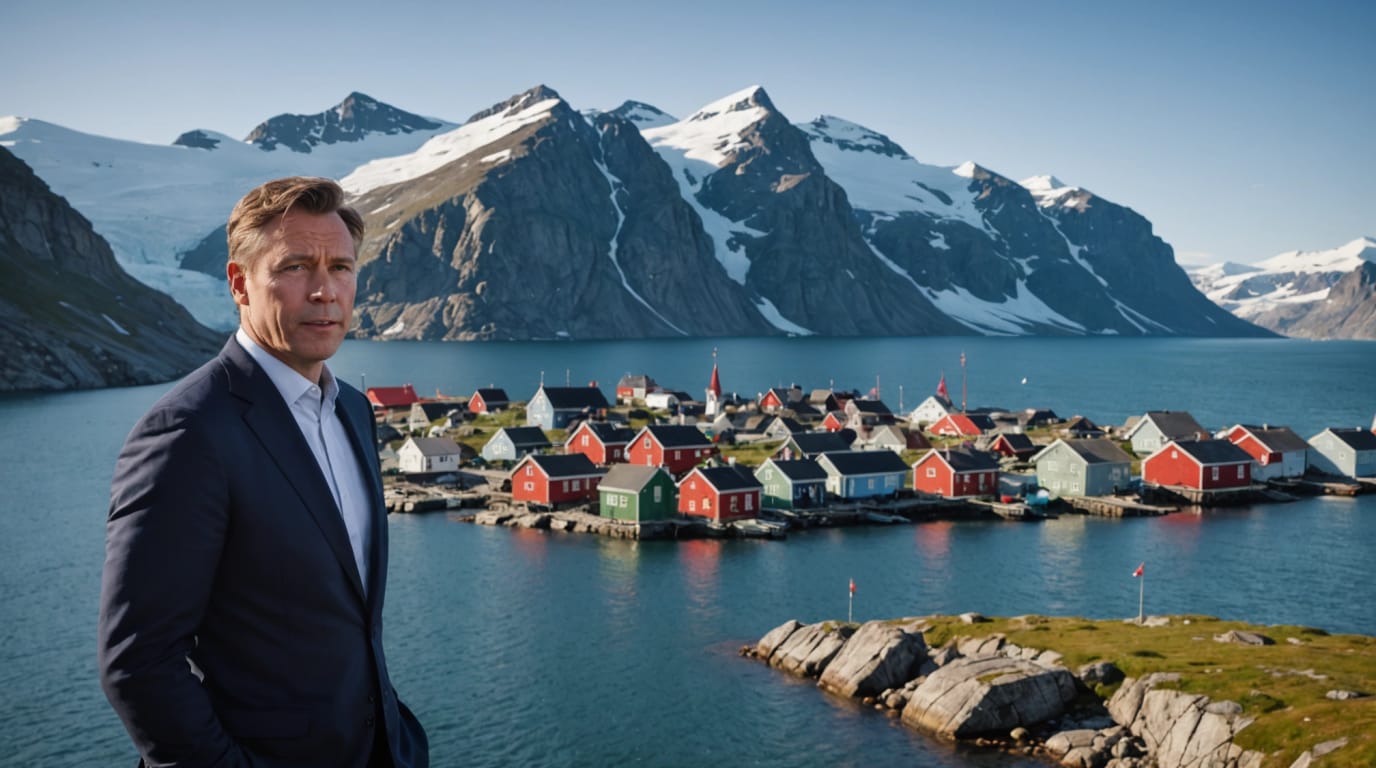
NUUK, Greenland — Danish Prime Minister Mette Frederiksen on Thursday firmly rejected any notion of the United States annexing Greenland, a semi-autonomous Danish territory, while simultaneously advocating for increased collaboration on Arctic defense. Her remarks come amid heightened geopolitical interest in the Arctic region and recent tensions between Denmark and the U.S. over the strategic island.
Frederiksen, speaking from Nuuk during a three-day visit, addressed the U.S. directly, emphasizing the importance of respecting international law and the established world order. Her visit follows U.S. Vice President JD Vance's recent trip to Greenland, which drew criticism from Danish and Greenlandic officials after he accused Denmark of inadequately safeguarding the island.
"You Cannot Annex Another Country"
At a press conference held aboard a Danish military vessel, Frederiksen stated unequivocally, "You cannot annex another country, not even with an argument about security." She stressed that national borders, state sovereignty, and territorial integrity are fundamental principles of international law.
Instead of annexation, Frederiksen extended an invitation to the U.S. to strengthen security in the Arctic in partnership with Denmark and Greenland. "If you want to be more present in Greenland, Greenland and Denmark are ready," she said. "And if you would like to strengthen the security in the Arctic, just like us, then let us do it together."
Tensions and Historical Context
Frederiksen's strong stance follows months of speculation and concern sparked by repeated suggestions from U.S. figures about the possibility of the U.S. acquiring Greenland. These suggestions have been met with resistance from both Denmark and Greenland, where a recent survey indicated that 85% of the population opposes joining the U.S.
The relationship between Greenland and Denmark has also been strained in recent years due to increased awareness of historical mistreatment of Greenlanders under Danish colonial rule. These historical factors add complexity to the current discussions about Greenland's future and its relationship with both Denmark and the United States.
Greenland's Strategic Importance
Greenland, the world's largest island, holds significant strategic importance due to its location between the Arctic and Atlantic oceans and its abundance of natural resources, including minerals. As the Arctic ice melts, access to these resources and the island's strategic position have drawn increased international attention, leading to greater competition for influence in the region.
Incoming Greenlandic Prime Minister Jens-Frederik Nielsen, who won last month's parliamentary election, echoed Frederiksen's sentiments, emphasizing the importance of unity between Denmark and Greenland in the face of external pressure. He also asserted Greenland's autonomy, stating that the island is "run by the Greenlandic people, and that will never change."
U.S. Response and Future Cooperation
Following a meeting with Danish Foreign Minister Lars Lokke Rasmussen on the sidelines of a NATO meeting in Brussels, U.S. Secretary of State Marco Rubio reaffirmed the "strong relationship" between the U.S. and Denmark and acknowledged Greenland's right to self-determination, according to the State Department.
Despite the disagreement over annexation, both Denmark and the U.S. appear to be seeking ways to strengthen their cooperation in the Arctic. Frederiksen's invitation for a closer dialogue and joint efforts to enhance Arctic security suggests a path forward based on partnership and mutual respect for sovereignty.
A Path Forward in the Arctic
The situation highlights the delicate balance between Greenland's desire for autonomy, Denmark's role as its protector, and the United States' strategic interests in the Arctic. While the prospect of annexation appears to be off the table, the need for collaboration on Arctic security and resource management remains a critical issue for all three parties. The future of Greenland will likely depend on navigating these complex relationships and finding common ground that respects the island's sovereignty and promotes stability in the Arctic region.


