Deadly Crackdown on Alawite Protests in Syria's Coastal Heartland Deepens Post-Assad Instability
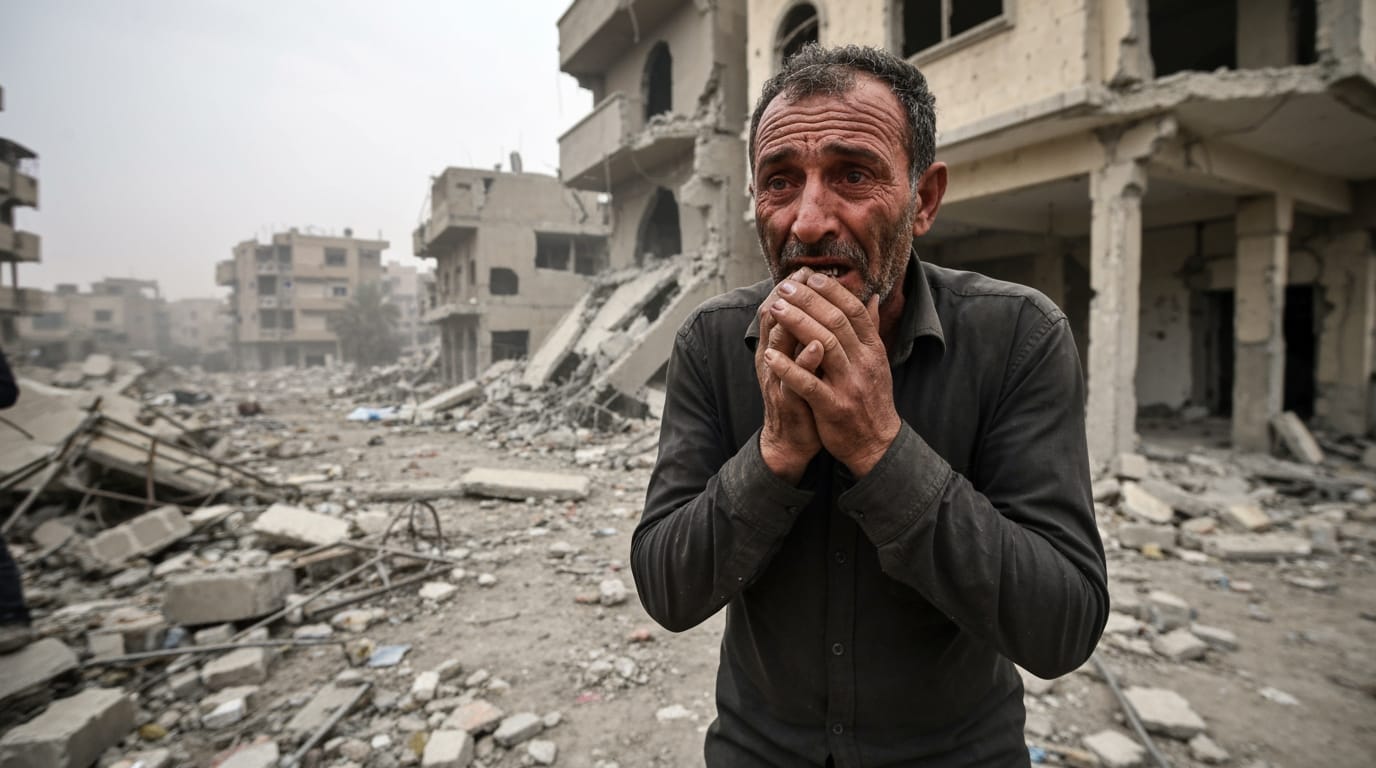
LATAKIA, Syria – Security forces clashed with Alawite protesters in Syria's coastal cities on Sunday, resulting in the deaths of at least two, and possibly three, individuals, according to a war monitor and state media. The violence erupted as members of the Alawite minority, once the bedrock of the fallen Assad regime, took to the streets of Latakia, Tartus, Homs, and Hama to demand security, the release of detainees, and political rights in the wake of a deadly mosque bombing targeting their community two days prior. The incident underscores the severe challenges facing Syria's transitional government in navigating deeply entrenched sectarian divisions and widespread grievances following the collapse of the Bashar al-Assad regime a year ago.
The Escalating Confrontation in Latakia
The Sunday protests, primarily concentrated in Latakia, the spiritual heartland of the Alawite community, quickly escalated into deadly confrontations. The Britain-based Syrian Observatory for Human Rights (SOHR) reported that Syrian security forces killed two people while dispersing demonstrations in Latakia. Conversely, Syria's state media, SANA, presented a sharply different account, claiming three individuals were killed and 60 wounded, but attributed the casualties to "remnants of the former regime" who allegedly attacked security forces and civilians with gunfire, knives, and stones. A Reuters reporter on the scene in Latakia observed gunshots ringing out from an unidentified location approximately two hours into the protest, after which security forces fired into the air, leading to chaos and protesters carrying away wounded individuals. Latakia's health authorities reported injuries from bladed weapons, stones, and gunfire, which they too blamed on elements associated with the former regime. This stark discrepancy in reporting highlights the deeply polarized narratives surrounding internal unrest in post-Assad Syria.
The protests, which also saw unrest in Tartus, Homs, and Hama, were prompted by a bombing at an Alawite mosque in Homs on Friday, which killed eight worshippers and wounded 18 others during prayers. The Sunni Islamist militant group Saraya Ansar al-Sunna claimed responsibility for the Homs attack, further inflaming sectarian tensions. In response to the growing unrest, Syria's defense authorities deployed army units, supported by armored vehicles, into the centers of Latakia and Tartus on Sunday to "restore security and stability" after what they described as a surge in attacks by "outlawed groups."
Roots of Resurgent Alawite Discontent
The recent surge in Alawite demonstrations is rooted in a profound sense of insecurity and marginalization that has afflicted the community since the fall of President Bashar al-Assad's government in December 2024. For over half a century, the Alawites, a Shiite Muslim sect, held disproportionate power within Syria's military, intelligence, and political structures under the Assad family's rule. However, even under Assad, the community experienced significant hardships, including mass conscription during the civil war that led to a disproportionate loss of young Alawite men and widespread poverty among many families.
With the swift collapse of the Assad regime in December 2024, precipitated by an offensive led by the Islamist rebel group Hayat Tahrir al-Sham (HTS), the Alawite community found itself in a precarious position. Feared reprisals for their perceived association with the former regime quickly materialized. In March 2025, coastal areas witnessed massacres targeting Alawite civilians, with various reports indicating hundreds to over 1,700 deaths. Subsequent months saw dozens of Alawite women disappear under suspicious circumstances or kidnapped, and communities looted and burned. Despite assurances from the new HTS-led authorities that Alawites would be protected and that perpetrators of crimes would be held accountable, deep-seated fears and ongoing violence have fueled widespread discontent.
A Community's Urgent Demands
The current protests, described by some monitors as a "peaceful Alawite uprising," articulate a clear set of grievances and demands. Chief among them is the call for enhanced security and protection from sectarian attacks and kidnappings that have plagued their communities since Assad's ouster. Protesters also clamored for the release of Alawite detainees, many of whom are former military personnel or those affiliated with the previous regime, now held by the new government. Reports suggest that nearly 9,000 mostly Alawite former military personnel are still detained after surrendering to the new government.
Crucially, the demonstrations have included calls for a decentralized political system or federalism for Syria. This demand reflects a growing desire for self-governance and greater autonomy within the Alawite-majority regions, seeking to safeguard their rights and ensure their representation in the country's future. The Supreme Alawite Islamic Council, led by Sheikh Ghazal Ghazal, a vocal figure outside Syria, has been instrumental in organizing these protests and advocating for these demands, including an end to sectarian discrimination.
Implications for Syria's Fragile Future
The deadly crackdown on Alawite protests in a region historically loyal to the state apparatus, albeit under the previous regime, presents a significant challenge to the new HTS-led transitional government. This unrest signals a deepening instability across Syria, particularly as the country attempts to transition from decades of authoritarian rule to a more inclusive governance model. The conflicting narratives surrounding the killings—with state media blaming "remnants" of the former regime and monitors pointing to security forces—further complicate efforts to establish trust and accountability.
The demands for federalism and protection from sectarian violence highlight the urgent need for the new authorities to address the grievances of minority communities. While the HTS leader, Ahmad al-Sharaa, has publicly called for pan-Syrian unity and assured that Alawites will be part of the new Syria, the reality on the ground, marked by ongoing attacks and violent suppressions, casts a long shadow over these pronouncements. The potential for further fragmentation along sectarian lines remains a critical concern, threatening to prolong conflict and hinder the establishment of a stable, unified Syrian state. The success of Syria's transition will hinge on the new government's ability to forge a shared national identity and protect the rights of all its diverse communities, including those perceived to have been tied to the former regime.
The violence in Latakia underscores the perilous path ahead for Syria, where long-simmering resentments and the immediate trauma of recent conflicts continue to fuel unrest. As the country grapples with building a new order, the government's response to the legitimate demands and anxieties of its Alawite population will be a critical test of its commitment to an equitable and peaceful future for all Syrians.