Deadly Raid on Gaza Aid Flotilla Ignites International Fury
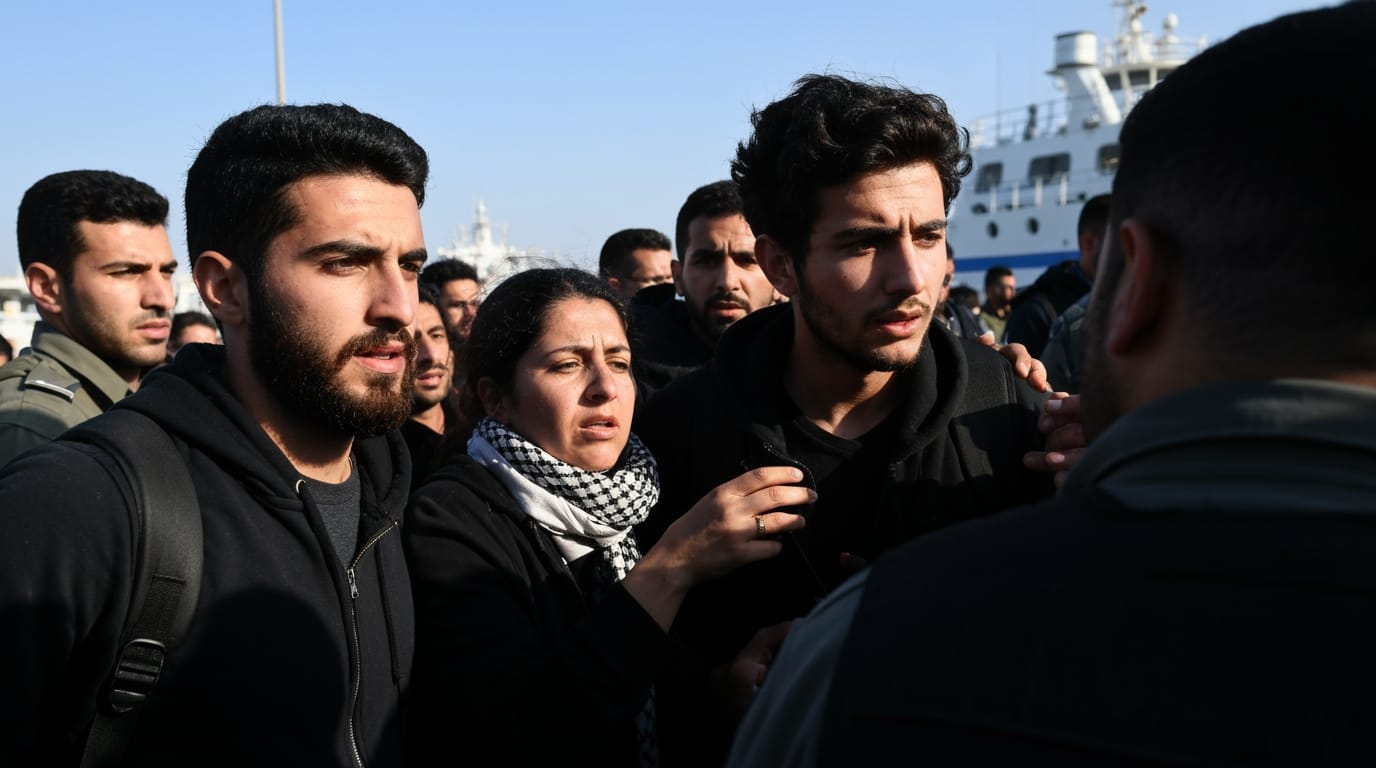
Mediterranean Sea, May 31, 2010 – An Israeli commando raid on a flotilla attempting to deliver humanitarian aid to the blockaded Gaza Strip in international waters resulted in the deaths of 10 activists and dozens of injuries, sparking immediate and widespread international condemnation. The predawn operation against the six-ship "Freedom Flotilla," particularly the Turkish-flagged Mavi Marmara, drew fierce criticism from governments, international bodies, and human rights organizations, profoundly straining diplomatic relations and reigniting debate over the legality and humanitarian impact of Israel's blockade of Gaza.
The Deadly Encounter at Sea
In the early hours of May 31, 2010, Israeli naval commandos intercepted the Gaza Freedom Flotilla approximately 72 nautical miles (about 133 kilometers) off the coast of Gaza in international waters. The flotilla, organized by the Free Gaza Movement and the Turkish Foundation for Human Rights and Freedoms and Humanitarian Relief (IHH), was carrying approximately 10,000 tonnes of humanitarian aid and construction materials, with the stated aim of breaking Israel's naval blockade on the Gaza Strip. Despite radio warnings from the Israeli Navy to alter course to the Israeli port of Ashdod, the flotilla continued towards Gaza.
The boarding operation turned deadly on the Mavi Marmara, the largest ship in the convoy, which carried more than 500 activists. Israeli forces descended from helicopters and boarded from speedboats. Accounts of the events diverge sharply. Israeli officials maintained that their commandos faced organized and violent resistance upon boarding, with activists attacking them with metal rods, knives, and other makeshift weapons. They claimed soldiers used force in self-defense after three commandos were captured and mistreated. Activists on board, however, alleged that Israeli forces opened fire before boarding, and that the violence used was disproportionate and unwarranted. Turkish television footage reportedly showed commandos being ambushed by activists on deck, while activists asserted they were responding to an armed assault.
Ultimately, nine activists were killed during the raid, with another dying from his wounds four years later, bringing the total to ten fatalities. Dozens more were wounded, including Israeli soldiers. Autopsy reports commissioned by Turkey indicated that many victims sustained multiple gunshot wounds, some at close range or in the back of the head, challenging Israel's assertion of purely self-defensive fire.
A World Reacts: Widespread Condemnation
The raid triggered an immediate and forceful international backlash. The United Nations Security Council convened an emergency meeting and condemned "those acts resulting in civilian deaths," calling for a "prompt, impartial, credible and transparent investigation conforming to international standards." United Nations Secretary-General Ban Ki-moon called for a full investigation, stating that the underlying problem was the "counter-productive, unsustainable and wrong" siege of Gaza.
Diplomatic fallout was particularly severe between Israel and Turkey, previously strong allies. Turkish President Abdullah Gül described the raid as an "attack on Turkey," and Ankara recalled its ambassador, signaling a significant deterioration in relations. Many countries around the world, including a dozen Latin American nations and 23 European countries, issued condemnations or protests against Israel's actions. Several countries, including Ecuador, Nicaragua, South Africa, and Turkey, downgraded diplomatic relations or withdrew ambassadors. Mass demonstrations erupted globally, protesting Israel's use of force and its blockade of Gaza.
The Blockade and Competing Narratives
The incident brought renewed international scrutiny to Israel's blockade of the Gaza Strip, which had been in place since Hamas took control of the territory in June 2007. Israel maintained that the naval blockade was a necessary security measure to prevent weapons and military equipment from reaching Hamas and other militant groups in Gaza, arguing that breaching it would create an "Iranian port in Gaza" and enable the smuggling of numerous weapons. Israeli officials further asserted that the flotilla's primary objective was not humanitarian aid but a political provocation aimed at breaking the blockade. They pointed to offers to deliver aid via Israeli ports, which were reportedly rejected by flotilla organizers.
Conversely, the flotilla organizers and their supporters argued that the blockade constituted collective punishment of Gaza's civilian population, severely restricting the movement of goods and people and leading to a dire humanitarian situation. They highlighted the significant humanitarian needs in Gaza, including shortages of basic construction materials, medical supplies, and food, and high unemployment rates. The activists viewed their mission as a peaceful, civilian effort to deliver essential supplies and draw attention to the blockade's impact.
Conflicting Reports and Lingering Questions
The international community initiated several investigations into the raid, yielding differing conclusions that underscored the contentious nature of the event. A report by the United Nations Human Rights Council (UNHRC) in September 2010 deemed the Israeli raid illegal, stating that Israel's actions were "disproportionate" and "betrayed an unacceptable level of brutality," with some evidence of "wilful killing." The UNHRC report found no offensive weapons on board the flotilla ships, save for a few catapults.
In contrast, a parallel inquiry commissioned by UN Secretary-General Ban Ki-moon, known as the Palmer Report (chaired by former New Zealand Prime Minister Geoffrey Palmer), presented a more nuanced view in September 2011. While criticizing Israel for using "excessive and unreasonable" force that resulted in "unacceptable" loss of life on the Mavi Marmara and for "significant mistreatment" of passengers, the Palmer Report also concluded that Israel's naval blockade of Gaza was legal and a "legitimate security measure" under international law. It stated that the flotilla "acted recklessly" in attempting to breach the blockade and that Israeli forces faced "significant, organized and violent resistance" from some passengers, justifying the initial use of force in self-defense. However, the report also questioned the intensity of Israel's response once control was established.
These conflicting reports highlighted the deep divisions within the international community and complicated efforts to reach a consensus on accountability and future actions.
A Decade of Disagreement and Humanitarian Concern
The Mavi Marmara incident and the subsequent global outrage left a lasting imprint on regional politics and international law. It severely damaged Israel's relationship with Turkey, leading to a prolonged diplomatic freeze and a significant decline in bilateral cooperation, though Israel later offered compensation to the victims' families as part of a reconciliation deal in 2016.
The events of May 2010 intensified global awareness and debate surrounding the humanitarian situation in Gaza and the legality of the blockade. While Israel has since eased some restrictions, the core arguments over the blockade's necessity versus its humanitarian cost continue to resurface with subsequent crises and aid efforts. The incident remains a poignant reminder of the complexities of the Israeli-Palestinian conflict, the challenges of enforcing blockades in international waters, and the often tragic human cost of geopolitical tensions.


