NATO Secretary General Dismisses Concerns Over U.S. Troop Adjustments, Urges Stronger European Defense
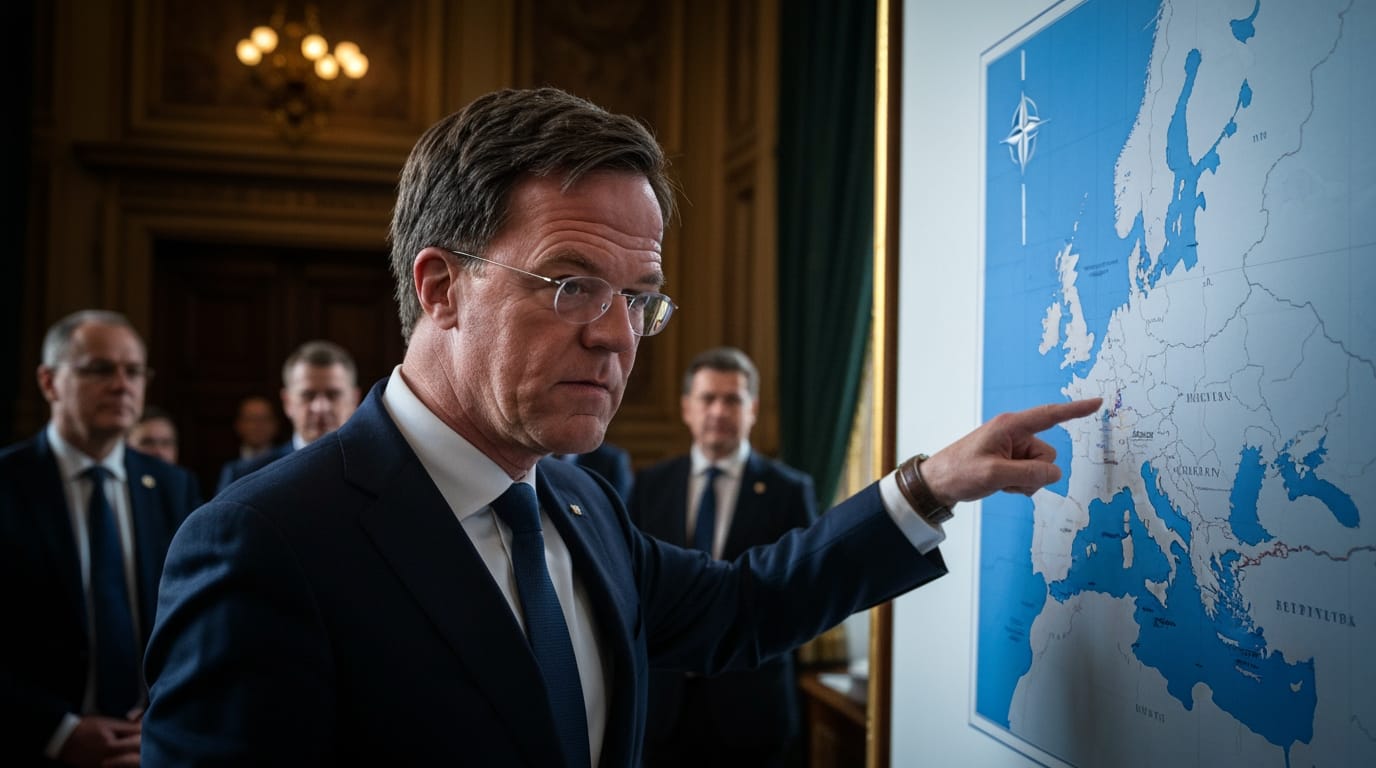
Brussels, Belgium – NATO Secretary General Mark Rutte has asserted that recent adjustments to the United States' military presence in Europe will not undermine the alliance's defensive capabilities, framing the changes as a logical evolution towards a more robust and self-reliant European pillar within NATO. His remarks come amidst a complex geopolitical landscape, with Washington recalibrating its global strategic focus and European nations accelerating efforts to bolster their own defense spending and operational readiness.
The pronouncements from Rutte, coupled with similar assurances from NATO's top military commander, aim to allay anxieties that have arisen following decisions by the U.S. to withdraw forces from the continent. These developments underscore a pivotal moment for the transatlantic alliance, pushing European members to significantly enhance their military contributions and strategic autonomy while maintaining a unified front against evolving threats.
A Strategic Rebalancing, Not a Retreat
Rutte emphasized that the reduction of U.S. troops, including the recent decision to pull 5,000 personnel from Germany and halt the deployment of a 4,000-strong armored brigade combat team to Poland, represents a "gradual and structured" process. He clarified that these are primarily "rotational forces" and their adjustments will not compromise NATO's overarching defense plans. "As allies build up their capability, the United States is able to pull capability back and use it for other global priorities, so I'm very comfortable with where we are," stated U.S. General Alexus Grynkewich, NATO's Supreme Allied Commander Europe, on May 19.
This reorientation, according to Rutte, aligns with Washington's broader strategic pivot towards the Indo-Pacific region, a shift that has been openly discussed for some time. Far from signaling an abandonment, Rutte maintains that the U.S. remains deeply committed to European security, including through nuclear deterrence and conventional military contributions. This perspective highlights a conscious effort to foster a more equitable distribution of defense responsibilities, a long-standing point of contention within the alliance.
Historical Context and Evolving Threats
The North Atlantic Treaty Organization, established in 1949, was founded on the bedrock principles of collective security, primarily to deter Soviet expansionism and prevent the resurgence of militarism in post-World War II Europe. The U.S. commitment to European defense has been a cornerstone of this alliance, providing a crucial "nuclear umbrella" and a substantial military presence throughout the Cold War and its aftermath. However, discussions about burden-sharing and the disproportionate contribution of the U.S. are not new to NATO's history.
In recent years, the geopolitical landscape has undergone significant changes. Russia's actions in Ukraine have served as a stark reminder of persistent threats on Europe's eastern flank, prompting NATO to bolster its deterrence and defense posture. Since 2014, the alliance has implemented numerous measures, including increased defense spending, modernized capabilities, and enhanced readiness initiatives. These efforts have been further intensified following Russia's full-scale invasion of Ukraine in 2022, leading to the deployment of additional battlegroups and commitments to provide forces with greater speed and agility.
Europe Steps Up: Increased Spending and Self-Reliance
A critical element underpinning Rutte's confidence is the tangible commitment by European and Canadian allies to significantly increase their defense investments. At a NATO summit in The Hague last year, member states pledged to raise defense spending to 5% of their Gross Domestic Product (GDP) by 2035, a substantial increase from the previous 2% target. Rutte observed that European nations have "gotten the message loud and clear" regarding the need to shoulder greater responsibility for their own defense.
This renewed focus on self-reliance extends beyond mere financial commitments. European countries are actively working to improve their military capabilities, streamline logistical agreements, and enhance interoperability within the alliance. Efforts include ensuring the implementation of bilateral agreements for the use of military bases and prepositioning assets in critical regions. This strategic shift aims to create a "stronger Europe within a stronger NATO," where European allies take a more prominent role in conventional defense, complemented by continued American power.
Lingering Concerns and the Path Forward
Despite the optimistic assessments from NATO leadership, the manner of the recent U.S. troop withdrawal announcements has raised some concerns among allies. The suddenness of the moves, particularly the withdrawal from Germany, has prompted worries about U.S. President Donald Trump's broader commitment to the alliance. These decisions, which followed disagreements between President Trump and German Chancellor Friedrich Merz regarding the war in Iran, highlighted underlying tensions that require careful diplomatic navigation.
Experts suggest that a significant U.S. drawdown could expose existing structural weaknesses in Europe's defense architecture, particularly in specialized areas like strategic airlift, intelligence, surveillance, and reconnaissance (ISR), aerial refueling, and integrated air and missile defense – capabilities still heavily reliant on American assets. Furthermore, divergent threat perceptions among Eastern and Western European members could complicate burden-sharing and procurement coordination, particularly as defense spending rises unevenly across the continent.
Conclusion: A New Chapter for Transatlantic Security
The evolving dynamic within NATO, marked by U.S. troop adjustments and a determined push for greater European defense autonomy, signifies a new chapter for transatlantic security. While the immediate withdrawals have sparked debate, NATO Secretary General Mark Rutte's assurances, backed by the alliance's top military commander, underscore a strategic evolution rather than a fundamental fracture. The emphasis on a "gradual and structured" approach, coupled with Europe's increasing defense investments and commitments, aims to forge a more balanced and resilient alliance.
The path forward will require sustained political will, continued investment in critical capabilities, and enhanced coordination among allies. The ultimate goal remains a NATO that is robust and adaptable, capable of deterring aggression and defending its members, with a stronger European pillar contributing significantly to collective security in an increasingly unpredictable world.


