German Authorities Apprehend Two in High-Tech Espionage Probe Amid Rising Concerns Over Chinese Intelligence Operations
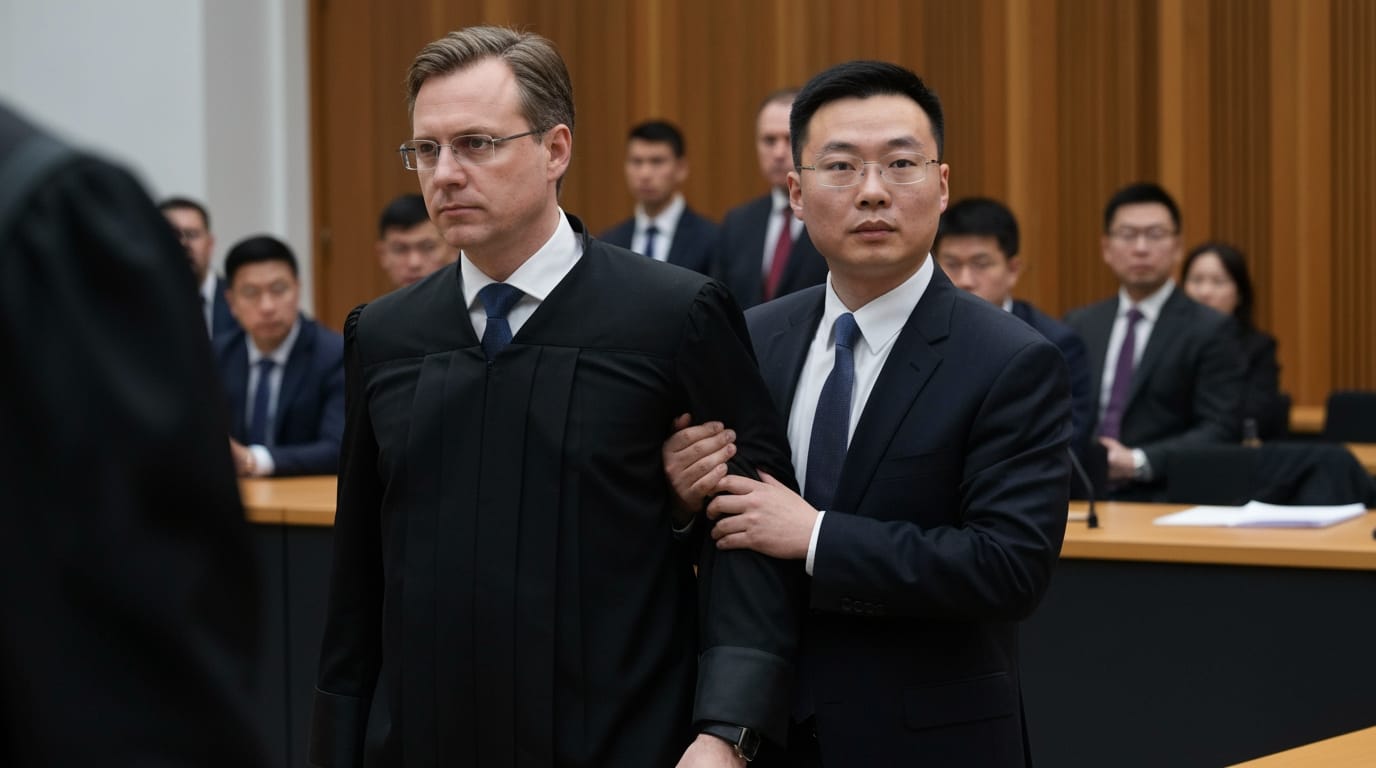
BERLIN, Germany – German federal prosecutors have announced the arrest of a married couple on suspicion of spying for a Chinese intelligence agency, marking the latest development in Berlin’s escalating efforts to counter foreign espionage. The arrests, made on Wednesday, May 20, 2026, come as German authorities increasingly warn of sophisticated attempts by state actors to acquire sensitive high technology and intellectual property. The couple is accused of systematically gathering information with potential military applications from German academic and research institutions.
The apprehension of the two individuals, identified only as Xuejun C. and Hua S. in adherence to German privacy laws, underscores a heightened focus by German counter-intelligence on the illicit transfer of critical technologies. Prosecutors allege that the couple's activities centered on establishing contacts with scientists across various fields, including aerospace engineering, computer science, and artificial intelligence, to obtain strategically valuable information. This incident follows a series of warnings from Germany's domestic intelligence agency regarding the pervasive nature of state-sponsored espionage aimed at its advanced industrial and scientific sectors.
Elaborate Network and Deceptive Tactics Uncovered
The allegations against Xuejun C. and Hua S. detail a calculated strategy to penetrate German scientific circles and funnel crucial research to China. According to federal prosecutors, the couple actively sought out German scientists and researchers, often employing deceptive tactics to conceal their true intentions. They are suspected of posing as interpreters or even employees of an automobile manufacturer, using these covers to gain access and build trust within academic environments.
A particularly concerning aspect of their alleged operation involved luring German scientists to China under false pretenses. Prosecutors claim these scientists were invited to give what were ostensibly paid lectures to civilian audiences. However, these gatherings were reportedly attended by representatives from state-owned defense companies, suggesting a deliberate effort to extract information for military purposes under the guise of academic exchange. The specific focus on fields like aerospace engineering, computer science, and artificial intelligence highlights the strategic importance of these dual-use technologies, which possess both civilian and military applications.
A Broader Pattern of Espionage
These recent arrests are not isolated but rather indicative of a persistent and expanding pattern of alleged Chinese espionage activities targeting Germany. Just over two years prior, in April 2024, German authorities arrested three other individuals, including a married couple identified as Herwig F. and Ina F., along with an associate, Thomas R., on similar charges of spying for China. That case involved allegations of passing technical military know-how to Chinese authorities, including information on machine part technology for powerful marine engines used in warships and the unauthorized export of a special laser. The group allegedly operated a company that entered into cooperation agreements with German universities, preparing studies that ultimately served the interests of the Chinese Ministry of State Security (MSS).
Intelligence officials have long cautioned that such cases represent merely "the tip of the iceberg" of foreign spy rings operating within Germany. The German government has observed an increase in Chinese espionage activity, which poses significant security threats to numerous vital sectors. These incidents underscore a strategic vulnerability where open academic and industrial environments can be exploited for geopolitical and military gain.
Germany's "De-risking" Strategy and Mounting Concerns
The recent arrests reinforce Germany's growing apprehension over technology transfer and the broader implications of its economic entanglement with China. The German government, under Chancellor Friedrich Merz, has openly pursued a strategy of "de-risking" its economic ties with Beijing. This approach seeks to reduce dependencies and safeguard critical infrastructure and technological advantages, even as China remains Germany's top trading partner. Chancellor Merz's visit to China in February, preceding these arrests, likely included discussions on these very concerns.
Warnings from Germany's intelligence agencies have become increasingly stark. In a 2022 parliamentary hearing, German spy chiefs described China as a "climate change" level challenge for long-term espionage, contrasting it with Russia, which they characterized as a "storm." This analogy highlights the systemic and pervasive nature of the threat posed by Chinese intelligence operations, which extends beyond conventional espionage to encompass cyberattacks, data collection, and intellectual property theft. Reports indicate that German businesses lose billions of euros annually to industrial espionage, with a significant portion attributed to actors from Russia and China. Concerns also extend to the potential for Chinese-made technology, such as certain telecommunications equipment or vehicles, to be used for surveillance or data collection.
Beijing has consistently denied all accusations of espionage, often framing such allegations as politically motivated attempts to manipulate China's image. This diplomatic stance adds another layer of complexity to the already strained relations between Germany and China, as Berlin navigates the delicate balance between robust economic partnership and national security imperatives.
Protecting Innovation and National Security
The targeting of German universities and research institutions reveals a strategic focus on the wellspring of innovation. Germany's strong academic and industrial research base, particularly in cutting-edge technologies, makes it a prime target for foreign intelligence services seeking to accelerate their own technological advancements. The alleged methods, including cultivating relationships with professors and manipulating lecture opportunities, exploit the inherent openness of academic environments. The implications of such activities are far-reaching, potentially compromising not only national security but also Germany's long-term economic competitiveness and leadership in key technological domains.
The German government's intensified counter-espionage efforts and the arrests of alleged agents are a clear signal of its commitment to protecting its technological edge and national interests. However, the ongoing nature of these threats demands continuous vigilance and adaptation. German companies, research institutions, and policymakers face the formidable challenge of fostering innovation and international collaboration while simultaneously fortifying their defenses against sophisticated and persistent espionage campaigns.
An Evolving Threat Landscape
The recent arrests of Xuejun C. and Hua S. underscore the persistent and evolving nature of foreign espionage directed at Germany's high-tech sector. As Germany seeks to redefine its economic and political relationship with China, balancing the immense benefits of trade and cooperation with the critical need for national security, incidents like these will continue to shape the policy landscape. The challenge for German authorities remains to effectively counter these pervasive threats while maintaining the openness and international collaboration that are vital to its economic and scientific prosperity. The unfolding legal proceedings against the accused will offer further insights into the tactics employed by state-backed espionage networks and the vulnerabilities they seek to exploit, serving as a stark reminder of the continuous battle for technological supremacy and national integrity in a complex global environment.


