Decades-Long Quest for Justice: Lumumba Killing Case Back in Belgian Courts 65 Years Later
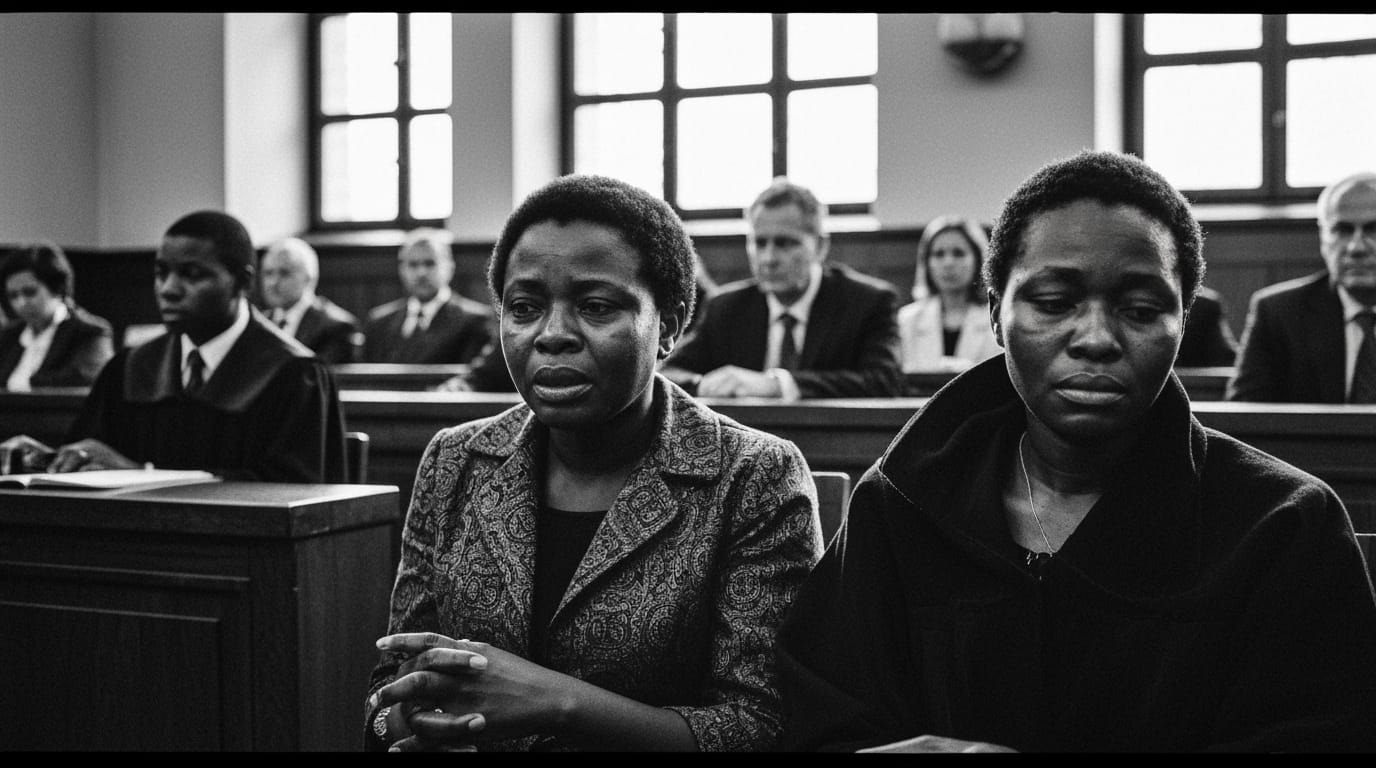
BRUSSELS, Belgium – More than six and a half decades after the assassination of Patrice Lumumba, the Democratic Republic of Congo's first democratically elected prime minister, the quest for accountability has brought his killing back into a Belgian courtroom. A pivotal hearing took place on January 20, 2026, where a judge considered whether to proceed with a trial against the sole surviving suspect among those initially accused, 92-year-old former Belgian diplomat Étienne Davignon. This development marks a significant, albeit delayed, step in unraveling one of post-colonial Africa's most enduring mysteries and Belgium's own contentious colonial past.
The Dawn of Independence and a Leader's Fall
Patrice Lumumba rose to prominence as a fervent anti-colonial leader, guiding the Democratic Republic of Congo (DRC) to independence from Belgium on June 30, 1960. His vision for a truly independent and unified Congo, with full control over its vast natural resources, resonated with many but clashed sharply with the interests of the former colonial power and Western nations amidst the Cold War. Just months into his premiership, Lumumba faced immense political instability, including an army mutiny and the secession of the mineral-rich Katanga province, backed by Belgium. Deposed in a military coup, he was subsequently arrested and, on January 17, 1961, executed by a firing squad in Katanga. Two of his associates, Joseph Okito and Maurice Mpolo, were killed alongside him. The circumstances of his death were shrouded in secrecy for decades, with official accounts falsely claiming he was killed by angry villagers after escaping custody. In a macabre attempt to erase all traces, his body and those of his companions were dismembered and dissolved in sulfuric acid, a chilling detail confirmed by later investigations.
Belgium's Moral Responsibility Acknowledged
For many years, Belgium vehemently denied any involvement in Lumumba's assassination. However, persistent advocacy and mounting evidence, notably spurred by historian Ludo De Witte's 1999 book, led to a re-evaluation. In 2000-2001, a Belgian parliamentary inquiry was launched to investigate the country's role. The inquiry concluded in 2001 that Belgium bore "moral responsibility" for the events that led to Lumumba's murder. The report detailed how Belgian government representatives supported Lumumba's transfer to hostile Katanga, knowing the immense danger, and that Belgian officers were present during the execution. The inquiry also suggested that then-King Baudouin was aware of plans to eliminate the charismatic leader but took no action to save him. Following the inquiry's findings, Belgium formally expressed its "profound and sincere regrets" in 2002, acknowledging its moral responsibility in the assassination.
The Long Road to Criminal Justice
Despite the official acknowledgment of moral responsibility, Lumumba's family sought criminal justice. In 2011, his eldest son, François Lumumba, filed a criminal complaint in Belgium against eleven Belgian citizens believed to be involved in the assassination. The lawsuit, pursued by the family, has consistently alleged war crimes, torture, and inhumane treatment, positing that the Belgian state was part of a "vast conspiracy" aimed at Lumumba's political and physical elimination. The investigation has been a protracted process, navigating complex legal terrain and historical archives. A significant moment occurred in October 2022 when a Belgian court allowed the findings of the 2001 parliamentary commission to be admitted into the ongoing judicial investigation, providing crucial evidence that had been previously sealed.
As the decades passed, many of the original accused individuals have died. Today, only one remains: Étienne Davignon, a former diplomat who was 28 at the time of Lumumba's death. On June 17, 2025, the Belgian Federal Prosecutor's Office formally requested that Davignon be referred to the Brussels Criminal Court. He stands accused of involvement in the "illegal detention and transfer" of Lumumba and the "humiliating and degrading treatment" he endured, though a charge of "intent to kill" was not retained by the prosecution.
A Moment of Reckoning for Colonial Legacies
The hearing on January 20, 2026, aimed to determine whether sufficient evidence exists to send Davignon to trial, a decision the family's lawyers hope will lead to a trial in early 2027. Yema Lumumba, a granddaughter of Patrice Lumumba, emphasized the family's determination, stating, "We cannot turn back time... but we are counting on the Belgian justice system to do its job and shed light on history." Lawyers representing the Lumumba family underscored the broader implications, arguing that refusing a trial would "amount to definitively confirming the impunity for major colonial crimes."
The ongoing legal proceedings are seen by many as a vital opportunity for Belgium to confront its colonial past more fully and for justice to be served for one of Africa's most iconic independence leaders. The case also follows symbolic gestures, such as the official return of Lumumba's last known physical remains – a single tooth – to his family in the DRC in June 2022. This act of repatriation, accompanied by renewed apologies from the Belgian Prime Minister for the "moral responsibility" in Lumumba's disappearance, highlights the profound impact of this historical injustice and the enduring quest for truth and reconciliation.
The outcome of this unprecedented legal battle, 65 years after the assassination, carries significant weight not only for the Lumumba family but for Belgium's relationship with its former colony and the broader international discourse on historical accountability for colonial-era atrocities. The decision by the Belgian court will be closely watched as it sets a potential precedent for addressing long-standing grievances related to decolonization.


