Decades of Division: The Cautious Path to Reopening the Turkey-Armenia Border
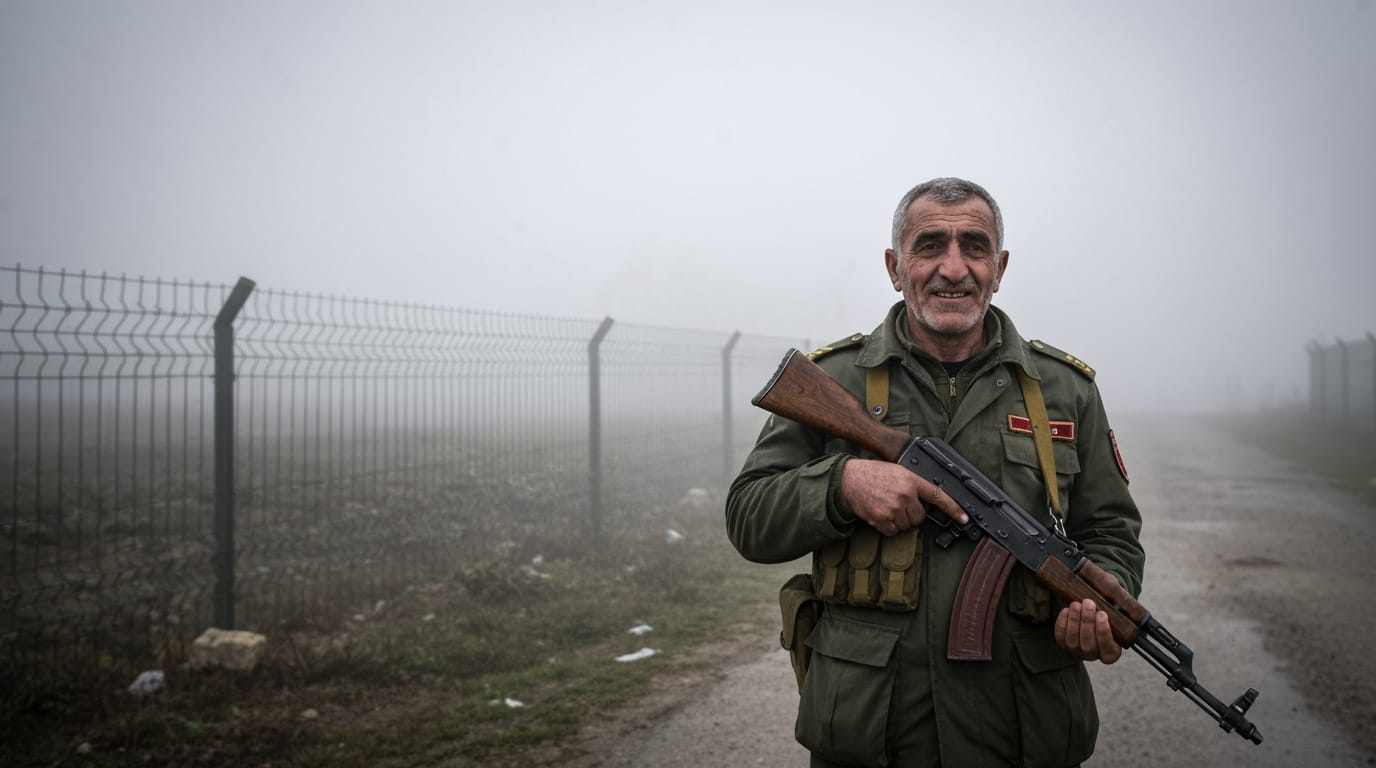
A long-dormant land border between Turkey and Armenia, sealed for over three decades, is inching closer to a historic reopening, a development poised to reshape regional dynamics and unlock significant economic potential. While technical preparations are nearing completion at key crossing points, the full normalization of relations remains intricately tied to complex geopolitical considerations, particularly the ongoing peace process between Armenia and Azerbaijan. The prospect of reopening offers a blend of hope for increased trade and people-to-people contact, tempered by the enduring historical grievances and political sensitivities that have kept the frontier closed since 1993.
A Legacy of Closure: The Border's Long Silence
The 311-kilometer land border between Turkey and Armenia has been officially closed since April 3, 1993, when Turkey imposed a transportation and economic blockade in solidarity with Azerbaijan during the First Nagorno-Karabakh War. This closure exacerbated an already strained relationship, which had seen the border de facto closed for much of the 20th century. Diplomatic relations between the two nations have been non-existent, historically marked by hostility and deep-seated issues, including Turkey's refusal to acknowledge the 1915 Armenian Genocide, a contentious point for Yerevan and the Armenian diaspora.
Past attempts at reconciliation, notably the Zurich Protocols signed in 2009, ultimately failed to achieve ratification by either side's parliament, leaving the border shuttered and diplomatic efforts stalled. The blockade aimed to pressure Armenia on various fronts, including the resolution of the Nagorno-Karabakh conflict in Azerbaijan's favor and the cessation of Armenia's pursuit of international recognition of the genocide. For years, any cargo transfer between the two countries has been channeled through third countries, primarily Georgia, highlighting the inefficiencies and costs imposed by the closed border.
Renewed Dialogue and Concrete Steps
Despite the historical impediments, a renewed push for normalization gained momentum in 2021 with the appointment of special envoys: Ambassador Serdar Kılıç for Turkey and Deputy Speaker of the Armenian National Assembly Ruben Rubinyan for Armenia. These envoys have held multiple meetings, including historic encounters in Yerevan and directly at the shared border, signifying a commitment to direct dialogue.
A significant breakthrough came in July 2022, when both sides agreed to open the land border for third-country nationals and diplomatic passport holders. Progress on this agreement has been gradual but visible. The Margara border checkpoint on the Armenian side has reportedly been ready for operation since December 2023, undergoing full renovation in preparation for the opening. On the Turkish side, significant reconstruction and modernization efforts are underway at the Alican checkpoint, directly opposite Margara. Reports indicate that work at Alican was approximately 90% finished by January 2026, with technical preparations expected to be completed in the near future.
A tangible sign of easing tensions occurred in February 2023, when the Alican border crossing was temporarily opened for the first time in 35 years to allow humanitarian aid from Armenia to reach victims of the devastating earthquake in Turkey. This was followed by another temporary opening in March 2025 for humanitarian aid deliveries from Armenia to Syria. Such instances, though temporary, demonstrated the practical utility of an open border and fostered a sense of goodwill. Further facilitating connections, both countries have also announced eased visa procedures for diplomatic and service passport holders, allowing them to obtain electronic visas free of charge since January 1, 2026. Efforts are also being made to restore and launch the Gyumri-Kars railway and an electricity interconnector, alongside increasing air routes and flights between the two countries.
The Shadow of Nagorno-Karabakh: A Lingering Condition
Despite the advancements, the full normalization of relations and the comprehensive opening of the border remain largely contingent on progress in the Armenia-Azerbaijan peace process. Turkey has consistently linked its steps toward Armenia to a resolution of the Nagorno-Karabakh conflict. Turkish Foreign Minister Hakan Fidan articulated this stance, warning in November 2025 that a premature normalization of relations with Armenia could inadvertently freeze the conflict rather than resolve it. This position underscores the deep historical and political ties between Turkey and Azerbaijan. The Zangezur Corridor, a proposed transport route through Armenia connecting Azerbaijan to its exclave of Nakhchivan, also plays a role in these intricate regional negotiations.
The 2020 Nagorno-Karabakh war, where Turkey provided significant military support to Azerbaijan, further complicated relations and renewed Armenian perceptions of a neighboring threat. While the conflict's outcome has altered the geopolitical landscape, the influence of Azerbaijan on Turkey's foreign policy towards Armenia remains a critical factor in the pace and scope of border reopening.
Economic Prospects and Regional Transformation
The potential reopening of the Turkey-Armenia border carries substantial economic implications for both nations, particularly for landlocked Armenia. Armenian officials, including Deputy Minister of Economy Anushik Avetyan, have highlighted the significant benefits, predicting a rapid improvement for Armenia's economy.
An open border is expected to reduce logistical costs, shorten supply chains, and expand market access for Armenian businesses. This would lessen Armenia's heavy dependence on other routes, such as the Lars checkpoint, and facilitate export diversification. Expert studies suggest that opening the border could lead to a substantial increase in trade volume between Armenia and Turkey, potentially from less than 1% to over 10% of Armenia's total trade, with some projections indicating an annual increase to $700-800 million. Armenia could gain access to Turkish ports, offering cheaper and safer ferry transportation options to Europe and Russia, its major trade partners. The tourism sector is also anticipated to see a quick and positive impact, alongside a potential increase of up to 20% in investment flows across the region. While the Armenian government is currently evaluating these economic consequences, the overall sentiment points to a mutually beneficial outcome, enhancing regional competitiveness and attractiveness along international trade routes.
A Future Defined by Cautious Optimism
The path to fully reopening the Turkey-Armenia border is characterized by cautious optimism. While technical work at crossing points like Alican and Margara signals tangible progress, the overarching political framework, heavily influenced by the Armenia-Azerbaijan peace process, will dictate the ultimate timeline and scope. Former Turkish MP Garo Paylan's prediction of an opening for third-country citizens in March 2026, and Bloomberg's report in December 2025 of Turkey considering a broader reopening within six months, underscore the growing anticipation.
The potential benefits, both economic and diplomatic, are immense, promising to transform a closed frontier into a conduit for cooperation and prosperity in the South Caucasus. However, for the border to truly transition from a symbol of division to a bridge of connection, sustained political will, a comprehensive resolution to regional conflicts, and the willingness of all parties to navigate historical sensitivities will be paramount.


