Greek Government Rocked by EU Farm Subsidy Scandal as Ministers Resign
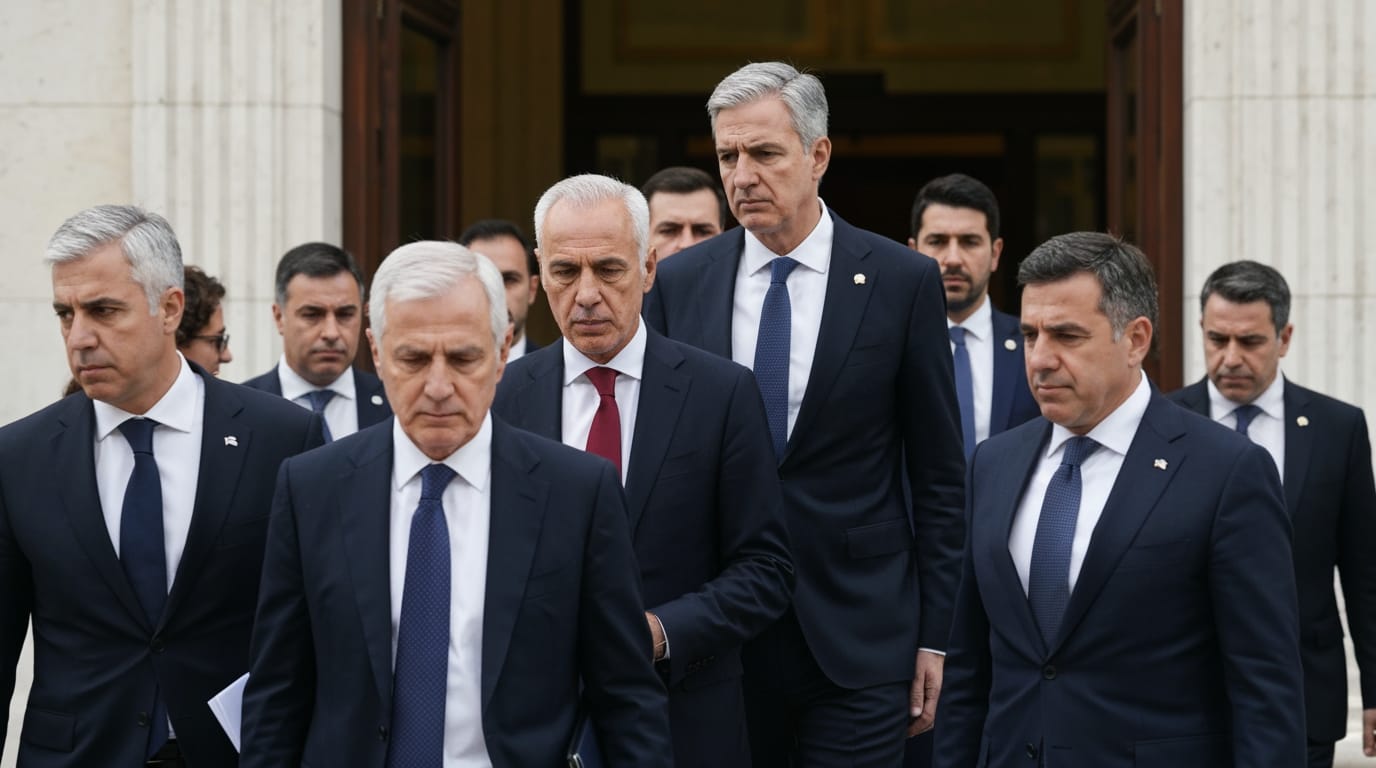
ATHENS, GREECE – Three high-ranking Greek government ministers resigned on Friday, April 3, amidst an escalating European Union investigation into a widespread agricultural subsidy fraud scheme that has deeply implicated the nation’s political and farming sectors. The departures mark a significant blow to the administration of Prime Minister Kyriakos Mitsotakis, already under scrutiny, and underscore the severe systemic vulnerabilities exposed within the management of critical EU funds. The resignations, characterized by the opposition as a desperate attempt at damage control, come as the European Public Prosecutor's Office (EPPO) intensifies its probe into an alleged organized criminal network siphoning millions from the EU's Common Agricultural Policy (CAP).
The immediate political fallout saw Kostas Tsiaras, Minister of Rural Development and Food, Ioannis Kefalogiannis, Minister of Civil Protection, and Dimitris Vartzopoulos, Deputy Minister of Health, step down from their posts. While each minister maintained their innocence, stating their resignations were intended to facilitate the judicial process, the move triggered a swift cabinet reshuffle, with former European Commission Vice President Margaritis Schinas appointed as the new agriculture minister. This marks the second wave of such high-level departures in less than a year, following the resignations of five senior officials in June 2025, including four ministers with previous ties to the agriculture ministry, further highlighting the depth of the scandal.
The Anatomy of a Multi-Million Euro Deception
At the heart of the scandal is OPEKEPE, the Greek payment and control agency responsible for distributing and monitoring billions of euros in EU agricultural subsidies annually. Investigations by the EPPO, led by European Chief Prosecutor Laura Kövesi, have uncovered a sophisticated and extensive fraud scheme operating since at least 2018. The fraudulent activities exploited procedural gaps that emerged after the EU's Common Agricultural Policy (CAP) shifted its subsidy calculation from livestock to land-based entitlements in 2014. An incomplete national land registry further exacerbated the issue, allowing individuals to declare land ownership or leases far from their actual location or even on non-existent properties.
The methods of deception were varied and audacious. Suspects allegedly submitted false declarations for land they did not own or lease, or for agricultural activities that were never performed. Reports detail claims for pastures situated on archaeological sites, olive groves planted within a military airport, and even fictitious banana plantations on Mount Olympus – regions where such agriculture is impractical or impossible. Beyond land claims, the scheme involved inflating livestock numbers to secure higher subsidies, with some individuals claiming thousands of animals that did not exist. The criminal network, operating with a clear hierarchical structure, also employed intricate money laundering techniques, issuing fictitious invoices, routing funds through multiple bank accounts, and mixing illicit proceeds with legitimate income to conceal their origins. Part of the misappropriated funds was reportedly used to purchase luxury goods, travel, and vehicles, further underscoring the scale of personal enrichment derived from the fraud.
European Prosecutors Press for Accountability
The European Public Prosecutor's Office has been at the forefront of unraveling the intricate web of fraud. EPPO's investigations, which began in earnest in 2025, led to raids on OPEKEPE headquarters where prosecutors faced a "lack of sincere cooperation" in gathering digital evidence. The scope of the investigation is vast, with EPPO seeking parliamentary immunity waivers for 11 active lawmakers and probing the involvement of an additional 20 members of the ruling New Democracy party, including active and former officials. Evidence, including wiretapped phone conversations, reportedly suggests that individuals involved in the scandal coordinated with Greek ministers to interfere with the EU prosecutor's work.
The financial repercussions for Greece are substantial. In June 2025, the European Commission imposed a staggering €415 million fine on Greece for the systematic mismanagement of agricultural aid between 2016 and 2023, directly implicating OPEKEPE's failures. This fine, which Greek taxpayers will ultimately bear, serves as a stark reminder of the cost of systemic corruption. The estimated damage to the EU budget from the identified fraudulent activities exceeds €19.6 million from 324 individuals, with overall financial damage potentially surpassing €1 billion. Facing the threat of losing future EU farm subsidies, Greece has submitted an action plan to address the abuses, and OPEKEPE was officially dissolved in May 2025, with its functions transferred to the Independent Authority for Public Revenue (AADE) in an effort to tighten controls.
Public Anger and Erosion of Trust
The scandal has generated significant public anger and widespread concern within Greece's vital farming sector. For weeks, farmers have staged protests, including large-scale tractor demonstrations in Athens and central Greece, demanding answers and expedited payment of their legitimate subsidies, which have been severely delayed by the ongoing investigations. The revelation that a vast majority of the fraudulent subsidies, approximately 80% between 2017 and 2020, were directed to the island of Crete, where Prime Minister Mitsotakis's family holds considerable political influence, has fueled public skepticism and calls for greater accountability. Notably, between 2019 and 2025, Crete saw an anomalous registration of 13,000 new farmers and a doubling of declared sheep and goat populations, even as the national number of livestock farmers declined.
Prime Minister Mitsotakis has publicly acknowledged government failures, vowing to imprison those responsible and reclaim stolen funds. However, opposition parties have vehemently accused the government of a cover-up, pointing to earlier internal reports from 2020 that flagged suspicious land claims but were reportedly ignored. With national elections on the horizon next year, the scandal threatens to undermine public trust in political institutions and the fair distribution of European aid.
A Path Forward Amidst Lingering Questions
The resignations of three Greek ministers represent a critical juncture in a scandal that has laid bare deep-seated issues of corruption and mismanagement within the country's administration of EU funds. While the government has taken steps to dissolve OPEKEPE and reshuffle its cabinet, the full scope of accountability is yet to be determined. The ongoing investigations by the European Public Prosecutor's Office, including demands for parliamentary immunity waivers, signal a tenacious pursuit of justice that transcends national political boundaries. The crisis underscores the imperative for robust oversight mechanisms, transparency, and unwavering political will to safeguard European taxpayers' money and ensure that vital agricultural support reaches its intended beneficiaries. As Greece grapples with the financial penalties and the erosion of public trust, the coming months will be crucial in demonstrating a genuine commitment to reform and restoring faith in the integrity of its governance.


