Decades-Old Injustice Reignited: Banana Farm Sterility Ruling Puts Pesticide Use Back in Global Spotlight
A landmark court ruling, reasserting the culpability of major corporations in cases of worker sterility linked to pesticide exposure on banana plantations, has brought a decades-old environmental and human rights struggle back into sharp focus. The decision, which sides with thousands of farmworkers claiming reproductive harm from a powerful chemical used extensively in the mid-20th century, highlights the enduring legacy of corporate negligence and the protracted fight for justice by some of the world's most vulnerable laborers. This development sends a ripple through the agricultural industry, reminding stakeholders of the profound and long-lasting human cost associated with unchecked chemical application and the critical need for stringent oversight.
The Echo of a Past Poison: Dibromochloropropane's Devastating Legacy
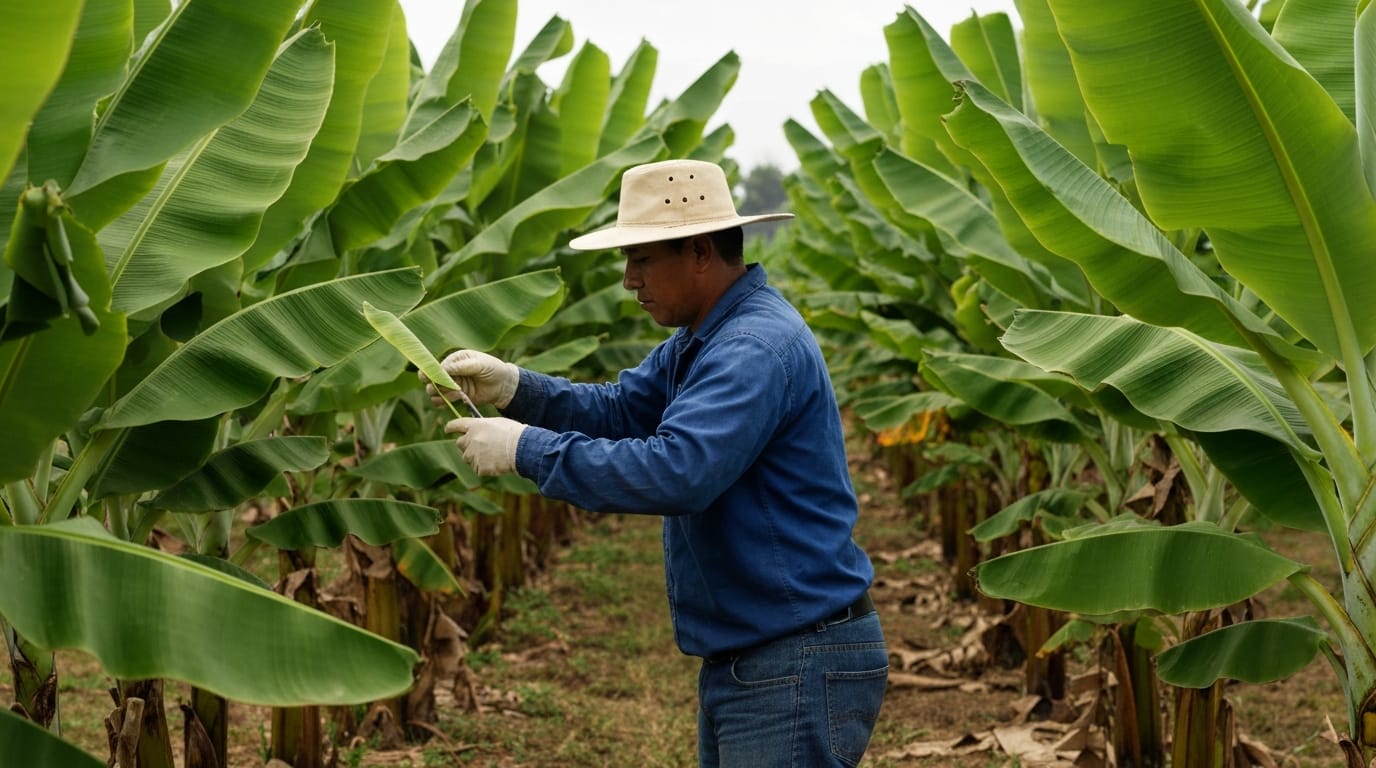
At the heart of this renewed legal battle lies Dibromochloropropane (DBCP), an organobromine compound once widely employed as a nematicide in agriculture. From the 1960s through the late 1970s, DBCP was lauded for its effectiveness in controlling parasitic nematodes, microscopic worms that plague crop roots, particularly in tropical fruit cultivation. Banana plantations, with their vast monocultures and susceptible soils, became prime candidates for its extensive use across Central and South America, the Caribbean, and parts of Asia. Workers, often with minimal protective gear and inadequate training, routinely handled and applied the chemical directly to the soil surrounding banana plants, leading to chronic and high-level exposure.
However, the efficacy of DBCP came with a hidden, devastating cost. As early as the 1970s, scientific studies and internal company reports began to reveal alarming links between exposure to the pesticide and severe health issues, most notably male sterility. Factory workers producing DBCP in the United States were among the first to report cases of azoospermia (absence of sperm) and oligospermia (low sperm count), prompting immediate investigations. The evidence was so compelling that the U.S. Environmental Protection Agency (EPA) banned most uses of DBCP in 1979. Despite the ban in developed nations, manufacturers continued to export and sell the chemical to developing countries, where regulations were lax or non-existent, prolonging its use on plantations for years, even into the 1980s. This prolonged application, often under the purview of multinational fruit companies, laid the groundwork for the current wave of litigation and the human tragedy that continues to unfold.
A Protracted Legal Odyssey: The Quest for Accountability
The path to justice for DBCP victims has been long, arduous, and marked by significant legal hurdles. Beginning in the 1980s and intensifying in the 1990s, thousands of affected farmworkers, primarily from countries like Nicaragua, Costa Rica, Ecuador, Honduras, and the Philippines, initiated lawsuits against the chemical manufacturers (such as Dow Chemical, Shell Chemical, and Occidental Chemical) and the multinational fruit companies (including Dole Food Company, Chiquita Brands International, and Del Monte Fresh Produce) that either produced, supplied, or used the controversial pesticide. These cases were often complicated by jurisdictional challenges, difficulties in proving direct causation after decades of exposure, and the sheer power imbalance between impoverished plaintiffs and multinational corporations.
Initial attempts to pursue justice in U.S. courts were frequently met with arguments of forum non conveniens, with courts asserting that cases should be heard in the plaintiffs' home countries. This often led to years of litigation in local courts, which were frequently under-resourced and susceptible to undue influence. Despite these obstacles, some significant victories were achieved over the decades, including substantial judgments in Nicaragua, often followed by appeals and further legal wrangling. However, consistent and widespread compensation remained elusive for many, leading to ongoing frustration and a persistent belief among victims that justice had been delayed, if not denied. The recent ruling serves as a powerful affirmation, cutting through layers of legal complexity to once again highlight corporate responsibility and the irreversible harm inflicted upon a generation of workers.
The Unseen Scars: Human Cost Beyond Sterility
While male sterility remains the most widely recognized consequence of DBCP exposure, the human toll extends far beyond the inability to procreate. Farmworkers, many of whom were young men in their prime reproductive years when exposed, faced profound psychological and social distress. The inability to have children often carried significant cultural and familial stigma in societies where large families are common and deeply valued. This led to marital strain, social isolation, and a diminished sense of self-worth for many men, compounding their physical suffering with emotional anguish. Beyond male reproductive health, scientific studies have also suggested potential links between DBCP exposure and other adverse health effects, including increased risks of certain cancers, liver damage, and kidney problems, though the most robust evidence remains tied to reproductive toxicity.
Economically, the impact on affected families has been catastrophic. Many workers lost their livelihoods due to debilitating health issues or were unable to perform arduous farm labor after becoming ill. Without access to adequate healthcare or social safety nets, these families often spiraled into deeper poverty, a generational legacy passed down to their non-biological or adopted children. The ongoing need for medical monitoring, psychological support, and economic assistance for these victims highlights a humanitarian crisis that persists decades after the initial widespread use of the chemical ceased. The ruling not only offers a measure of financial recompense but also provides a vital validation of the suffering endured by thousands, giving voice to those marginalized for too long.
Looking Forward: Lessons from a Bitter Harvest
The recent ruling in favor of banana farm workers serves as more than just a legal victory; it is a stark reminder of the ethical responsibilities inherent in global commerce and a powerful impetus for change. It underscores the critical need for robust international regulations governing the production, distribution, and use of pesticides, particularly in developing nations where enforcement mechanisms may be weaker. The long shadow cast by DBCP illustrates the danger of prioritizing profit over people and the enduring consequences of failing to adequately protect vulnerable populations.
As the world grapples with increasing demands for food production and the complexities of global supply chains, the lessons from the DBCP saga are more relevant than ever. This ruling should prompt a renewed commitment from multinational corporations to uphold the highest standards of worker safety and environmental protection, regardless of where their operations are located. It also reinforces the vital role of persistent legal advocacy and investigative journalism in holding powerful entities accountable. The quest for justice for the DBCP victims is not just about compensating for past wrongs; it is about ensuring that such a devastating chapter in agricultural history is never repeated, fostering an era of greater transparency, responsibility, and human dignity in the global food system.