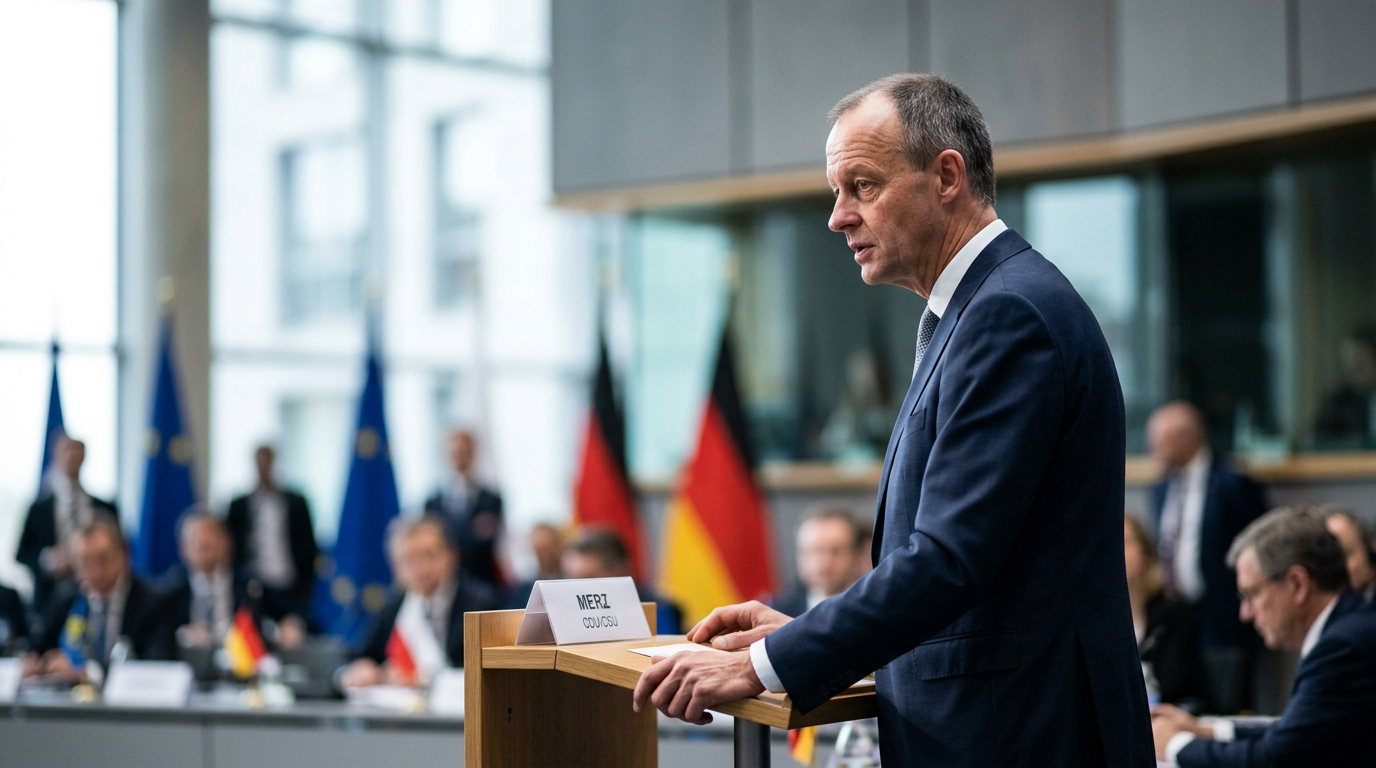
Denmark Vows to Defend Sovereignty as US Appoints Special Envoy to Greenland
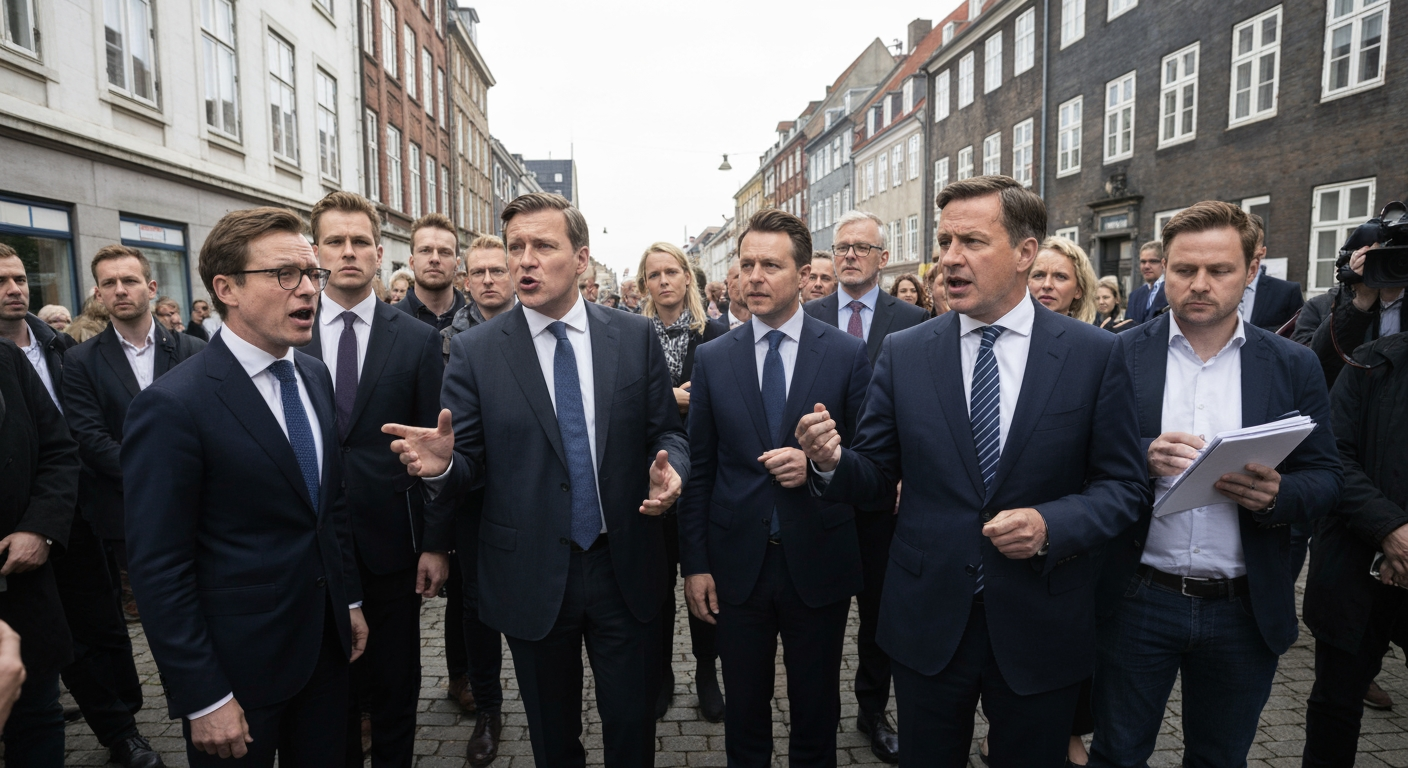
Copenhagen, Denmark – Diplomatic tensions have escalated sharply between Denmark and the United States following President Donald Trump's appointment of a special envoy to Greenland, a move that Copenhagen has condemned as a serious affront to its sovereignty. Danish Foreign Minister Lars Løkke Rasmussen expressed "deep anger" over the decision and the stated intent of the newly appointed envoy, signaling a significant strain on relations between the two NATO allies. The diplomatic spat underscores persistent American strategic interest in the vast Arctic island and highlights the delicate balance of power and self-determination in a rapidly changing geopolitical landscape.
Diplomatic Fury and Unacceptable Rhetoric
On Sunday, December 22, 2025, President Trump announced the appointment of Louisiana Governor Jeff Landry as his special envoy to Greenland. This appointment immediately ignited a furious reaction from Denmark, which views Greenland as an integral, albeit autonomous, part of its kingdom. Foreign Minister Rasmussen swiftly declared that the US ambassador would be summoned to Copenhagen for an explanation, emphasizing that Landry's public remarks about making Greenland "part of the U.S." were "totally unacceptable." Rasmussen stressed that national borders and state sovereignty are fundamental principles rooted in international law, asserting that no country can annex another, even under the guise of international security. The Danish government underscored its expectation that all nations, including the United States, must respect the territorial integrity of the Kingdom of Denmark.
A History of American Ambition and Arctic Strategy
The latest diplomatic incident is not an isolated event but rather the most recent manifestation of a long-standing American fascination with Greenland. The United States has entertained ambitions of acquiring the world's largest non-continental island since the 19th century, with historical discussions and formal offers dating back to 1867. Notable attempts to purchase Greenland occurred in 1910, 1946, 1955, and as recently as 2019, with further internal discussions in 2025. After World War II, amid the brewing Cold War, the US secretly offered Denmark $100 million in gold for Greenland, highlighting its perceived "military necessity."
Greenland's strategic importance stems from its unique geographical position. Located between North America and Europe, it plays a critical role in Arctic security, particularly in controlling the Greenland-Iceland-UK (GIUK) Gap, which is vital for maritime defense. The island also hosts the Pituffik Space Base (formerly Thule Air Base), a crucial US military installation that contributes to missile defense and early warning systems. Beyond its military significance, Greenland is rich in untapped natural resources, including critical minerals and hydrocarbons, which further fuel external interest. The melting of Arctic ice due to global warming has opened new shipping routes and access to these resources, intensifying geopolitical competition from powers like Russia and China. The US views unimpeded access to Greenland as essential for its national security interests and to counter potential influence from rival nations in the Arctic.
Greenland's Voice and the Quest for Self-Determination
While part of the Kingdom of Denmark, Greenland enjoys a significant degree of self-government. Since 2009, Greenland has held the right to declare independence, and its government has authority over internal affairs, such as the economy, social services, and infrastructure. However, Denmark retains responsibility for foreign affairs, defense, citizenship, and monetary policy. Despite this structure, Greenlandic leaders have consistently asserted their right to self-determination and autonomy.
Greenland's Prime Minister, Jens-Frederik Nielsen, strongly echoed Denmark's stance, stating that the US appointment "doesn't change anything for us here at home." Nielsen unequivocally declared, "We will determine our future ourselves. Greenland is our country," and reinforced that "Greenland belongs to Greenlanders, and territorial integrity must be respected." Opinion polls indicate that the vast majority of Greenland's 57,000 inhabitants desire continued independence from Denmark but have no wish to become part of the United States. Aaja Chemnitz, a Greenlandic politician in the Danish Parliament, reiterated this sentiment, stating that "Greenland has expressed our position very clearly: Nothing about us without us, and Greenland's future is solely up to us. A majority does not want to become Americans, we do not want to be taken over by another country, but on the contrary, we want to ensure greater self-determination."
Strain on Alliance and Future Uncertainties
This latest development follows prior incidents that have already strained relations between Washington and Copenhagen. In August 2025, Danish officials summoned the US charge d'affaires over reports of alleged US influence operations in Greenland, suggesting attempts to weaken ties with Denmark and promote secessionism. These reports, which Danish media attributed to individuals connected to the Trump administration, raised alarms in Copenhagen, with the Danish foreign minister at the time calling the alleged scheme "totally unacceptable." The White House, in response to those earlier concerns, reportedly advised Denmark to "calm down."
The persistent US pursuit of Greenland, coupled with the latest special envoy appointment and the envoy's annexationist statements, places a considerable strain on the long-standing alliance between the United States and Denmark. Both nations are founding members of NATO, yet the actions taken by the US administration appear to challenge the foundational principles of allied respect and territorial integrity. The Danish Defense Intelligence Service has even, for the first time, identified the United States as a potential threat to the country's security, citing Washington's prioritization of its own interests and perceived encroachment on Greenland. This classification places the US alongside traditional concerns like Russia and China as potential risks to Danish security. The erratic nature of these diplomatic maneuvers is also causing anxiety among smaller European Arctic states, complicating efforts for unified Arctic cooperation and raising questions about the future of transatlantic security arrangements.
The appointment of a special envoy whose stated aim is to incorporate Greenland into the United States highlights a fundamental clash between US strategic imperatives and the principles of national sovereignty and self-determination. As Denmark and Greenland stand firm in their resolve to protect their territorial integrity, the diplomatic fallout is likely to reverberate throughout the NATO alliance and reshape the dynamics of Arctic geopolitics, underscoring the enduring challenges of balancing national interests with international norms.
Related Articles

Ratko Mladić, "Butcher of Bosnia" and Convicted War Criminal, Dies at 84
THE HAGUE, Netherlands – Ratko Mladić, the former Bosnian Serb military commander known as the "Butcher of Bosnia" and convicted of genocide, war crimes, and crimes against humanity, has died at the age of 84. Serbian...


Long-Awaited 9/11 Mastermind Trial Set for 2028, Decades After Attacks
GUANTANAMO BAY, Cuba – Nearly a quarter-century after the devastating terror attacks of September 11, 2001, a military judge has finally set a trial date for Khalid Sheikh Mohammed, the alleged mastermind behind the...