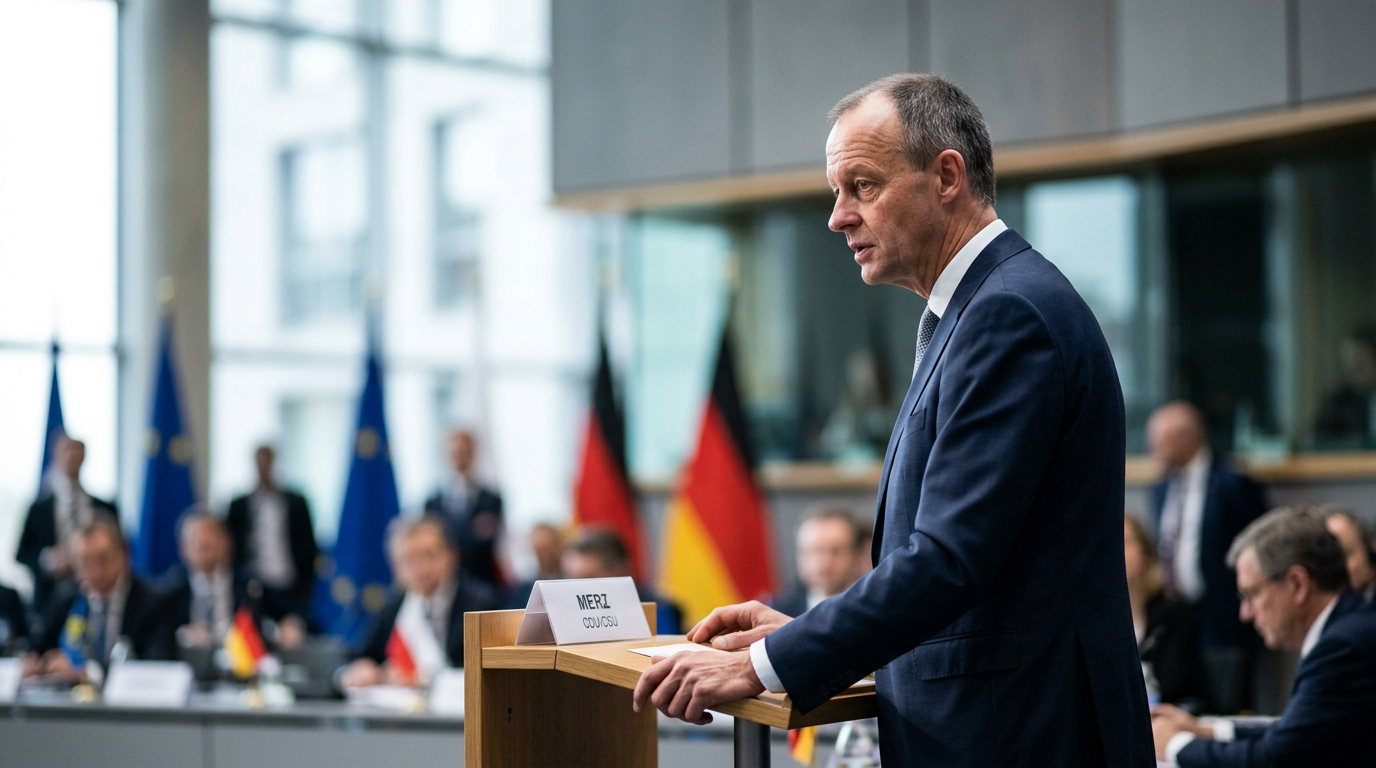
Denmark Welcomes Shift in U.S. Greenland Visit Amidst Tensions

Copenhagen, Denmark – A planned visit by a U.S. delegation to Greenland has been significantly scaled back, a move welcomed by Danish officials after the initial itinerary sparked diplomatic unease. The change comes amid renewed interest from former President Donald Trump in acquiring the Arctic island, a semi-autonomous territory within the Kingdom of Denmark.
Initial Plans Draw Criticism
The original plan involved a visit by Usha Vance, wife of U.S. Vice President JD Vance, along with National Security Advisor Mike Waltz and potentially Energy Secretary Chris Wright. The White House had announced that Usha Vance would travel to Greenland from Thursday to Saturday, with plans to view historical sites, learn about Greenlandic heritage, and attend the Avannaata Qimussersua, Greenland's national dogsled race, in the southwestern town of Sisimiut.
However, these plans drew sharp criticism from both Danish Prime Minister Mette Frederiksen and Greenland's outgoing Prime Minister Mute Egede, who viewed the visit as unwelcome interference. Frederiksen described the planned visit to the dog-sled race as "unacceptable pressure" on the territory.
Focus Shifts to Military Base
Following the backlash, the U.S. delegation's plans were altered. Vice President JD Vance announced that he would now accompany his wife, Usha, on a visit limited to the Pituffik Space Base in northern Greenland on Friday. The purpose of the visit, according to Vance, is to visit U.S. Space Force members stationed there and assess the security situation.
Danish Foreign Minister Lars Lokke Rasmussen expressed his approval of the revised plans. "I think it's very positive that the Americans have cancelled their visit among Greenlandic society," Rasmussen told public broadcaster DR. "They will only visit their own base, Pituffik, and we have nothing against that."
Trump's Renewed Interest
The diplomatic row comes against the backdrop of renewed interest from Donald Trump in acquiring Greenland. Since returning to power in January, Trump has reportedly insisted on pursuing the idea of taking over Greenland for national security purposes, even refusing to rule out the use of force.
Trump's previous interest in buying Greenland in 2019 caused a major rift between the U.S. and Denmark after the then-President publicly confirmed his interest in purchasing the territory. The idea was swiftly rejected by Danish officials, including Prime Minister Frederiksen, who called the suggestion "absurd."
Greenland's Perspective
The situation is further complicated by the ongoing political negotiations in Greenland following a general election on March 11. Parties are currently working to form a new coalition government, adding another layer of sensitivity to any external involvement.
Polls indicate that the vast majority of Greenlanders are opposed to becoming part of the United States. Anti-American sentiment has been on the rise, with demonstrations featuring slogans such as "Make America Go Away" and "Yankees go home." Protests were also planned in connection with the Vance's visit before the itinerary was changed.
De-escalation and Future Relations
The change in plans is widely seen as a de-escalation of the diplomatic dispute. Ole Waever, a professor at the University of Copenhagen, noted widespread concerns about a potential "soft power operation and creeping influence" from the U.S.
Despite the recent tensions, Danish officials have emphasized that they remain open to cooperation with the United States. Prime Minister Frederiksen has stated that Denmark and Greenland are allies and that there is no desire to end cooperation with the U.S. She also highlighted the support from Nordic countries and the EU. This is supported by a 1951 bilateral agreement that establishes U.S. rights to move freely and construct military bases in Greenland, provided Denmark and Greenland are notified.
The altered visit to Greenland signals a potential cooling of tensions between the U.S. and Denmark. By focusing solely on the U.S. military base, the delegation avoids direct engagement with Greenlandic society, addressing concerns about undue influence and respecting Greenland's autonomy. While the long-term implications of Trump's continued interest in Greenland remain to be seen, the immediate crisis appears to have been averted through diplomatic compromise.
Related Articles

Ratko Mladić, "Butcher of Bosnia" and Convicted War Criminal, Dies at 84
THE HAGUE, Netherlands – Ratko Mladić, the former Bosnian Serb military commander known as the "Butcher of Bosnia" and convicted of genocide, war crimes, and crimes against humanity, has died at the age of 84. Serbian...


Long-Awaited 9/11 Mastermind Trial Set for 2028, Decades After Attacks
GUANTANAMO BAY, Cuba – Nearly a quarter-century after the devastating terror attacks of September 11, 2001, a military judge has finally set a trial date for Khalid Sheikh Mohammed, the alleged mastermind behind the...