Diplomacy's Tightrope: US and Israel Grapple with Phase Two of Gaza Peace Plan
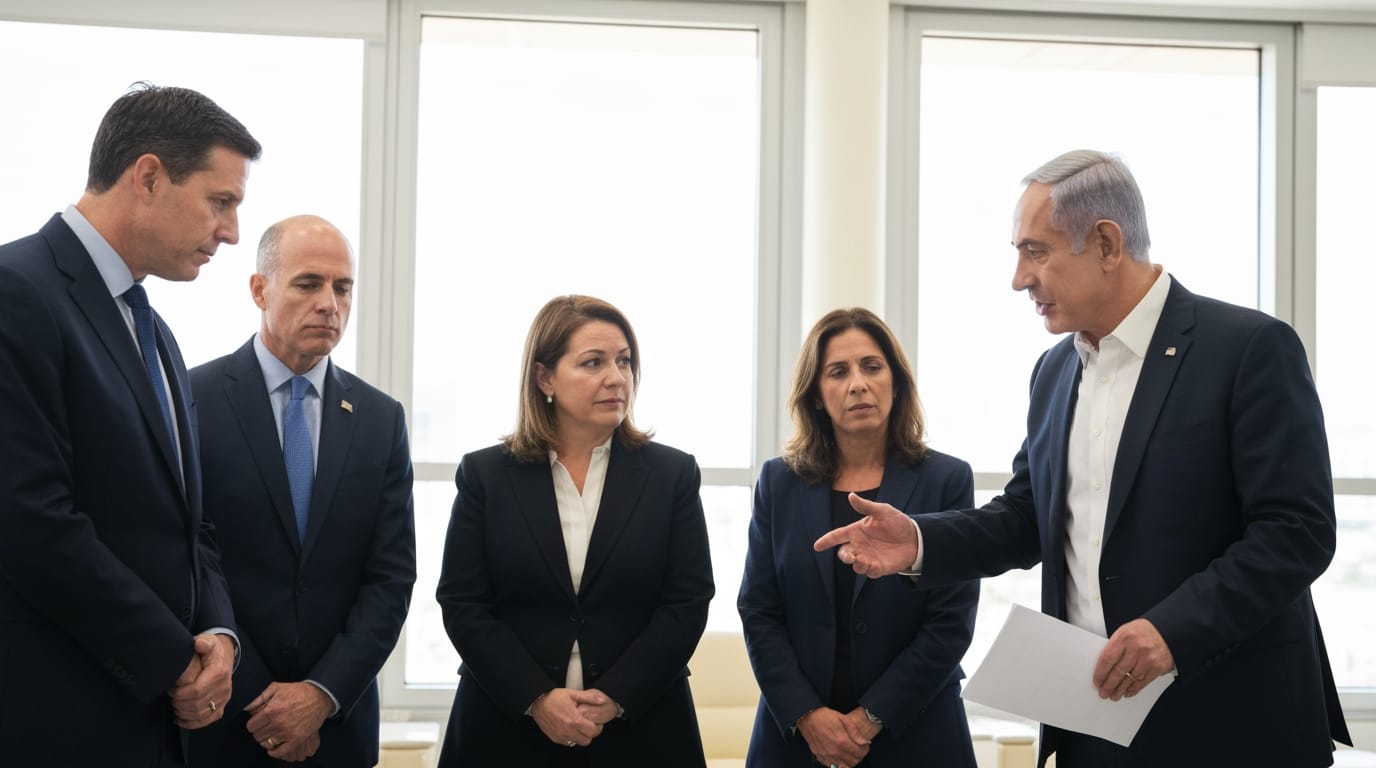
Jerusalem – High-stakes diplomatic efforts are underway as American officials engage with Israeli Prime Minister Benjamin Netanyahu to propel the contentious second phase of a comprehensive peace plan for Gaza. The discussions, featuring US envoys Steve Witkoff and Jared Kushner, underscore an urgent international push to transition the war-torn enclave from a fragile ceasefire to a framework encompassing demilitarization, new governance, and ambitious reconstruction. Yet, deep divisions within Israel's government and lingering skepticism among Palestinians threaten to complicate the path forward, even as the humanitarian crisis in Gaza deepens.
The Blueprint for Peace and Its Precarious Progression
The "Comprehensive Plan to End the Gaza Conflict," brokered by the United States and endorsed by the UN Security Council in November 2025, laid out a phased approach to stabilize and rebuild the Gaza Strip following the intense conflict that erupted after the October 7, 2023, attacks. The initial phase, implemented since October 10, 2025, called for an immediate ceasefire, humanitarian actions, and the return of hostages. However, this first phase has been characterized by a "mixed success," with reports of continued hostilities and a severe humanitarian situation, including over 450 Gazan casualties since the ceasefire began.
Phase Two of this ambitious plan outlines a broad agenda focused on the demilitarization of Gaza, the establishment of new security measures, the formation of a transitional governance body, and large-scale reconstruction efforts. This stage envisions Gaza evolving into a "de-radicalized terror-free zone" through the destruction of Hamas's offensive military infrastructure, including tunnels. It also introduces the concept of an International Stabilization Force (ISF), a multinational body tasked with overseeing security, training vetted Palestinian police forces, and securing border areas to prevent illicit munition flows. Governance is slated to transition to a National Committee for the Administration of Gaza (NCAG), comprised of Palestinian technocrats operating under international supervision, with the long-term goal of the Palestinian Authority assuming full control by the end of 2027.
Diplomacy Amidst Standoffs: US-Israeli Discussions
Recent meetings in Jerusalem saw US envoys Witkoff and Kushner engaging with Prime Minister Netanyahu to advance the implementation of Phase Two. Discussions reportedly centered on the demilitarization of Gaza and strategies for achieving "long-term peace" in the region. A critical point of contention and a primary focus of these talks is the recovery of the remains of the last remaining hostage, Ran Gvili, with US officials emphasizing close coordination with Israel on this sensitive matter.
The US has also unveiled an expansive vision for a "New Gaza" as part of the reconstruction component of Phase Two. This plan includes proposals for residential towers, a beach resort, and data centers, with initial rebuilding efforts slated for Rafah and parts of Khan Yunis, before expanding to central Gaza refugee camps and Gaza City. The entire reconstruction effort is projected to span two to three years. A significant indicator of progress in Phase Two would be the reopening of the Rafah border crossing between Gaza and Egypt in both directions, a move reportedly advocated by US envoys even amidst delays in hostage recovery.
Internal Divisions and External Doubts
Despite the outward diplomatic push, significant internal and external hurdles complicate the implementation of the peace plan. Within Israel, Prime Minister Netanyahu faces considerable pressure from ultranationalist ministers in his coalition, many of whom openly advocate for Jewish settlement in Gaza and have threatened to destabilize the government if the war ends prematurely. Israeli Settlement Affairs Minister Orit Strock publicly denounced the broader peace plan, including the US-led "Board of Peace," as "flawed" and called for an Israeli occupation of the Gaza Strip, underscoring deep ideological rifts within the Israeli leadership. Furthermore, there are Israeli concerns that the proposed technocratic governing committee for Gaza and the international oversight panel could establish a new governance reality without full Hamas disarmament or explicit Israeli consent. Netanyahu has also voiced strong opposition to the deployment of Turkish or Qatari forces as part of Gaza's future security arrangements.
On the Palestinian side, while the Palestinian Authority (PA) has expressed support for the peace deal, its historical lack of full control over Gaza since 2007 and questions surrounding the legitimacy and autonomy of the proposed National Committee for the Administration of Gaza (NCAG) present substantial challenges. Many Palestinians remain skeptical of the NCAG, fearing external overreach and a prioritization of economic development over fundamental political questions of Palestinian self-determination. The PA itself has limited sovereignty, operating under the overall control of the Israeli military in parts of the West Bank, raising questions about its capacity to effectively govern a revitalized Gaza. Moreover, Hamas, while reportedly showing some openness to decommissioning offensive weapons, maintains that its full disarmament is contingent on serious talks for Palestinian statehood and Israeli withdrawal, a stance that conflicts with Israel's demands for complete demilitarization.
The Humanitarian Imperative and Obstacles to Implementation
The urgent need for stabilization and reconstruction is exacerbated by a severe and ongoing humanitarian crisis in Gaza. Hundreds have been killed since the ceasefire officially took effect, and humanitarian conditions remain dire across the strip. The situation has been compounded by Israel's recent decision to suspend 37 international humanitarian organizations operating in Gaza, a move critics argue deepens the catastrophe and imposes Israeli control over aid efforts.
The ambitious plans for an International Stabilization Force face challenges, with few countries having committed personnel, making its full deployment "still far off." Similarly, while the "Board of Peace" — a presidential initiative by Donald Trump — has been established to oversee reconstruction and coordination, its charter has been criticized for not explicitly referencing Gaza and for granting extensive powers to its chairman, prompting concerns about it bypassing established international frameworks like the UN.
As discussions continue, the second phase of the Gaza peace plan represents a critical juncture. The convergence of urgent humanitarian needs, ambitious reconstruction proposals, and complex political dynamics, both regional and internal, underscores the monumental task ahead. The success of this phase hinges not only on diplomatic agreements but also on the willingness of all parties to navigate profound disagreements, build trust, and address the fundamental aspirations for security and self-determination in a deeply fractured region.


