Taiwan's Parliament Greenlights Key U.S. Arms Deals Amid Rising Regional Tensions
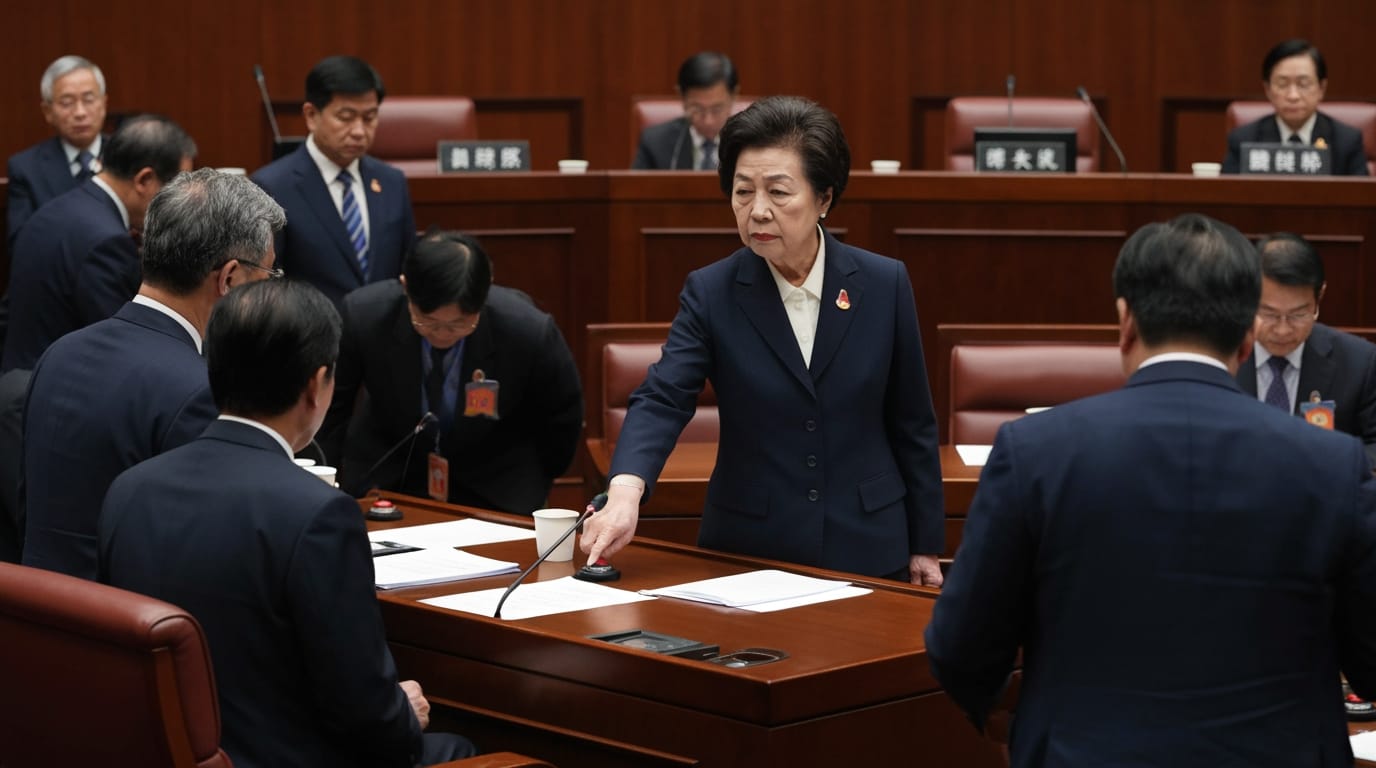
TAIPEI – Taiwan's parliament on Friday authorized its government to sign contracts for a crucial segment of U.S. arms sales, a move signaling Taipei's urgent commitment to bolstering its defenses in the face of escalating military pressure from Beijing. The legislative action, encompassing four distinct weapons systems valued at approximately $9 billion, comes as Taiwan races against looming signing deadlines and amid ongoing political debates over its defense spending. This approval is part of a larger, previously announced $11 billion package, with an even more substantial $14 billion arms deal reportedly awaiting U.S. presidential approval, poised to become the largest in Taiwan's history.
Legislative Urgency Pushes Through Critical Approvals
The unanimous resolution passed by Taiwan's parliament on March 13 granted the government the necessary authorization to proceed with signing agreements for weapons systems that were part of an $11 billion U.S. arms package announced in December 2025. This expedited approval was driven by warnings from Taiwanese officials that failing to meet signing deadlines would relegate the island to the "back of the queue" for critical weapon deliveries, potentially delaying essential defensive capabilities. The four systems covered by this immediate authorization include advanced anti-tank missiles like the TOW and Javelin, M109A7 self-propelled howitzers, and the highly mobile HIMARS multiple launch rocket systems.
The parliamentary move bypasses, for now, a broader gridlock over President Lai Ching-te's proposed NT$1.25 trillion (US$40 billion) special defense budget, which opposition parties have repeatedly stalled. While supporting the principle of enhanced defense, opposition lawmakers have expressed concerns about the lack of clarity in the government's proposals, resisting what they term "blank cheques." This internal political dynamic underscores the complexities of Taiwan's defense procurement efforts, even as the external threat environment intensifies. The Defense Ministry has been coordinating closely with U.S. authorities, including the Defense Security Cooperation Agency, to ensure the timely provision of information on items and delivery schedules.
Bolstering Asymmetric Warfare Capabilities
Taiwan's acquisition of these U.S. arms is fundamentally aimed at strengthening its deterrence capabilities against the People's Republic of China, which views the self-governed island as an integral part of its territory and has not renounced the use of force to achieve unification. The military purchases are largely aligned with Taiwan's strategy of "asymmetric warfare," which focuses on developing capabilities to inflict significant costs on any invading force, thereby deterring an attack.
The weapons approved, such as the HIMARS and Javelin missiles, are considered crucial for this strategy. HIMARS, capable of launching precision-guided rockets and long-range Army Tactical Missile Systems (ATACMS), could allow Taiwan to strike military targets across the Taiwan Strait, an essential component of its defensive posture. Anti-tank missiles like the TOW and Javelin are vital for countering potential amphibious assaults and armored threats. However, some military experts have voiced concerns that certain expensive systems, such as the Patriot PAC-3 missile defense system and the National Advanced Surface-to-Air Missile System (NASAMS), might not be the most cost-effective solutions against anticipated saturation attacks involving cheaper drones and multiple rocket launchers. Critics argue these systems are better suited for intercepting ballistic missiles, potentially creating an "anti-asymmetry" in defensive spending.
The United States, operating under the framework of the Taiwan Relations Act, has long maintained a policy of providing Taiwan with the means to defend itself. The Trump administration's "America First Arms Transfer Strategy" further emphasizes prioritizing arms sales to partners who demonstrate a robust commitment to their own self-defense, a category into which Taiwan evidently falls. This ongoing support from Washington is seen as a critical bulwark against Beijing's increasing assertiveness in the region.
The Shadow of a Record-Breaking Deal and Geopolitical Maneuvering
Beyond the recently approved $9 billion package, a significantly larger U.S. arms deal, estimated at approximately $14 billion (or $14.3 billion), is reportedly awaiting approval from U.S. President Donald Trump. This potential agreement, which would be the largest arms sale ever to Taiwan, is expected to include advanced air defense systems, primarily PAC-3 and NASAMS interceptor missiles. An additional $6 billion in "asymmetric" defense capabilities is also under consideration.
The timing of this potential announcement is particularly sensitive, as it is anticipated to occur after President Trump's scheduled trip to China from March 31 to April 2, where he is slated to meet with Chinese President Xi Jinping. U.S. administrations have historically timed arms sales approvals for Taiwan around diplomatic engagements with Beijing, a delicate balancing act aimed at managing strategic competition while maintaining diplomatic channels. This approach suggests a careful calibration of U.S. foreign policy, seeking to avoid overshadowing high-level diplomatic talks while still signaling unwavering support for Taiwan's defense. The large scale of this pending deal, if approved, would underscore a substantial increase in U.S. military support for the island.
Beijing's Unwavering Opposition and Regional Repercussions
China has consistently and unequivocally condemned U.S. arms sales to Taiwan, viewing such transactions as a blatant interference in its internal affairs and a violation of the "one-China" principle. Beijing regularly reiterates its demand that the United States cease all arms sales to Taiwan, arguing that these actions undermine regional stability and Sino-U.S. relations.
Chinese Foreign Ministry spokesperson Guo Jiakun, in response to reports of the new arms packages, reiterated Beijing's firm opposition and urged Washington to adhere to the "one-China" principle and the three China-U.S. joint communiques. China's stance is rooted in its claim of sovereignty over Taiwan, which it considers a breakaway province to be reunited with the mainland, by force if necessary.
The ongoing arms deals inevitably exacerbate tensions across the Taiwan Strait and inject further friction into already complex U.S.-China relations. While Washington frames the sales as essential for Taiwan's self-defense and regional peace, Beijing views them as provocative actions that encourage pro-independence elements in Taiwan. The implications extend beyond the immediate parties, impacting the broader geopolitical landscape of the Indo-Pacific, where the strategic rivalry between the United States and China continues to intensify.
Conclusion
Taiwan's parliamentary approval of key U.S. arms contracts marks a significant step in its ongoing efforts to fortify its defenses against a formidable and increasingly assertive China. Driven by immediate deadlines and a strategic imperative to develop asymmetric warfare capabilities, Taipei is making concrete moves to enhance its military readiness. This action, coupled with the anticipation of a record-setting $14 billion arms package from the U.S., underscores Washington's sustained commitment to Taiwan's security, even as it navigates sensitive diplomatic engagements with Beijing.
However, these developments unfold against a backdrop of unwavering opposition from China, which consistently views such arms sales as infringements on its sovereignty. The interplay of Taiwan's self-defense aspirations, U.S. strategic support, and China's geopolitical ambitions creates a dynamic and volatile situation in the Indo-Pacific. The flow of advanced weaponry to Taiwan reflects not only a pragmatic response to perceived threats but also a profound commitment to maintaining the delicate balance of power in one of the world's most critical geopolitical hotspots. The coming months, particularly following President Trump's visit to China, will reveal further dimensions of this evolving and closely watched saga.


