Diplomatic Confusion Clouds Middle East Tensions as Trump Announces Talks, Iran Demurs
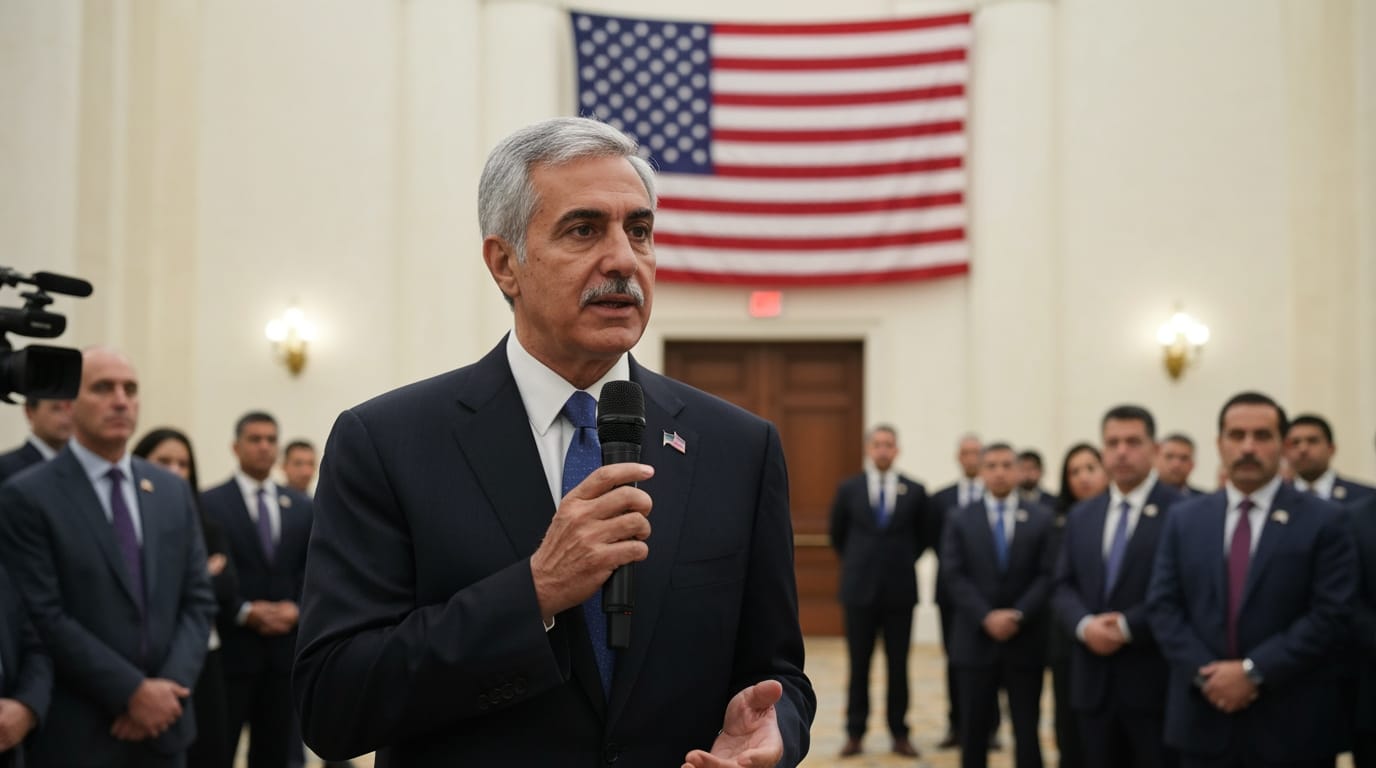
Doha, Qatar – June 30, 2026 – A significant diplomatic rift emerged this week as former President Donald Trump announced an imminent meeting in Doha between U.S. and Iranian officials, a claim swiftly and unequivocally rejected by Tehran. The conflicting statements have cast a shadow of uncertainty over already fraught relations between the two nations, coming on the heels of a dangerous escalation of military exchanges in the strategically vital Strait of Hormuz and amidst efforts to uphold a fragile memorandum of understanding (MoU).
The President's Unexpected Announcement
On Monday, President Donald Trump declared on his Truth Social platform that Iran had requested a meeting and that it would take place the following day in Doha, Qatar. This announcement suggested a breakthrough in diplomatic efforts, particularly after a weekend marked by renewed hostilities in the Gulf. White House Press Secretary Karoline Leavitt corroborated Trump’s claim, confirming that U.S. Special Envoy Steve Witkoff and Senior Advisor Jared Kushner were slated to lead the American delegation to Doha for "high-level meetings." Trump, speaking from the Oval Office, characterized the potential meeting as "perhaps important, perhaps not," underscoring the inherent unpredictability of the delicate diplomatic dance. The proposed talks were widely understood to be aimed at de-escalating tensions and potentially advancing discussions on a broader peace agreement, particularly in the wake of recent military flare-ups.
Tehran's Swift Rebuttal
However, Tehran wasted no time in refuting the American president's assertion. Within hours of Trump's post, Iranian officials issued strong denials, stating that no such comprehensive negotiation meeting with the United States was scheduled. Esmaeil Baghaei, Iran's Foreign Ministry spokesperson, emphatically stated that "there will be no negotiation meeting with the American side at any level in the coming days." He clarified that while an Iranian expert delegation would indeed travel to Doha later in the week, its purpose was solely to follow up on the implementation of a previously agreed-upon Memorandum of Understanding, specifically regarding the release of Iran's frozen assets and the monitoring of oil exports. Baghaei stressed that this technical visit had "no relation" to any meeting with U.S. representatives for broader negotiations. Deputy Foreign Minister Kazem Gharibabadi echoed this sentiment, adding that technical meetings of working groups were not planned for the week and that negotiations could only commence once Iran's conditions within the MoU were met.
Fragile Truce and Hormuz Tensions
The diplomatic confusion unfolded against a backdrop of heightened military tensions in the Middle East. Just days prior, the region witnessed a dangerous exchange of strikes following an attack on a cargo ship in the Strait of Hormuz, prompting retaliatory actions from the U.S. against Iranian military targets. Iran subsequently launched missiles and drones at U.S. military bases in Kuwait and Bahrain, threatening to unravel an already fragile ceasefire. These hostilities highlighted the precarious nature of the existing Memorandum of Understanding between Washington and Tehran, signed earlier this month, which aimed to establish a 60-day period for negotiations towards a permanent end to the conflict and to ensure the reopening of the Strait of Hormuz. A major point of contention within this MoU has been Iran's assertion of exclusive control over the Strait of Hormuz, a claim rejected by the United States. Oman, a regional mediator, has indicated that the responsibility for ensuring safe passage through the strait "primarily rests with Iran" as per the MoU, a perspective that conflicts with other international views regarding freedom of navigation.
The MoU also reportedly included provisions for the release of Iranian frozen assets. Iranian President Masoud Pezeshkian had recently announced that $6 billion of nearly $12 billion in Iranian funds held in Qatar would be released, describing it as a "great victory for the Iranian people." This financial component is a critical aspect of the MoU's implementation that Tehran appears eager to address, separate from broader political negotiations.
Diplomatic Quagmire and Regional Implications
The public disagreement between the U.S. and Iran over the nature and timing of talks in Doha underscores a deep-seated mistrust and a persistent lack of common ground. The immediate implication is a stalling of any potential high-level diplomatic progress towards a lasting peace. While technical discussions on the MoU are reportedly continuing through intermediaries and expert delegations, the absence of direct, high-level engagement leaves a significant vacuum in de-escalation efforts. The conflicting narratives also create confusion for regional and international actors, many of whom are closely watching for signs of stability or further deterioration in the Middle East. The German Foreign Minister, Johann Wadephul, for instance, had reaffirmed support for the U.S.-Iran MoU, calling it an "important step" and an "opportunity for diplomacy in what remains a highly fragile situation." However, the current diplomatic impasse jeopardizes the effectiveness of such agreements and signals continued volatility for global shipping, energy markets, and regional security. The Strait of Hormuz remains a critical chokepoint, and its contested control continues to fuel fears of wider conflict and economic disruption.
Conclusion
The contradictory announcements regarding potential U.S.-Iran talks in Doha highlight the profound challenges in navigating the complex geopolitical landscape of the Middle East. While Washington expressed an openness, if cautious, to high-level negotiations, Tehran firmly insisted on a more limited scope for discussions centered solely on the implementation of existing agreements, particularly concerning frozen assets and maritime control. This diplomatic disconnect, set against a backdrop of recent military skirmishes in the Strait of Hormuz, leaves the path forward shrouded in uncertainty. Without a clear shared understanding of the agenda and participants for future engagements, the prospects for sustained de-escalation and a comprehensive resolution to the ongoing tensions between the United States and Iran remain elusive, posing significant risks for regional stability and international security.


