Disinformation: The Silent Enabler Worsening Ebola's Grip in the Democratic Republic of Congo
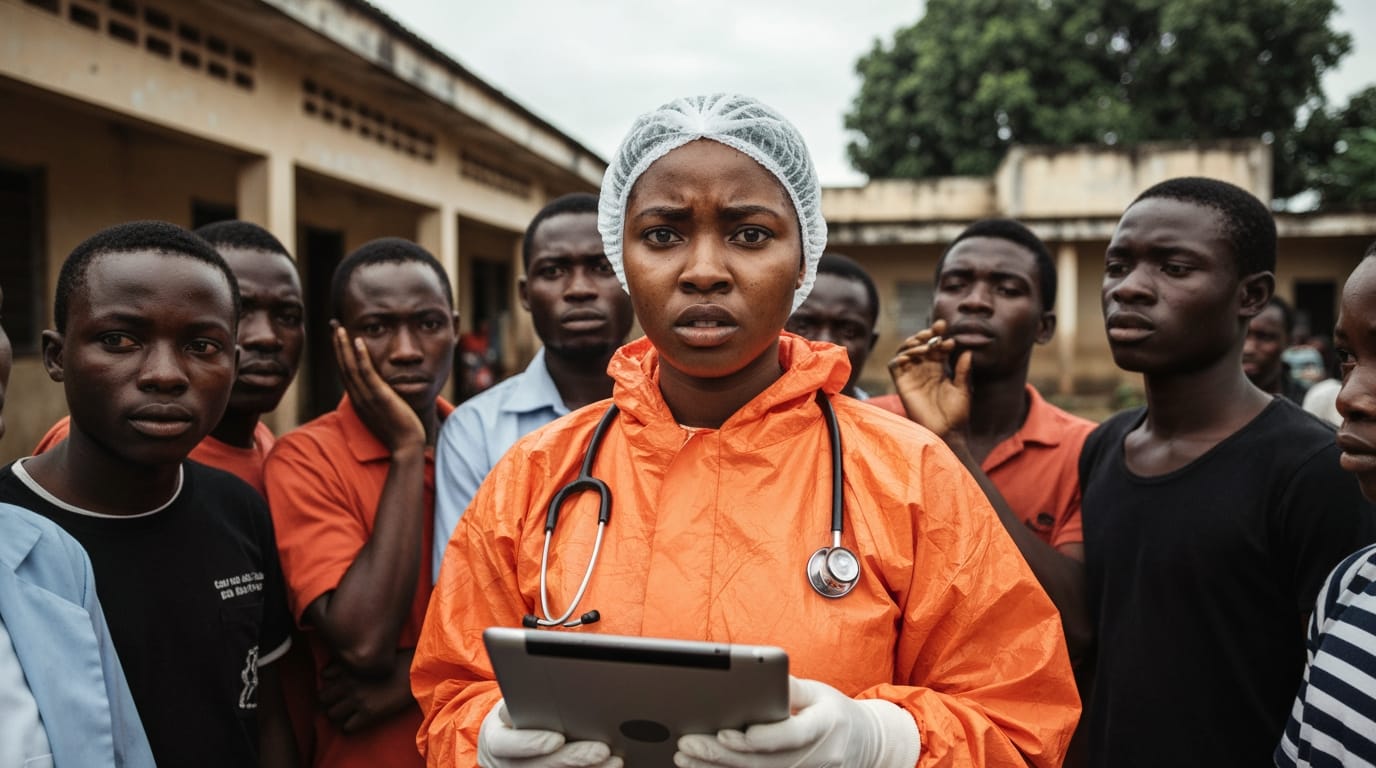
BUNIA, Democratic Republic of Congo – As the Democratic Republic of Congo grapples with its 17th Ebola outbreak, a deadly and insidious enemy is proving almost as formidable as the virus itself: widespread disinformation. False narratives and deep-seated mistrust are actively sabotaging public health efforts, leading to delayed diagnoses, vaccine hesitancy, and even violent attacks on frontline medical workers, prolonging suffering and hindering containment in a nation already scarred by conflict and instability.
A Dual Epidemic: Virus and Untruths
The current outbreak, identified as the rare Bundibugyo type of Ebola, emerged on May 15, 2026, with health authorities initially suspecting hundreds of cases before the official announcement. Despite the swift efforts of international and national health organizations, the response has been immediately challenged by a deluge of skepticism and misinformation. This "infodemic" is not a new phenomenon in the DRC; it has plagued previous Ebola responses, notably the 2014 and 2018-2019 outbreaks, which saw over 1,300 deaths. In these earlier crises, as today, misconstrued information undermined scientific understanding, questioned the motivations of health professionals, and politicized vital health activities. The World Health Organization Director-General, Tedros Adhanom Ghebreyesus, underscored the gravity of the situation, stating that misinformation is "almost as dangerous as the virus itself and spreads just as fast."
The Echo Chamber of Falsehoods
The disinformation ecosystem surrounding Ebola in the DRC is complex and deeply rooted in historical, political, and cultural contexts. Rumors often spread through word of mouth, a common channel given the low internet penetration in many affected areas. These narratives frequently portray Ebola as a foreign construct or a conspiracy. Many Congolese residents have expressed beliefs that Ebola is not a real illness, or that it was "brought in by white people" for nefarious purposes, such as making money or conducting experiments. Some false claims have suggested that people dying from Ebola were deliberately killed in treatment centers, or that foreign aid workers were actively spreading the disease. Others posit that a simple cure exists but is being deliberately withheld by health authorities, or that vaccines are dangerous and will infect recipients rather than protect them. During the current Bundibugyo outbreak, many dismissed the initial news as a "Western conspiracy." These pervasive myths feed into a wider narrative of mistrust that views public health interventions with suspicion, sometimes even interpreting them as instruments of political or economic exploitation.
Deadly Consequences on the Ground
The immediate impact of this disinformation is devastating for public health efforts. Distrust of medical personnel and authorities leads to communities delaying seeking care, refusing treatment, and rejecting protective measures critical for containing the virus. A survey conducted during a previous outbreak in Beni and Butembo found a direct link between mistrust and misinformation, leading to fewer efforts to protect against the disease, including vaccine hesitancy. Roughly a quarter of respondents in that survey questioned the very existence of Ebola.
The consequences extend to critical procedures like safe burials. With Ebola's viral load spiking after death, careful handling of deceased individuals is paramount to prevent further spread. However, rumors have led to community resistance, with families sometimes demanding the bodies of suspected Ebola victims for traditional burials, leading to violent clashes and the burning of treatment facilities. Health workers, including Congolese nationals, become targets of suspicion and violence. More than 130 attacks on healthcare facilities were reported during a past outbreak, resulting in dozens of deaths. Nurse Muhiwa Maheshe Mululu, an Ebola survivor who later worked to raise awareness, received death threats and had his home attacked by arsonists because his community believed he was corrupted by emergency workers. These incidents force health teams to operate in insecure environments, diverting resources and attention from the primary goal of disease containment. Samson Gerson, a 52-year-old Bunia resident, epitomized the deep-seated skepticism, stating he would "prefer to die" rather than take an Ebola vaccine, believing officials profit from the crisis.
Roots of Deep Mistrust
The fertile ground for disinformation in the DRC stems from a complex interplay of historical trauma, political instability, and ongoing armed conflict. Decades of conflict, particularly in the eastern regions where outbreaks frequently occur, have fostered deep mistrust in governmental institutions and foreign assistance. Communities in these areas have experienced repeated cycles of violence, displacement, and neglect, leading to a profound skepticism toward any external intervention, even humanitarian aid. The perception that outsiders, particularly those from Western nations, are exploiting the region's resources or interfering in its affairs is a powerful undercurrent that makes conspiracy theories about Ebola particularly resonant. Local officials' perceived lack of involvement can further exacerbate this mistrust, making communities more receptive to false narratives. This pervasive skepticism creates an environment where fear and an information vacuum allow misinformation to thrive, blurring the lines between fact and fiction.
Battling for Belief: The Counter-Narrative
Recognizing the critical role of trust in epidemic control, significant efforts are being made to combat disinformation. Central to these strategies is robust community engagement, which emphasizes involving local actors and leaders to deliver harmonized, culturally sensitive messages. Organizations like the International Federation of Red Cross and Red Crescent Societies (IFRC) deploy volunteers for door-to-door campaigns, explaining how to protect oneself and when to seek care.
Ebola survivors have emerged as powerful advocates, uniquely positioned to share their experiences and challenge stigma and misinformation. Nurse Mululu, after his personal ordeal, now runs a survivors' association, conducting outreach work and giving talks to community groups about his recovery. In Bunia, journalist Verité Johnson leads a daily radio program on Radio Télévision Mont Bleu, providing vital facts, updates from health specialists, and answering community questions, directly countering rumors circulating in the region. Risk communication strategies employ local languages and various media, including short videos and billboards, to disseminate accurate information. Furthermore, health organizations are developing community feedback systems to track and understand circulating rumors, allowing for targeted and effective counter-messaging. These efforts aim to rebuild trust, not just in specific health interventions, but in the broader public health framework.
Conclusion
The Democratic Republic of Congo's ongoing struggle against Ebola vividly illustrates that controlling an epidemic extends far beyond medical science alone. The battle against the virus is inextricably linked to the fight against disinformation, which actively erodes trust, obstructs public health measures, and exacerbates human suffering. The recurring pattern of misinformation underscores the urgent need for sustained investment in community engagement, transparent communication, and addressing the root causes of mistrust, including political instability and historical grievances. Only by tackling both the biological and informational epidemics simultaneously can the DRC and the global community hope to break the cycle of fear, falsehoods, and devastating outbreaks. The lessons learned in the DRC highlight a universal truth in public health: where reliable information falters, disease thrives, and the human cost becomes immeasurable.


