Divergent Paths: US and Israel Grapple with Iran's Nuclear Ambitions
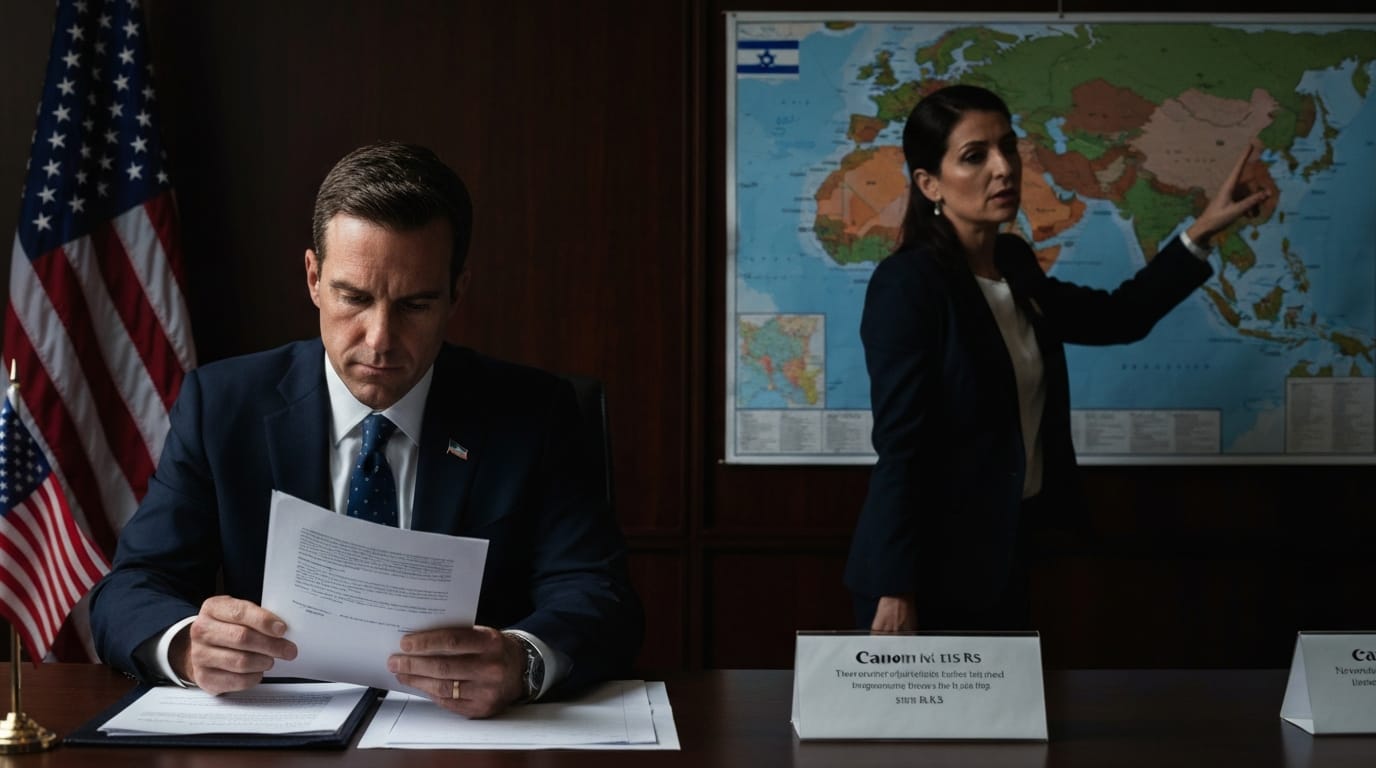
WASHINGTON D.C. – A persistent and increasingly public chasm has emerged between the United States and Israel regarding the most effective strategy to neutralize Iran's nuclear program and curb its destabilizing regional influence. Despite sharing the ultimate goal of preventing Tehran from acquiring nuclear weapons, the two steadfast allies often find themselves at odds over the pace, methods, and acceptable risks involved in confronting the Islamic Republic. This strategic divergence presents a complex challenge for regional stability and the future of international non-proliferation efforts, forcing a delicate diplomatic balancing act amidst escalating tensions in the Middle East.
The Fundamental Divide: Diplomacy vs. Pre-Emption
At the heart of the US-Israeli disagreement lies a fundamental difference in how each nation assesses the immediacy of the threat and the primary tools for addressing it. The United States, particularly under recent administrations, has consistently favored a multilateral diplomatic approach, coupled with robust economic sanctions, to compel Iran back into compliance with international nuclear safeguards. Washington generally views military action as a last resort, prioritizing negotiations and verifiable agreements to contain Iran's nuclear enrichment capabilities. This strategy often emphasizes a longer-term horizon for achieving non-proliferation goals, seeking to manage the threat through international frameworks and sustained pressure.
Israel, however, perceives Iran's nuclear program as an existential threat demanding a more urgent and decisive response. Israeli leaders have repeatedly expressed deep skepticism about the efficacy of diplomacy alone, particularly given Iran's track record of non-compliance and its pursuit of advanced enrichment technologies. For Jerusalem, the clock is ticking more rapidly, and the potential for a nuclear-armed Iran warrants a credible military option always on the table, if not an active consideration for pre-emptive strikes. This perspective stems from its geographic proximity to Iran and its proxies, coupled with the Iranian regime's explicit threats against the Jewish state.
The JCPOA: A Defining Point of Contention
The Joint Comprehensive Plan of Action (JCPOA), the 2015 international agreement designed to limit Iran's nuclear program in exchange for sanctions relief, serves as the most prominent example of the strategic rift. The Obama administration, and later the Biden administration, championed the JCPOA as the most robust non-proliferation agreement ever negotiated, effectively rolling back Iran's nuclear activities and extending its "breakout time" to produce enough fissile material for a weapon. While acknowledging its imperfections, the US has largely advocated for a return to or a revised version of the deal, believing it offers the best verifiable mechanism to constrain Iran's nuclear path.
Conversely, Israel has been an unwavering critic of the JCPOA since its inception. Israeli leaders argue that the deal's "sunset clauses," which gradually lift restrictions on Iran's nuclear program over time, effectively provide Tehran with a legitimate pathway to nuclear weapons. Furthermore, Israel contends that the agreement failed to address critical elements of Iran's broader threat, including its ballistic missile program and its extensive network of regional proxies. From the Israeli vantage point, the JCPOA was a flawed accord that merely delayed, rather than eliminated, the threat, and any return to it would embolden the Iranian regime without adequately safeguarding regional security. The 2018 US withdrawal from the JCPOA, orchestrated by the Trump administration, was largely welcomed in Jerusalem but viewed with concern by many of Washington's European allies.
Regional Spheres of Influence and Proxy Warfare
Beyond the nuclear file, the US and Israel also diverge in their approaches to Iran's growing regional influence and its support for a complex web of non-state actors. The United States often views Iran's proxy networks, such as Hezbollah in Lebanon, various militias in Iraq and Syria, and the Houthis in Yemen, as destabilizing forces that contribute to humanitarian crises and complicate counter-terrorism efforts. While the US engages in targeted actions against these groups, its broader regional strategy often aims for de-escalation and the maintenance of a fragile balance, seeking to avoid large-scale confrontations that could entangle American forces.
Israel, on the other hand, perceives these Iranian-backed proxies as direct and immediate threats to its borders and national security. Jerusalem views Hezbollah, in particular, as a heavily armed extension of the Iranian Revolutionary Guard Corps (IRGC), capable of launching devastating attacks. Consequently, Israel has adopted a more proactive and often covert operational strategy, conducting frequent airstrikes in Syria and other locations to prevent the transfer of advanced weaponry to these groups and to degrade their capabilities. For Israel, confronting Iran's regional armaments and influence is not merely a matter of stability but one of immediate self-defense, intertwined with the nuclear threat.
Defining Red Lines and Actionable Timelines
The differing perceptions of urgency are starkly evident in the "red lines" each nation draws concerning Iran's nuclear advancements. For the United States, a primary red line has historically been Iran's actual acquisition of a nuclear weapon or a demonstrable move towards "breakout capability" – the rapid production of sufficient weapons-grade fissile material to build a bomb. US intelligence assessments often provide a longer timeline for Iran to reach this point, suggesting more time for diplomatic pressure to yield results.
Israel's red lines are typically drawn much earlier in the nuclear development process. Jerusalem frequently emphasizes Iran's accumulation of highly enriched uranium (20% or 60% purity), the deployment of advanced centrifuges, or overt moves towards enriching to weapons-grade levels (around 90%) as immediate triggers for serious concern. Israeli intelligence often presents a more compressed timeline for Iran's nuclear progress, underscoring the perceived need for pre-emptive action to prevent Iran from reaching an irreversible point where a military option becomes too risky or ineffective. This disparity in assessed timelines and thresholds for action creates ongoing friction, with Israel often pushing for more forceful responses than the US is prepared to countenance.
Conclusion: A Precarious Alliance on a Perilous Path
The strategic divergences between the United States and Israel on Iran are profound, reflecting different geographical realities, threat assessments, and national security doctrines. While both nations remain committed to preventing a nuclear Iran, their preferred pathways to that goal diverge significantly, creating a persistent challenge for the enduring alliance. The US leans heavily on the potential for diplomacy and sanctions, seeking to manage the threat over a longer arc, while Israel prioritizes immediate deterrence and the credible threat, or even use, of force, given what it views as an existential and rapidly approaching danger.
As Iran continues to advance its nuclear program, enriching uranium to higher purities and installing more advanced centrifuges, the diplomatic tightrope walk for Washington and Jerusalem becomes increasingly precarious. Reconciling these divergent strategies requires constant, high-level communication and a delicate balancing act to maintain allied unity while addressing perceived threats. The implications of this ongoing strategic tension extend beyond the two nations, impacting regional power dynamics, international non-proliferation efforts, and the broader stability of the Middle East, demanding a nuanced and adaptable approach from all parties involved.


