Dozens Killed in Russian Missile Strike on Sumy; Trump Calls Attack 'Horrible'
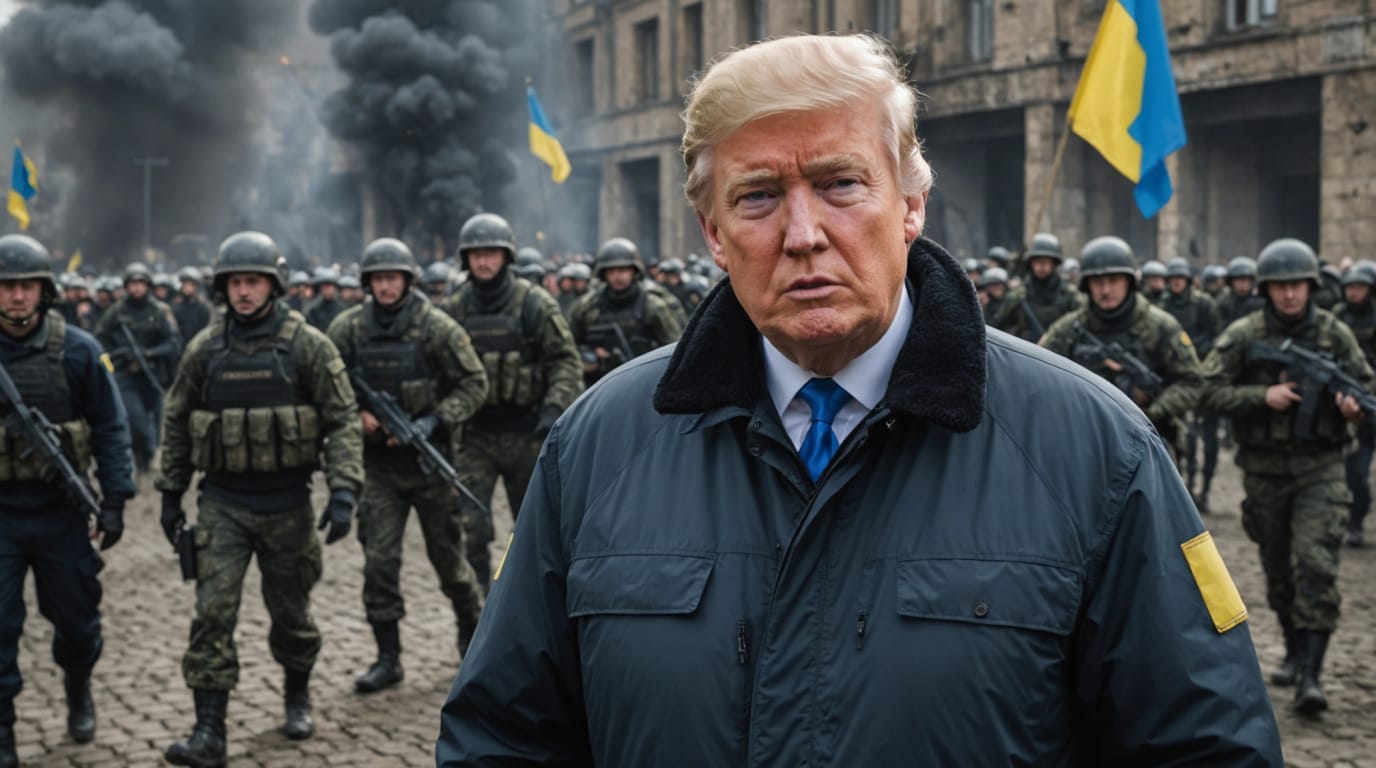
SUMY, Ukraine (AP) — A Russian missile attack on the northeastern Ukrainian city of Sumy killed at least 34 people, including two children, and wounded 117 on Sunday as residents gathered to celebrate Palm Sunday. The attack, one of the deadliest on Ukrainian civilians in recent months, drew swift condemnation from international leaders, while former U.S. President Donald Trump described the attack as "horrible," suggesting it may have been a "mistake."
The two ballistic missiles struck the heart of Sumy around 10:15 a.m. local time, according to Ukrainian officials. Images from the scene showed bodies scattered on the streets, burned-out cars, and buildings reduced to rubble. The attack followed a deadly missile strike on April 4 in President Volodymyr Zelenskyy's hometown of Kryvyi Rih, which killed approximately 20 people, including nine children.
Attack Details and Casualties
According to Kyrylo Budanov, head of Ukraine's military intelligence (HUR), the attack was carried out by the Russian 112th and 448th missile brigades, who launched two Iskander-M ballistic missiles from the Liski settlement in Voronezh Oblast and the Lezhenski settlement in Kursk Oblast. Andriy Yermak, head of the Ukrainian President's Office, stated that cluster munitions were used in the attack, a claim that has not been independently verified. The use of cluster munitions in civilian areas is considered a violation of international humanitarian law.
Among the dead was Olena Kohut, an organist of the Sumy Regional Philharmonic Orchestra. Ukrainian officials also reported that Colonel Yuri Yula, commander of the 27th Rocket Artillery Brigade, was killed in the strike.
International Condemnation
The Sumy attack has been widely condemned by European leaders and international organizations. French President Emmanuel Macron stated that the attack demonstrated Russia's disregard for human lives, international law, and diplomatic efforts. He called for strong measures to impose a ceasefire on Russia.
British Prime Minister Keir Starmer said he was "appalled" by the attacks on civilians. EU High Representative for Foreign Affairs and Security Policy Kaja Kallas described the attack as "heartbreaking," noting that it occurred as citizens gathered for Palm Sunday.
Trump's Reaction
Former U.S. President Donald Trump, when asked about the attack, called it "terrible" and suggested it may have been a "mistake." He did not elaborate on how he came to this conclusion but reiterated his claim that the war in Ukraine would not have started under his leadership.
"I think it was terrible, and I was told they made a mistake, but I think it's a horrible thing. I think the whole war is a horrible thing... for that war to have started is an abuse of power," Trump said. He also placed blame on former U.S. President Joe Biden for allowing the war to start.
Trump's comments have drawn criticism, with some accusing him of echoing Russian propaganda. Oleksandr Merezhko, a senior Ukrainian MP, urged the FBI to investigate who is spreading Russian propaganda in the White House, comparing Trump's statement to saying that "9/11 was just a 'mistake' by al-Qaeda."
Russia's Response
The Russian defense ministry stated that the Sumy attack targeted a meeting of the command staff of the Seversk operational-tactical group, claiming that over 60 Ukrainian soldiers were killed. The ministry also accused Kyiv of placing military gatherings in civilian areas, alleging that Ukrainian forces are using civilians as human shields. These claims have not been independently verified. Russian state television portrayed the attack as a "staged provocation" aimed at undermining ceasefire talks between Moscow and Washington.
Humanitarian Situation in Sumy
The Sumy region has faced a growing humanitarian crisis since August 2024, exacerbated by its proximity to the Russian border. Sustained Russian attacks have heavily constrained people's access to essential services such as healthcare, banking, and transportation. According to the United Nations, relentless attacks have caused extensive damage to homes, hospitals, schools, and critical civilian infrastructure, including energy and water systems.
As of December 2024, Russian air attacks on the Sumy region were 65% higher compared to July of the same year. The attacks have resulted in significant damage to the region's energy infrastructure, leading to unplanned power outages and disrupting access to essential services, especially during the winter months.
The Ongoing Conflict
The Sumy attack underscores the challenges of negotiating an end to the three-year war between Russia and Ukraine. The attack occurred just days after U.S. envoy Steve Witkoff met with Russian President Vladimir Putin to discuss peace prospects. Despite these efforts, both sides continue to accuse each other of violating a tentative U.S.-brokered deal to pause strikes on energy infrastructure.
The recent escalation in attacks has raised concerns about a potential spring offensive. Ukrainian President Volodymyr Zelenskyy has called for a global response to the Sumy attack, stating that "Talks have never stopped ballistic missiles and aerial bombs. What's needed is an attitude toward Russia that a terrorist deserves."
Conclusion
The deadly missile strike on Sumy serves as a stark reminder of the human cost of the ongoing conflict in Ukraine. As international leaders condemn the attack and call for a ceasefire, the humanitarian situation in the region continues to deteriorate, leaving civilians vulnerable to further violence and hardship. The path towards a lasting peace remains uncertain, with both sides entrenched in their positions and the threat of further escalation looming.


