Drone Attack Claims Lives of Six Bangladeshi UN Peacekeepers in Sudan Amid Escalating Conflict
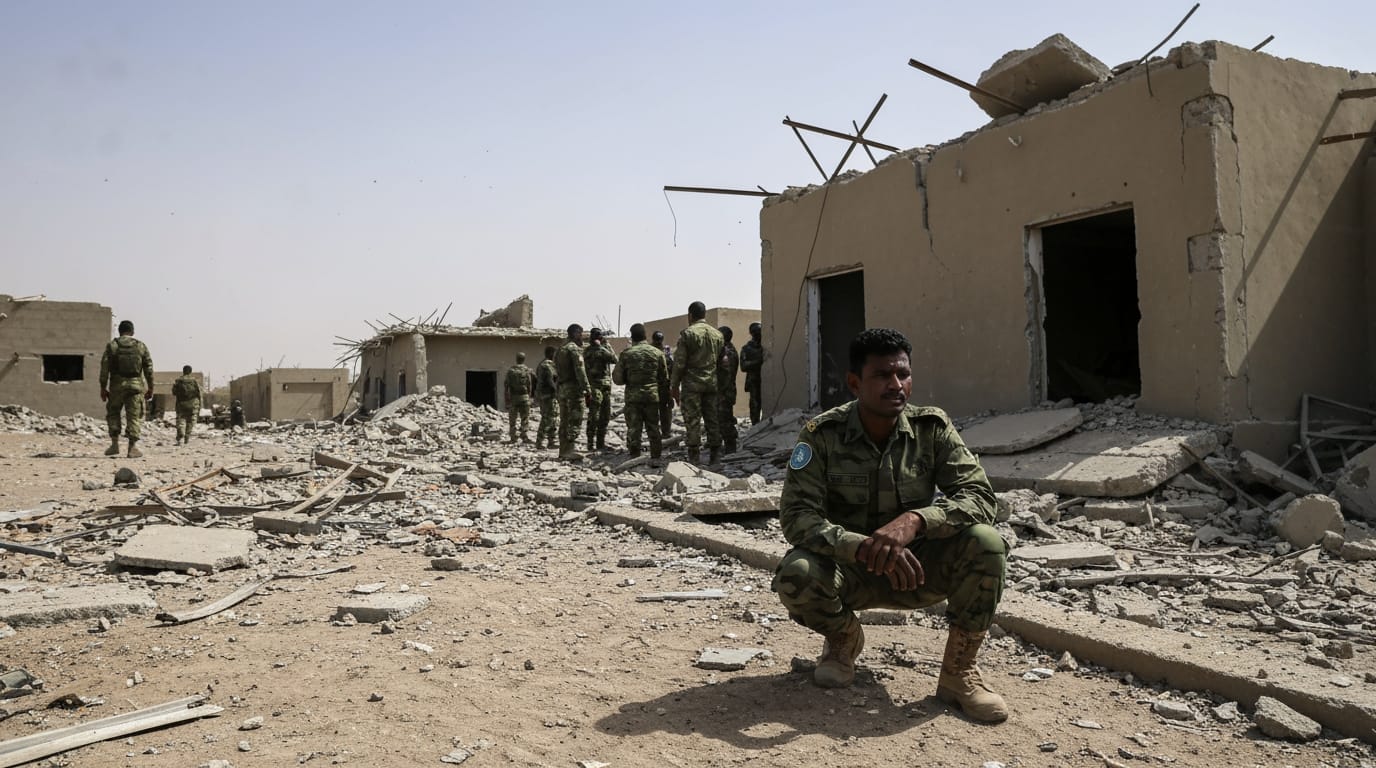
KADUGLI, Sudan – A drone strike on Saturday, December 13, 2025, tragically claimed the lives of six United Nations peacekeepers from Bangladesh and injured eight others at a logistics base in Kadugli, the capital of Sudan's South Kordofan state. The attack targeted personnel serving with the UN Interim Security Force for Abyei (UNISFA), a mission mandated to maintain peace in the disputed border region between Sudan and South Sudan. This devastating incident marks a grave escalation in the conflict gripping Sudan, drawing strong condemnation from international bodies and highlighting the increasing perils faced by peacekeepers in volatile zones.
All the casualties were Bangladeshi nationals, underscoring the profound sacrifices made by troop-contributing countries to global peace efforts. The United Nations Secretary-General, António Guterres, swiftly condemned the "horrific" attacks, stating that assaults targeting UN peacekeepers may constitute war crimes under international law and demanding accountability for those responsible. The Sudanese military and its aligned Transitional Sovereign Council were quick to accuse the paramilitary Rapid Support Forces (RSF) of orchestrating the strike, a claim the RSF vehemently denied.
The Deadly Strike and International Outcry
The drone attack, which reportedly involved three missiles, struck the UNISFA logistics base, causing fires and significant damage to a UN storage facility. Beyond the six fatalities, eight peacekeepers sustained injuries, with some reports indicating four were in critical condition, necessitating urgent medical attention and potential evacuation. This deliberate targeting of a UN facility has ignited a wave of international condemnation and calls for immediate investigation.
UN Secretary-General Guterres extended his deepest condolences to the government and people of Bangladesh, as well as to the families of the fallen peacekeepers, while also wishing a swift recovery to the injured. He emphasized the obligation of all parties to the conflict to protect UN personnel and civilians, reiterating his call for an immediate cessation of hostilities and a resumption of talks aimed at achieving a lasting ceasefire and a comprehensive, Sudanese-owned political process.
In Dhaka, Bangladesh's interim leader, Muhammad Yunus, expressed profound grief over the incident, referring to the fallen as "valiant sons" who embraced martyrdom in the noble pursuit of peace. The Bangladeshi Ministry of Foreign Affairs issued a strong condemnation of the attack, requesting the UN to ensure the highest level of medical treatment for the injured and facilitate the swift repatriation of the bodies of those killed. They also affirmed the government's commitment to standing by the bereaved families during this difficult time.
UNISFA's Crucial Mandate in a Volatile Region
The United Nations Interim Security Force for Abyei (UNISFA) was established in June 2011 by the UN Security Council following renewed violence and escalating tensions in the Abyei region. Abyei, an oil-rich area, is a contested territory straddling the border between Sudan and South Sudan, claimed by both nations since South Sudan gained independence in 2011. UNISFA's mandate includes protecting civilians under imminent threat, deterring violence, monitoring the redeployment of armed forces, facilitating humanitarian aid delivery, and strengthening the capacity of local law enforcement. The mission's presence is vital for maintaining a fragile peace in an area susceptible to inter-communal clashes and displacement.
Kadugli, where the attack occurred, is located in South Kordofan state, a region that has become a flashpoint in the wider conflict between the Sudanese Armed Forces (SAF) and the Rapid Support Forces (RSF). This brutal conflict, which erupted in April 2023, has plunged Sudan into chaos, claiming tens of thousands of lives and displacing millions. The fighting has increasingly centered on Kordofan, with the RSF making eastward pushes from Darfur into this strategically important agricultural region, crucial for supply lines and troop movements. The severity of the humanitarian crisis in Kadugli is so dire that famine was declared in the area in early November, further compounding the suffering of its inhabitants. The attack on UNISFA marks the first direct assault on the mission since the war began, signaling a dangerous new phase in the conflict's disregard for international peacekeeping efforts.
Bangladesh: A Pillar of Global Peacekeeping
Bangladesh has a long and distinguished history of contributing to global peace and security through its extensive involvement in UN peacekeeping operations. Since its first deployment of military observers to the United Nations Iran–Iraq Military Observer Group (UNIIMOG) in 1988, Bangladesh has consistently been one of the largest troop-contributing countries to UN missions worldwide. Its armed forces and police personnel have served in numerous challenging environments across Africa, Asia, and the Middle East, demonstrating unwavering commitment to the UN's mandate.
The nation's motivation stems in part from its own history of suffering during its Liberation War in 1971, which instilled a deep understanding of human suffering and a commitment to preventing such atrocities elsewhere. This dedication is enshrined in the country's constitution, which promotes international peace and cooperation. Over the decades, Bangladeshi peacekeepers have earned a reputation for their professionalism, impartiality, and dedication, often going beyond their immediate duties to provide humanitarian assistance and support to local communities. The loss of these six peacekeepers is a significant blow to Bangladesh, a nation that prides itself on its contributions to global peace and frequently mourns the sacrifices of its brave soldiers in service of this noble cause.
The Evolving Threat of Drone Warfare
The drone attack in Kadugli underscores a growing and alarming trend in modern warfare: the sophisticated and widespread use of drones by non-state actors and insurgent groups. These unmanned aerial vehicles, once primarily the domain of advanced militaries, are now more accessible and are being increasingly employed to deliver explosives and conduct surveillance, posing a significant threat to peacekeeping forces. The UN has recognized this evolving threat, noting that small, cheap drones can offer armed groups new ways to target UN bases and convoys.
This incident highlights the urgent need for UN peacekeeping missions to adapt their security protocols and defensive capabilities to counter such asymmetric threats. The ease with which these systems can be acquired and deployed makes them a potent weapon in protracted conflicts like the one in Sudan. Experts suggest that future peacekeeping operations will require enhanced technological solutions and revised strategies to protect personnel from both ground-based and aerial threats. The attack in Kadugli serves as a stark reminder that the environment for peacekeepers is becoming increasingly complex and dangerous, demanding continuous innovation and vigilance to ensure their safety while they fulfill their critical roles.
A Call for Peace and Protection
The deadly drone attack on the UNISFA base in Kadugli is a somber reminder of the immense risks undertaken by peacekeepers in the world's most volatile regions. The loss of six Bangladeshi lives is a tragic testament to the human cost of conflict and the unwavering dedication of those who serve under the UN flag. This incident not only represents a direct challenge to the authority and neutrality of UN peacekeeping operations but also exacerbates the already dire humanitarian situation in Sudan.
As international bodies and nations condemn this heinous act, the imperative for accountability remains paramount. The UN Secretary-General's call for an immediate ceasefire and renewed peace talks in Sudan gains added urgency in the wake of this tragedy. Protecting peacekeepers, who are often the last line of defense for vulnerable populations, is fundamental to the success of international peace efforts. This attack necessitates a re-evaluation of security measures for UN missions and a renewed global commitment to resolving conflicts through diplomatic means, ensuring that such sacrifices are not made in vain. The international community must stand united in demanding an end to violence and upholding the principles of peace and humanitarian protection that these fallen peacekeepers sought to embody.


