Dutch Court Mandates Urgent Climate Action for Caribbean Island, Citing Human Rights Violations
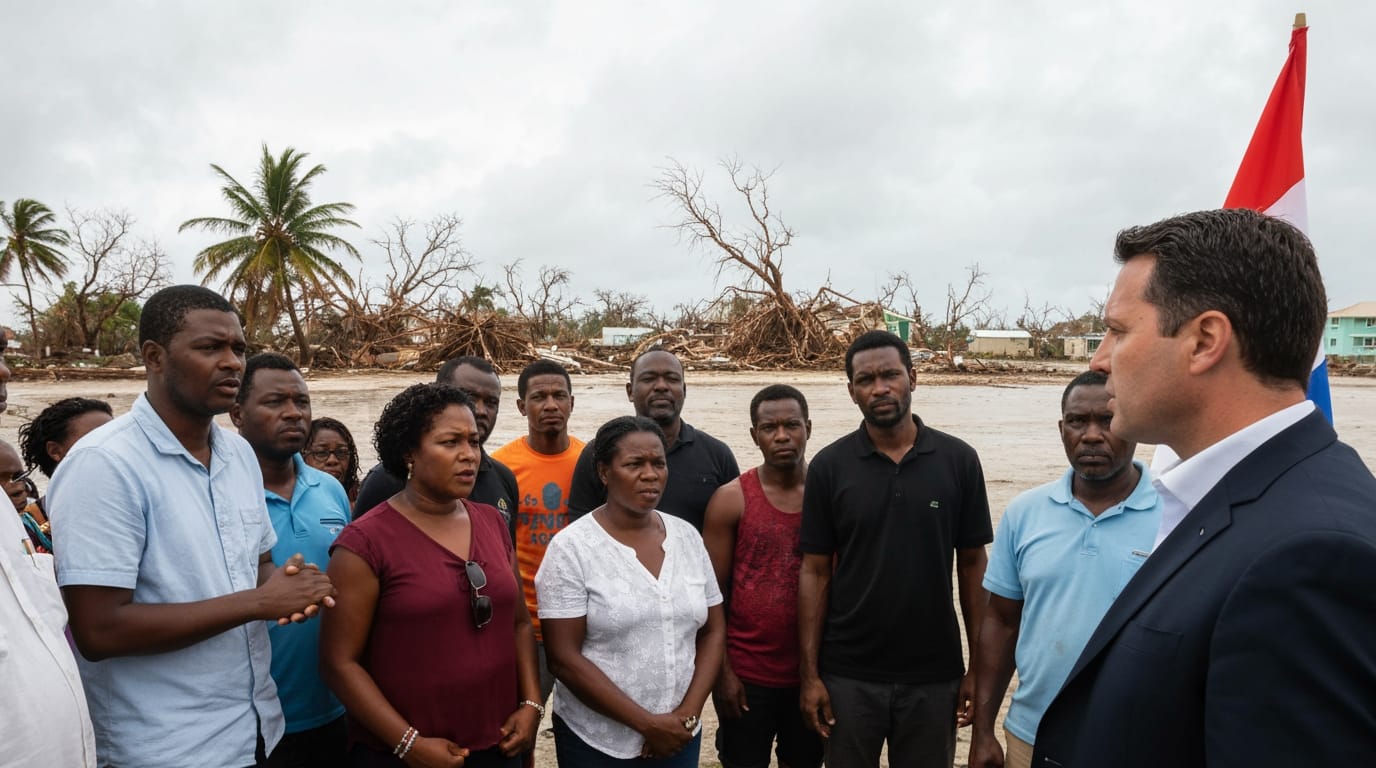
THE HAGUE, Netherlands – In a landmark ruling issued today, a Dutch district court has unequivocally found the Netherlands in breach of its human rights obligations, ordering the state to take immediate and comprehensive measures to protect the Caribbean island of Bonaire from the escalating impacts of climate change. The verdict represents a significant victory for the island's residents and environmental advocates, establishing a precedent that could reshape how nations are held accountable for climate risks in their overseas territories. The court's decision mandates the Dutch government to implement legally binding emission reduction targets and to formulate a specific adaptation plan for Bonaire, marking a pivotal moment in global climate litigation.
A Human Rights Imperative: The Bonaire Climate Case
The legal challenge, known as the Bonaire Climate Case, was initiated by eight residents of the small Caribbean island, supported by Greenpeace Netherlands, who argued that the Dutch state had failed to safeguard their lives and livelihoods against the severe threats posed by a changing climate. The Hague District Court concluded that the Netherlands had violated multiple provisions of the European Convention on Human Rights, specifically Articles 8 (right to respect for private and family life) and 14 (prohibition of discrimination), by not providing adequate and systematic protection to Bonaire's citizens compared to those residing in the European part of the Netherlands. Presiding Judge Jerzy Luiten emphasized the disparity in measures, stating there was "no good reason" for the delayed and less systematic approach taken for Bonaire, despite its heightened vulnerability.
Bonaire, a former Dutch colony that became a special municipality of the Netherlands in 2010, is home to approximately 20,000 to 26,000 Dutch citizens. Located in the southern Caribbean, the low-lying island faces severe environmental threats including rising sea levels, extreme heat, increased intensity of tropical storms, and widespread environmental degradation such as the demise of its protective coral reefs. Residents described to the court how climate change has already made life unbearably hot and dry, affecting crops and their health. Onnie Emerenciana, one of the plaintiffs, highlighted the growing difficulty of farming due to intensifying heat, winds, and erratic rainfall patterns. Researchers from Amsterdam's Vrije Universiteit have warned that even conservative projections indicate significant portions of Bonaire could be submerged by 2050, just 25 years from now. Meteorological data reveals that temperatures in the Caribbean Netherlands have risen by approximately 0.2 degrees Celsius per decade since the 1980s, accompanied by a decline in rainfall, particularly during the dry season.
Mandated Actions and Binding Commitments
The court's ruling outlines several critical directives for the Dutch government. Within 18 months, the Netherlands must establish a legally binding plan to achieve net-zero greenhouse gas emissions for its entire economy by 2050, aligning with international treaty agreements. These targets are to be enshrined in national legislation, complete with binding interim goals leading up to the 2050 deadline. Furthermore, the government is ordered to develop a specific climate adaptation plan for Bonaire, slated for implementation by 2030, aimed at shielding the island's residents from the inevitable consequences of climate change.
This judgment effectively rejects the Dutch government's previous stance, which had suggested that climate action for Bonaire was primarily an "autonomous task" for local authorities. While the government had indicated in 2024 that a separate climate plan for Bonaire and other special municipalities would be developed, the court's ruling underscores the urgency and the state's direct responsibility to its citizens, regardless of their geographic location.
A Growing Wave of Climate Litigation and Legal Precedent
The Bonaire ruling is heralded as a "world first" for its unique combination of climate mitigation and adaptation demands within the context of an overseas territory. Legal experts view this case as a crucial test of national climate obligations, particularly following a landmark 2024 European climate ruling and an influential advisory opinion from the International Court of Justice (ICJ). The ICJ's opinion found that states violating their climate obligations are committing an "unlawful act," providing a significant backdrop for such national-level litigations.
This case draws upon a lineage of progressive climate litigation in the Netherlands. It echoes the principles established in the groundbreaking 2019 Urgenda climate case, where the Dutch Supreme Court ordered the government to significantly reduce its emissions, citing a duty of care to its citizens. It also builds on the Milieudefensie v. Shell case, where the Hague District Court initially compelled Royal Dutch Shell to cut its emissions, although a later appeal partially overturned aspects of that decision. The consistent thread through these cases is the legal recognition of climate change as a human rights issue, compelling both governments and corporations to take responsibility for their contributions and mitigate the resultant dangers.
The implications of the Bonaire decision extend beyond the Dutch Kingdom. It could serve as a powerful blueprint for other low-lying islands and vulnerable communities globally, empowering them to pursue legal avenues against states perceived as failing in their climate duties. For nations with overseas territories susceptible to climate impacts, the ruling signals an increased legal and moral imperative to ensure equitable protection and climate resilience.
Hope and the Path Forward
The verdict brought visible relief and emotion to the plaintiffs. Jackie Bernabela, a Bonaire resident present at the court, was seen wiping away tears, articulating a sentiment of equality: "We are no longer second-class citizens. Equality. I am very happy." This human element underscores the profound personal stakes involved in climate litigation, where abstract policies translate directly into tangible impacts on daily lives and cultural heritage. Judmar Emerenciana, another plaintiff, expressed concerns over the disappearance of coral reefs and their impact on the island's prosperity, asserting the right of Bonaireans to a future.
The Dutch government now faces the critical task of translating the court's orders into concrete actions. This involves not only setting robust national emission targets but also allocating the necessary resources and expertise to develop and implement Bonaire's adaptation plan. The ruling highlights the urgent need for a holistic approach to climate governance that addresses both the root causes of climate change (mitigation) and its unavoidable consequences (adaptation), ensuring that no community is left behind in the global effort to confront this existential crisis. The world will be watching to see how the Netherlands responds to this judicial mandate, potentially setting a global standard for climate justice and equitable protection.


