East China Sea on Edge as Chinese Jets Target Japanese Aircraft with Fire-Control Radar
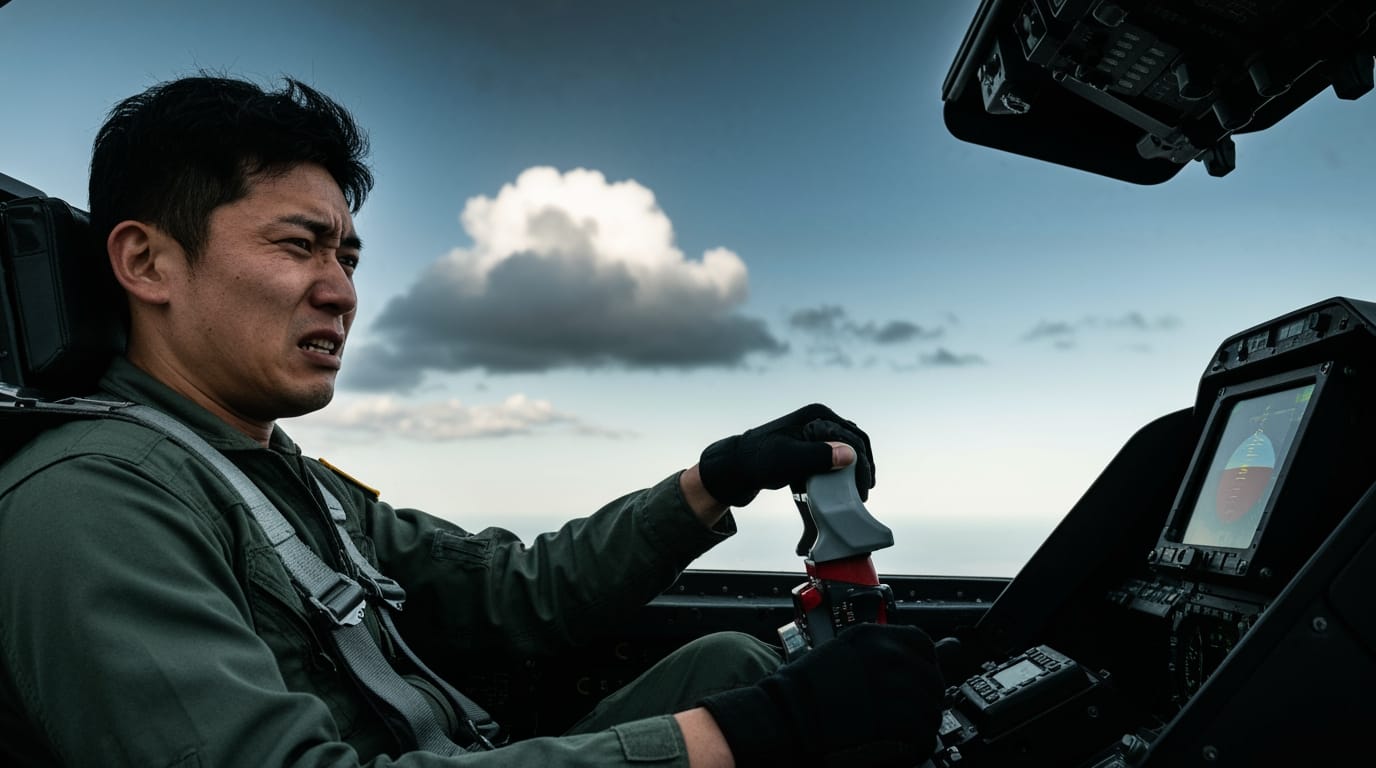
Tokyo, Japan – Tensions in the East China Sea escalated dramatically on Saturday when Chinese fighter jets reportedly directed fire-control radar at Japanese military aircraft in two separate incidents near Japan's southern Okinawa islands. This highly provocative act, condemned by Tokyo as "dangerous" and "regrettable," marks a significant and perilous turn in the ongoing standoff between Asia's two largest economies, signaling a direct threat of potential engagement.
The Japanese government lodged a strong protest with Beijing, demanding immediate preventive measures to avoid further escalation. The incidents unfold amidst a backdrop of already heightened regional volatility, fueled by territorial disputes and differing stances on Taiwan, underscoring the precarious security landscape in the Indo-Pacific.
Direct Confrontation in the Skies
According to Japan's Defense Ministry, Chinese J-15 fighter jets, launched from the Chinese aircraft carrier Liaoning, "intermittently" targeted Japanese F-15 fighter jets with fire-control radar. The first incident lasted approximately three minutes in the late afternoon, followed by a second, more prolonged engagement spanning about 30 minutes in the evening. These encounters occurred over international waters as the Liaoning carrier group, accompanied by three missile destroyers, maneuvered south of the Okinawan islands.
A fire-control radar lock is widely considered one of the most threatening actions a military aircraft can undertake short of firing weapons. It signifies that a target has been acquired for attack, prompting the targeted aircraft to execute immediate evasive maneuvers. Japanese Defense Minister Shinjiro Koizumi publicly denounced the Chinese actions, stating that "these radar illuminations went beyond what is necessary for the safe flight of aircraft." He further emphasized the gravity of the situation, calling it "extremely regrettable" and confirming that Japan had submitted a formal protest.
Crucially, Japanese defense officials noted that the F-15s were flying at a safe distance and had not engaged in any actions that could be construed as provocative, having been scrambled to monitor potential airspace violations. While no breach of Japanese airspace was reported, and no injuries or damage occurred, the incident marks the first confirmed instance of a radar lock between Japanese and Chinese military aircraft, representing a perilous escalation in their long-standing maritime and aerial encounters. As of Sunday, Chinese authorities had not yet issued an official statement regarding the specific incidents.
A Pattern of Peril: Echoes from the Past
While the December 2025 incidents represent a new high in aircraft-on-aircraft confrontation, they are not the first time Chinese military assets have been accused of using fire-control radar against Japanese forces. A similar, high-stakes encounter occurred in January 2013, when a Chinese naval frigate allegedly directed its fire-control radar at a Japanese Maritime Self-Defense Force destroyer, the Yudachi, and a helicopter in the East China Sea.
Japan, under then-Defense Minister Itsunori Onodera, formally protested the 2013 incident, describing the use of fire-control radar as "extremely abnormal" and warning that it could have led to a "dangerous situation in case of a misstep." However, China vehemently denied these allegations. Beijing's Ministry of National Defense stated that its ship-borne radars were operating in normal observation mode and that fire-control radar was not utilized. Chinese officials, in turn, accused Japan of making "irresponsible" remarks to mislead international public opinion and "hyping up the 'China threat.'" China asserted that Japanese warships and aircraft frequently conducted close surveillance of Chinese naval operations, which it described as the "root cause to air and maritime safety issues."
Both the 2013 naval incident and the recent aerial confrontation are inextricably linked to the protracted territorial dispute over a group of uninhabited islands in the East China Sea, known as the Senkaku Islands in Japan and the Diaoyu Islands in China. Japan maintains that the islands are an inherent part of its territory, while China claims historical sovereignty, leading to frequent incursions and standoffs in the surrounding waters and airspace.
Rising Tides in the East China Sea
The latest radar lock incident unfolds against a backdrop of significantly heightened geopolitical tensions across the region. Relations between Tokyo and Beijing have recently soured following statements by Japanese Prime Minister Sanae Takaichi in early November. Takaichi warned that Japan could potentially respond militarily if China were to take action against Taiwan, particularly if such action threatened Japan's own security. This assertion drew swift and angry criticism from Beijing, which accused Japan of "inflaming regional instability" and demanded a retraction of the statement.
China, which claims democratically governed Taiwan as its own territory, has been intensifying its military and political pressure on the island. Recent weeks have seen a notable increase in Chinese naval and air force activities. The Liaoning aircraft carrier's current maneuvers are part of this broader pattern. Furthermore, China has deployed a large number of naval and coast guard vessels across East Asian waters, at one point exceeding 100 ships, conducting what it terms "rights enforcement patrols" around disputed areas, including the Senkaku/Diaoyu Islands. Taiwan has also reported significant numbers of Chinese military aircraft and naval ships operating near its shores, with drones flying close to Japanese islands near Taiwan, such as Yonaguni Island, which lies a mere 110 kilometers (68.4 miles) from Taiwan.
In response to these escalating threats, Japan has been actively strengthening its own defense capabilities and reinforcing its alliance with the United States. The incidents underscore Japan's strategic concerns about regional stability and the potential for any conflict involving Taiwan to directly impact its security.
The Dangerous Calculus of Miscalculation
The repeated use of fire-control radar by Chinese forces, particularly in the skies, elevates the risk of miscalculation and accidental conflict in a region already brimming with geopolitical friction. Military experts consistently warn that such actions are highly provocative and could lead to unintended military confrontation, especially when forces are operating in close proximity.
The lack of robust crisis communication mechanisms between the two militaries further compounds these dangers. While dialogue is often called for by both sides, practical steps toward establishing reliable channels for de-escalation during emergencies remain elusive. The prevailing sentiment among analysts is that both deterrence and stabilization efforts are crucial for managing the ongoing great-power competition in the region. However, the challenge lies in finding a balance where deterrence does not inadvertently lead to increased instability.
The international community watches these developments with growing concern. With Japan hosting the largest overseas concentration of U.S. military power, any serious incident could quickly draw in other global actors, transforming a bilateral dispute into a broader regional or even international crisis. The events of this past Saturday serve as a stark reminder of the fragile peace in the East China Sea and the imperative for restraint and clear communication to avert a catastrophic misstep.


