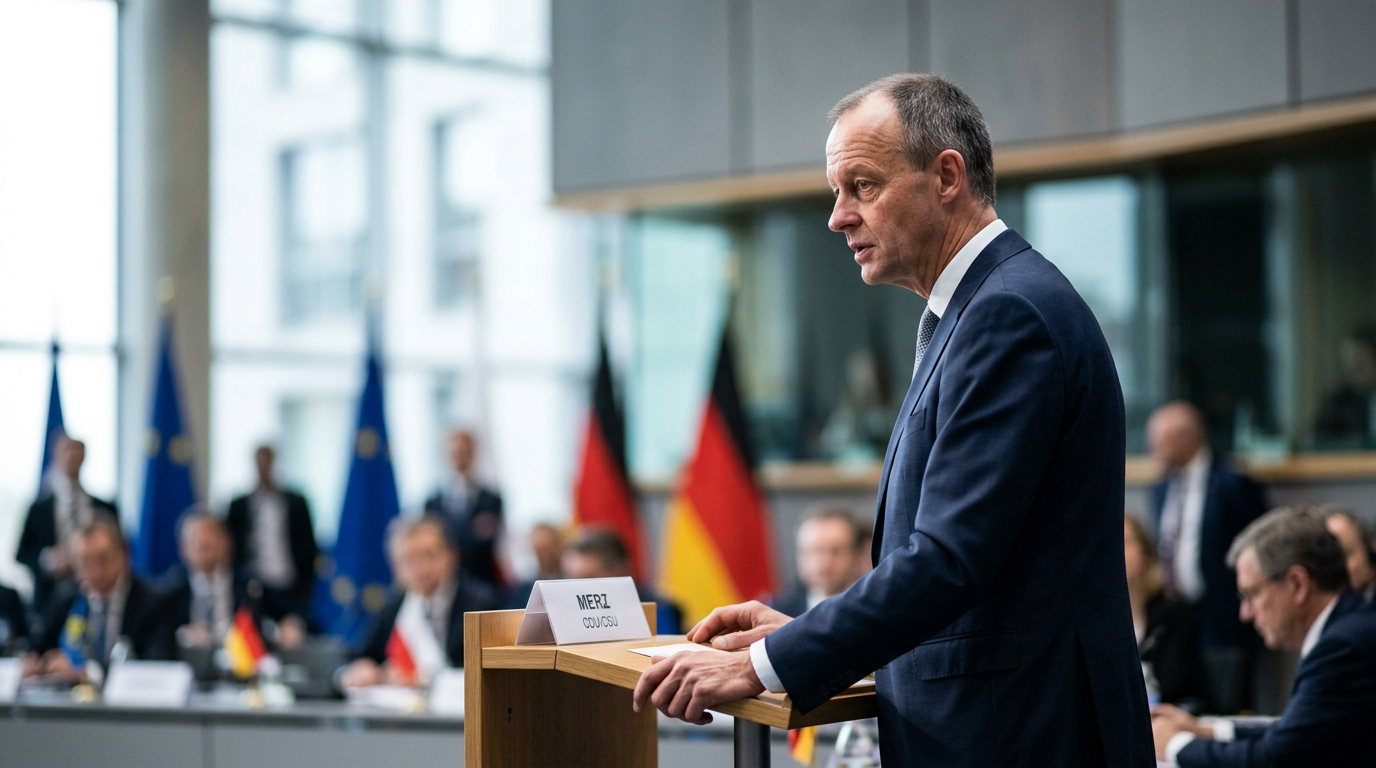
ECB Holds Rates Steady Amid Escalating Middle East Tensions, Inflationary Fears Persist

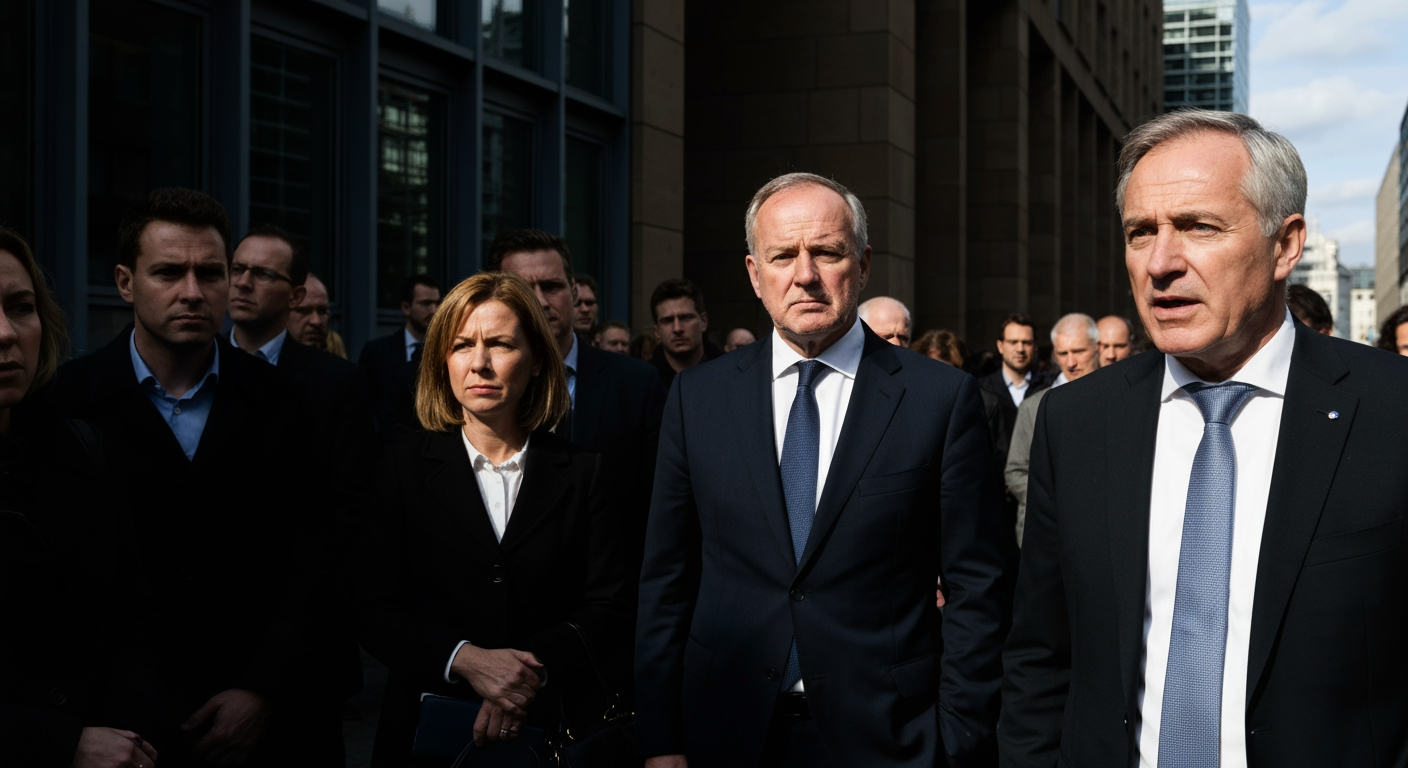
FRANKFURT – The European Central Bank (ECB) Governing Council announced today, Thursday, July 23, 2026, its decision to keep key interest rates unchanged, a move widely anticipated by financial markets. This cautious stance comes as the eurozone grapples with heightened economic uncertainty driven by an escalating conflict in the Middle East, specifically involving Iran, which has sent global energy prices soaring and rekindled fears of persistent inflation across the 21-nation bloc. The central bank emphasized its commitment to closely monitoring the volatile situation, acknowledging that the full inflationary impact of the energy shock has yet to materialize.
The decision maintains the deposit facility rate at 2.25%, the main refinancing operations rate at 2.40%, and the marginal lending facility rate at 2.65%. This pause follows a quarter-point rate hike in June, when the ECB became the first major central bank to actively respond to the economic ripple effects stemming from the renewed geopolitical instability. While some economists had criticized the June hike as potentially "heavy-handed" given nascent economic fragilities, the ECB's current "wait-and-see" approach reflects a complex balancing act between curbing inflation and safeguarding fragile economic growth against the backdrop of an unpredictable global landscape.
The Shadow of Geopolitical Tensions
The primary catalyst for the ECB's cautious posture is the intensifying conflict in the Middle East, frequently referred to in economic circles as the "Iran war," which has dramatically impacted global energy markets. Fresh fighting and renewed tensions between Iran and the United States have severely disrupted critical shipping routes, particularly the Strait of Hormuz. This vital waterway, ordinarily responsible for carrying approximately one-fifth of the world's oil and natural gas, has seen traffic slow to a trickle, leading to a significant restriction in energy exports. Adding to the instability, Iran-aligned Houthi rebels have reportedly struck Saudi oil tankers in the Red Sea, further exacerbating supply concerns and pushing Brent crude oil prices to over $98 a barrel, their highest level since late May.
This surge in energy costs represents a direct inflationary impulse for the eurozone, a region heavily reliant on imported energy. Analysts have noted that the current energy shock, while sharing some characteristics with past crises, presents unique challenges. The European Union has consequently revised its inflation forecast for 2026 upwards, now anticipating figures between 2.6% and 4.4%, depending on the severity and duration of the conflict. The ECB's Governing Council explicitly stated it is closely monitoring the "intensity and duration of the shock, as well as its indirect and second-round effects," recognizing that the full inflationary consequences are yet to unfold. This geopolitical instability has also led consumers to significantly revise their inflation expectations upwards and their growth expectations downwards, reflecting a broader sense of economic anxiety.
Eurozone's Precarious Economic Landscape
The economic outlook for the eurozone remains precariously balanced. While June saw a slight easing of headline inflation to 2.8%, renewed energy price pressures stemming from the Middle East conflict have sparked fears that this downward trend could reverse. The ECB remains steadfast in its medium-term objective to stabilize inflation at its 2% target. However, achieving this target is complicated by varying inflation forecasts. Some experts project headline inflation to remain around current levels, potentially ending 2026 at 3.3%, with core inflation moderating to 2.2%. Other projections by institutions like the IMF indicate a rise in headline inflation to 2.9% in 2026.
Compounding the inflationary challenges are concerns about economic growth. The International Monetary Fund (IMF) recently concluded its 2026 consultation with the euro area, projecting a significant slowdown in growth from 1.4% in 2025 to 0.9% in 2026. This weakened outlook is directly attributed to the effects of the Middle East conflict, including diminished confidence, tighter financial conditions, and persistent inflationary pressures. There are growing risks skewed towards weaker growth and higher inflation, with some analyses suggesting that several large economies, including Germany, France, and Italy, could face technical recessions by the end of 2026 if the maritime blockade persists. The possibility of a technical recession before growth potentially recovers later in the year, supported by stronger domestic demand and German fiscal stimulus, remains a significant downside risk.
The Central Bank's Balancing Act
The ECB's decision reflects a delicate balancing act, navigating the dual risks of sustained inflation and a potential economic downturn. This scenario, often termed "stagflation," presents a formidable challenge for central bankers: raising rates to tame inflation risks stifling growth further, while cutting rates to stimulate growth could exacerbate price increases. In this complex environment, the Governing Council has reiterated its data-dependent and meeting-by-meeting approach, declining to pre-commit to any specific rate path. This flexibility allows the central bank to adapt its policy as economic and geopolitical conditions evolve.
Market reactions to the ECB's announcement have been largely muted, as the decision was widely expected, with market pricing indicating a 95% probability of no change to the deposit facility rate ahead of the meeting. However, the expectation of future policy adjustments remains high. Financial markets are now pricing in a significantly higher probability of another rate hike in September, particularly if the conflict in the Middle East continues to escalate and oil prices remain elevated. Economists from various institutions also foresee the possibility of an additional hike before the year's end, especially if second-round inflation effects, such as wage demands, begin to materialize more strongly.
Conclusion: Navigating Uncharted Waters
The European Central Bank finds itself steering the eurozone economy through increasingly turbulent waters. While the decision to hold interest rates steady today offers a moment of pause, it underscores the profound uncertainty cast by the escalating Middle East conflict and its far-reaching economic implications. The interplay between volatile energy prices, persistent inflationary pressures, and a fragile growth outlook creates a complex challenge for policymakers. The ECB's commitment to a data-dependent approach, coupled with its vigilant monitoring of geopolitical developments, will be crucial in its ongoing efforts to anchor inflation expectations and guide the eurozone towards sustainable stability amidst unprecedented global headwinds. The coming months will undoubtedly test the central bank's resolve and adaptability as it strives to fulfill its mandate in an ever-changing economic and geopolitical landscape.
Related Articles

Ratko Mladić, "Butcher of Bosnia" and Convicted War Criminal, Dies at 84
THE HAGUE, Netherlands – Ratko Mladić, the former Bosnian Serb military commander known as the "Butcher of Bosnia" and convicted of genocide, war crimes, and crimes against humanity, has died at the age of 84. Serbian...


Long-Awaited 9/11 Mastermind Trial Set for 2028, Decades After Attacks
GUANTANAMO BAY, Cuba – Nearly a quarter-century after the devastating terror attacks of September 11, 2001, a military judge has finally set a trial date for Khalid Sheikh Mohammed, the alleged mastermind behind the...