ECJ Declares Polish Constitutional Tribunal Lacks Independence, Violates EU Values in Landmark Ruling
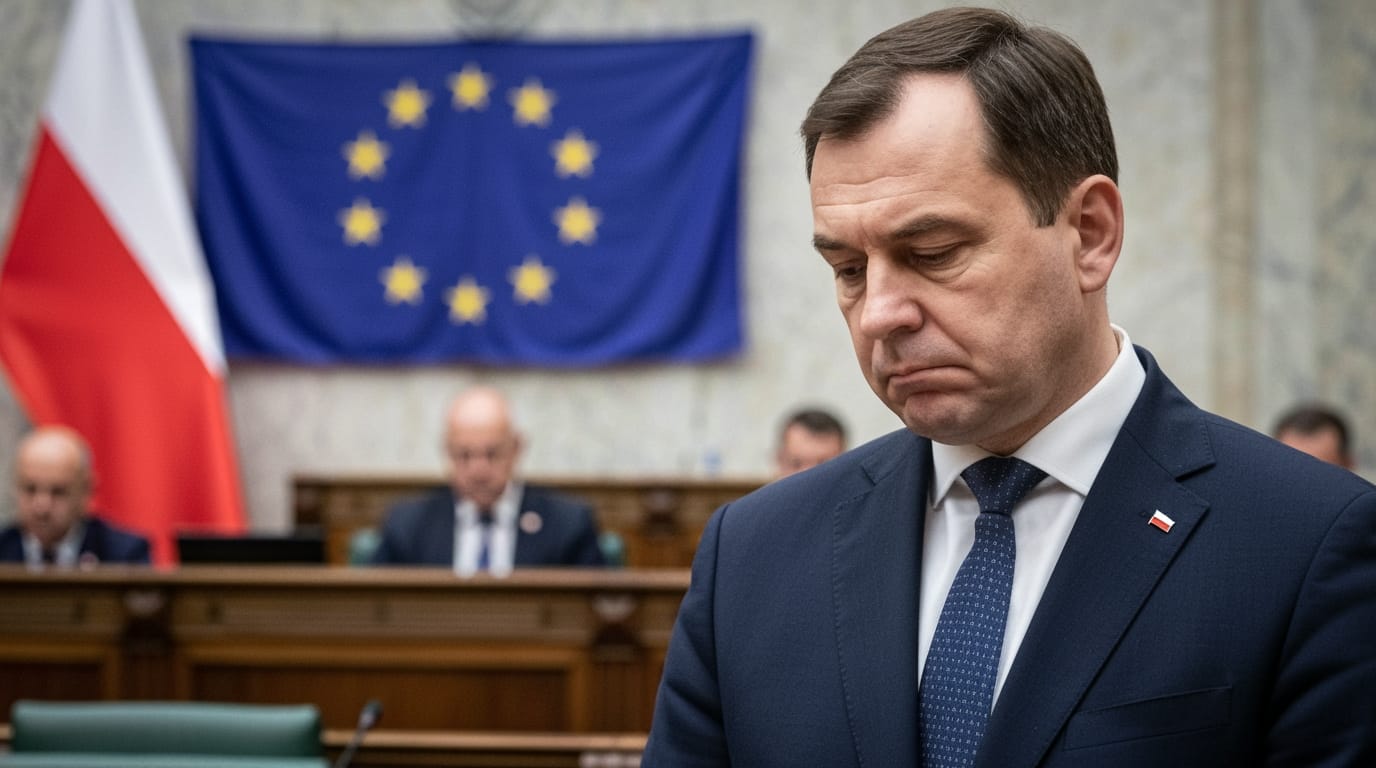
LUXEMBOURG – In a pivotal judgment issued Thursday, the European Court of Justice (ECJ) has definitively ruled that Poland's Constitutional Tribunal (TK) is neither independent nor impartial, finding that its actions have violated core European Union legal principles, including the foundational supremacy of EU law. The decision marks a significant escalation in the long-running dispute between Brussels and Warsaw over judicial independence, cementing concerns that political appointments under Poland's former government undermined the rule of law.
This landmark ruling stems from a complaint filed by the European Commission in 2023, directly challenging two controversial 2021 decisions by the Polish Constitutional Tribunal. Those rulings asserted the primacy of the Polish constitution over EU law, sparking widespread alarm across the bloc regarding Poland's commitment to shared European values. The ECJ’s pronouncement today underscores the unyielding expectation that all Member States adhere to the fundamental tenets upon which the Union is built, values Poland voluntarily embraced upon its accession.
A Court Under Scrutiny: Irregular Appointments and Compromised Impartiality
The ECJ's judgment meticulously dissects the structural deficiencies within the Polish Constitutional Tribunal, pointing specifically to serious irregularities in the appointment process of several of its members. The court found that the appointments of three judges in December 2015, followed by the tribunal's president in December 2016, were made in breach of fundamental national rules governing judicial nominations. These procedural failings, the ECJ concluded, render the TK incapable of meeting the EU's stringent standards for a "legally established, independent, and impartial judicial body."
Such deficiencies are not merely technical breaches; they strike at the heart of the rule of law, a cornerstone of the European Union. Article 2 of the Treaty on European Union enshrines principles such as democracy, human rights, and the rule of law, all of which mandate an independent judiciary. The ECJ explicitly stated that Poland cannot invoke its constitutional identity to justify disregarding these common values, which constitute the "very basis of the identity of the European Union itself." The court reinforced that once a state joins the EU, it cannot unilaterally withdraw from these binding obligations.
The Years-Long Erosion of Judicial Independence
The present ruling is the latest chapter in a protracted conflict between the European Union and Poland, which began in earnest following the 2015 parliamentary victory of the Law and Justice (PiS) party. The PiS government embarked on a series of sweeping judicial reforms that, according to Brussels, systematically undermined the independence of the Polish judiciary. These reforms included changes to the Constitutional Tribunal, the Supreme Court, ordinary courts, and the National Council for the Judiciary (KRS).
Over the past decade, the European Commission has initiated numerous infringement procedures and even triggered the Article 7 procedure against Poland, a mechanism designed to address serious breaches of EU values. Concerns ranged from lowering the retirement age of judges to establishing disciplinary chambers seen as politically controlled. The ECJ has consistently ruled against Poland in many of these cases, ordering the suspension of contentious laws and imposing significant daily fines for non-compliance, accumulating to hundreds of millions of euros. Billions in EU recovery funds have also been withheld, directly linking financial disbursements to adherence to rule-of-law standards.
Crucially, the ECJ has repeatedly affirmed that national courts cannot unilaterally define the limits of EU competencies. Disputes concerning the interpretation and application of EU law, particularly its primacy over national legislation in areas of EU competence, must be resolved through dialogue with the ECJ itself, often via preliminary rulings from national courts. The Polish Constitutional Tribunal's 2021 rulings were a direct challenge to this established legal order, asserting that certain EU treaty articles were incompatible with the Polish constitution, effectively rejecting the enforceability of EU law within Poland.
Divergent Reactions and Path Forward
The ECJ’s decision has elicited contrasting responses within Poland. Justice Minister Waldemar Żurek, part of the new pro-European coalition government led by Prime Minister Donald Tusk, welcomed the ruling. Żurek emphasized that the judgment "obliges our state to take action" and pledged to "rebuild a genuine, independent Tribunal." The current government, which assumed power in 2023, has made restoring the rule of law and repairing relations with the EU a central tenet of its agenda, an effort seen as crucial to unlocking billions in frozen EU funds.
However, the Polish Constitutional Tribunal, still largely composed of judges appointed during the previous PiS administration, maintained its historical stance. In a statement, it questioned the legitimacy of the ECJ ruling, asserting that the European court lacks the authority to assess the Polish constitution or its constitutional court. The TK reiterated its position that the Polish constitution remains the supreme law of the land, and that Poland did not cede powers over its judicial system to EU institutions upon joining the Union. This steadfast rejection highlights the deep ideological chasm that continues to complicate Poland's relationship with the EU legal order.
Implications for Poland and the Future of EU Law
This judgment carries profound implications. For Poland, it solidifies the legal imperative for the new government to undertake substantial reforms to its judicial system, particularly regarding the Constitutional Tribunal. While the current administration has expressed willingness to act, it faces domestic challenges, including potential vetoes from the Polish President, who remains aligned with the previous conservative government. The ECJ's full endorsement of the European Commission's complaint also empowers the Commission to impose further financial penalties if Poland fails to comply with the ruling, adding economic pressure to the legal and political demands.
More broadly, the ECJ's robust defense of judicial independence and the supremacy of EU law strengthens the Union's capacity to uphold its foundational values across all Member States. Legal experts suggest the precedent could be instrumental in addressing similar rule-of-law backsliding in other countries where institutions "masquerading as courts" are used to shield governments. The ruling reinforces the notion that membership in the European Union is not merely a transactional arrangement but a commitment to a shared legal and value-based order, from which no member can unilaterally opt out.
The path forward for Poland involves navigating complex legal, political, and constitutional terrains. The ECJ's pronouncement serves as a clear call for the restoration of genuine judicial independence and adherence to EU values, essential for both Poland's standing within the Union and the integrity of the European legal system as a whole. The coming months will reveal the extent to which this definitive ruling translates into concrete reforms and a renewed commitment to the principles of effective legal protection and impartiality.


