Eritrea's Internal Conflicts Spill Onto German Streets
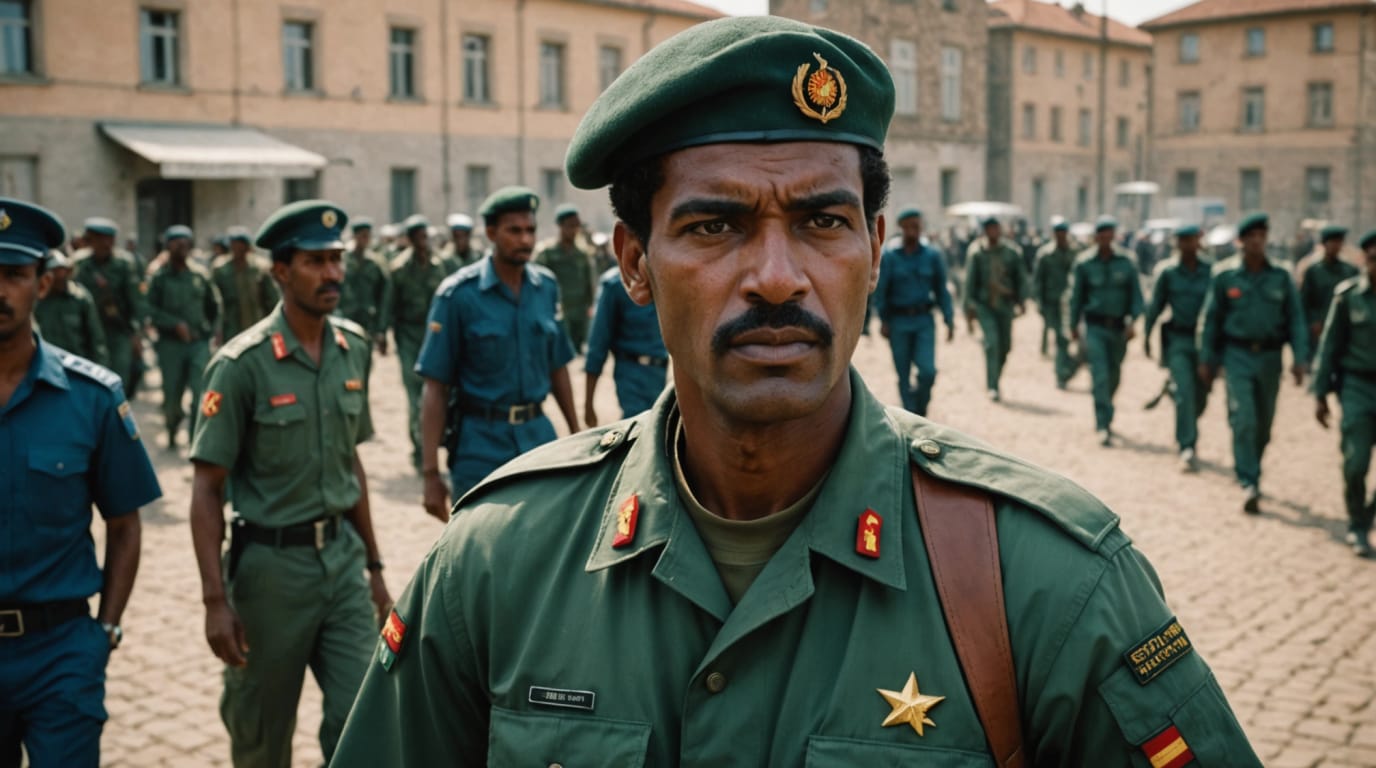
Germany, home to a large Eritrean diaspora, is increasingly grappling with the spillover of conflicts rooted in Eritrea's political landscape. The tensions between supporters and opponents of the Eritrean government have manifested in violent clashes, prompting law enforcement intervention and raising concerns about the exploitation of German freedoms for foreign political agendas.
Raids Target Alleged Terrorist Group
In a significant move, German authorities conducted raids across six states targeting individuals suspected of being part of an international network seeking to overthrow the Eritrean government. The German federal prosecutor's office identified 17 suspects as members or founders of the German branch of Brigade N'Hamedu, a group it defines as a terrorist organization. These raids highlight the seriousness with which German authorities are treating the threat of politically motivated violence within the Eritrean diaspora.
Prosecutors allege that the German offshoot of Brigade N'Hamedu has been active since at least 2022 and has orchestrated violence at events linked to the Eritrean government. These events include violent riots at Eritrean festivals in Giessen in August 2022 and August 2023, as well as disturbances at an Eritrean association seminar in Stuttgart in September 2023. These clashes resulted in injuries to numerous police officers and the detention of dozens of protesters. The state interior minister of Baden-Württemberg reported that 56 individuals received prison sentences following the 2023 Stuttgart riots, though some verdicts are still under appeal.
Deep Divisions Within the Diaspora
Eritrea has long been regarded as one of the most repressive countries in the world, according to human rights organizations. This has led to deep divisions within its diaspora, with some remaining loyal to the government and others vehemently opposing it. Exiles and opposition groups often accuse Eritrean government-affiliated events of serving as propaganda tools and financial conduits for the ruling regime in Asmara.
These divisions have manifested in violent confrontations at Eritrean cultural events in Germany and other countries. Supporters and opponents of the Eritrean government have clashed at festivals, seminars, and other gatherings, resulting in injuries, arrests, and property damage. These incidents underscore the intensity of the political passions within the Eritrean diaspora and the challenges of managing these conflicts within host countries.
The Eritrean Regime's Reach
The Eritrean government's influence within the diaspora is a contentious issue. Critics accuse the regime of using its embassies and affiliated organizations to monitor and control Eritreans abroad. One particular point of contention is the "reconstruction tax" of two percent of net income that the Eritrean government collects from Eritreans abroad. Those who do not pay the tax may be denied services from the Eritrean state, such as the ability to visit relatives in Eritrea. In 2022, the Federal Administrative Court ruled that applying for passports at the Eritrean embassy was "unreasonable" for nationals in Germany, as individuals would have to submit a "declaration of remorse" with a self-incrimination of a crime in order to obtain a passport.
These practices have raised concerns about the Eritrean government's ability to exert control over its diaspora and the potential for this control to be used for political purposes. Some observers argue that the Eritrean government is actively seeking to suppress dissent and maintain its grip on power through its diaspora networks.
Germany's Response
The German government has taken a firm stance against the violence and political extremism within the Eritrean diaspora. Interior Minister Nancy Faeser has condemned the clashes and stated that "foreign conflicts must not be carried out in our country." The recent raids targeting Brigade N'Hamedu demonstrate Germany's commitment to preventing the use of its territory for foreign political violence.
However, Germany faces a delicate balancing act between protecting freedom of expression and preventing violence and extremism. Some critics argue that German authorities have been too quick to restrict the rights of Eritrean opposition groups, while others argue that more needs to be done to combat the influence of the Eritrean government within the diaspora.
Looking Ahead
The conflicts within the Eritrean diaspora in Germany are likely to persist as long as the political situation in Eritrea remains unresolved. The deep divisions between supporters and opponents of the government, coupled with the Eritrean regime's efforts to maintain control over its diaspora, create a volatile environment.
Germany will need to continue to address these challenges through a combination of law enforcement, community outreach, and political engagement. It is crucial to protect the rights of all Eritreans in Germany, while also preventing the use of German territory for violence and extremism. Finding the right balance will require careful consideration and a commitment to upholding both German law and international human rights standards.


