Escalation in the Gulf: Iran Claims Widespread Strikes on U.S. Bases Amid Fragile Ceasefire
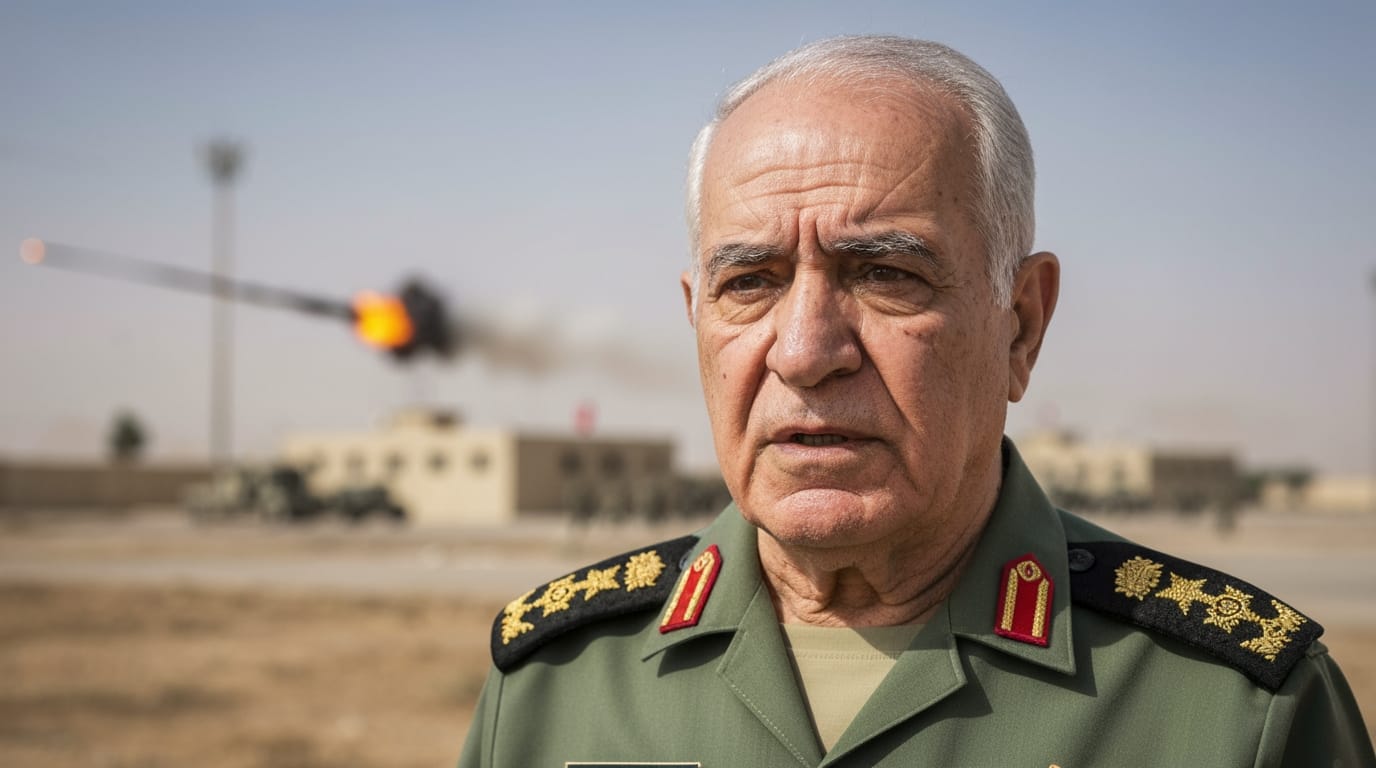
The volatile landscape of the Middle East intensified today as Iran's Revolutionary Guards announced they had targeted "enemy bases" across the Persian Gulf, following U.S. military strikes on Iranian radar sites. This latest exchange of hostilities further strains an already tenuous ceasefire, raising profound concerns about regional stability and global energy security. While Iranian state media highlighted the retaliatory strikes, U.S. Central Command (CENTCOM) confirmed intercepting multiple Iranian drones and missiles, simultaneously denying any damage to its personnel or facilities. The conflicting reports underscore the deep distrust and escalating cycle of claims and counter-claims that characterize the ongoing conflict.
A Day of Heightened Military Activity
The current flare-up began with the U.S. military shooting down four Iranian "one-way attack drones" launched towards the critical Strait of Hormuz, which CENTCOM described as posing "an immediate threat to regional maritime traffic". In response, U.S. forces conducted strikes on Iranian coastal surveillance radar sites located in Goruk and on Qeshm Island, aimed at "defending against further attacks". Hours later, Iranian state media, quoting the Revolutionary Guards, reported hitting "enemy bases" in the Gulf, framing these actions as retaliation for the U.S. strikes on Sirik and Qeshm Island.
The implications of these exchanges extended rapidly across the region. Kuwait's military reported responding to "hostile" missile and drone attacks. These incidents occurred just days after a prior strike on Kuwait's international airport resulted in one fatality and dozens of injuries, temporarily forcing its closure. CENTCOM later detailed that Iran had launched seven ballistic missiles towards Kuwait and Bahrain, with six successfully intercepted and one failing to reach its intended target. Despite Iran's claims of damaging the U.S. 5th Fleet headquarters in Bahrain, CENTCOM explicitly refuted these assertions, stating there were "no reports of harm to US personnel" and that "all Iranian attacks on American forces failed". Compounding the tensions, the U.S. military continues to enforce a blockade on Iranian ports, a measure taken in response to Tehran's attempts to control the Strait of Hormuz, a vital artery for global oil and natural gas shipments, which has already contributed to spiking energy prices and disrupted global supply chains.
A Recurring Pattern of Retaliation
Today's events are not isolated but rather the latest in a series of tit-for-tat exchanges that have characterized the conflict since early 2026. On February 28, 2026, the IRGC-aligned Fars news agency reported that Iran had targeted U.S. military bases across several Persian Gulf states, including Al-Udeid Air Base in Qatar, Al-Salem Air Base in Kuwait, Al-Dhafra Air Base in the UAE, and a fifth U.S. base in Bahrain. These actions were presented as a response to earlier "US-Israel strikes" on Iranian territory, prompting Bahrain to activate air-raid sirens.
Adding to the historical context, on March 1, 2026, Iran's army claimed to have targeted U.S. bases in Iraq's Kurdistan region and the Gulf. This, according to their statement, was in direct response to "Israeli and US strikes that killed supreme leader Ayatollah Ali Khamenei". This alleged event, if confirmed, would represent a monumental escalation, serving as a critical point of justification for Iran's subsequent aggressive postures. The U.S. Defense Department's naming of its Iran mission "Operation Epic Fury" around this time further highlighted the high-stakes military confrontation underway.
The Unseen Battlefield: Damage and Discrepancies
While U.S. officials consistently deny damage or casualties from Iranian attacks, an alternative narrative has emerged from expert analysis and independent reports. As early as April 9, 2026, Middle East experts contended that Iran's retaliation to U.S. and Israeli attacks had severely damaged at least a dozen U.S. military sites across the Gulf. Some of these facilities were described as "all but uninhabitable" in a New York Times report, with experts suggesting the physical infrastructure of American presence had been rendered "useless". This expert assessment directly contradicted the Trump administration's public stance, which has yet to acknowledge the extent of any sustained damage.
More recent analyses from April and June 2026, including reports by NBC News and BBC, utilizing satellite imagery and informed sources, have corroborated claims of extensive damage. These reports indicate billions of dollars in destruction to at least 20 U.S. military sites spanning Saudi Arabia, the UAE, Qatar, Kuwait, Iraq, Jordan, Bahrain, and Oman. Specific impacts included runways, advanced radar systems, dozens of aircraft, warehouses, command centers, and satellite communications infrastructure. Notably, the Combined Air Operations Center at Al-Udeid Air Base in Qatar, a critical hub for U.S. air campaigns in the Middle East for over two decades, reportedly suffered severe damage and was rendered inoperable. However, personnel had been relocated prior to the conflict in anticipation of such attacks. These revelations raise significant questions about the transparency of information surrounding the conflict and the true impact of Iran's capabilities.
A Strategic Quagmire with Global Repercussions
The escalating military confrontations unfold against the backdrop of a broader Middle East war and a perpetually "tenuous ceasefire" that diplomatic efforts have struggled to solidify. Negotiations between Washington and Tehran to extend the truce and achieve a lasting peace have repeatedly stalled, with both sides trading accusations over the lack of progress. The ongoing hostilities carry profound economic consequences, particularly concerning the Strait of Hormuz, through which a significant portion of the world's oil and gas transits. The U.S. blockade on Iranian ports, in response to Tehran's threats to maritime traffic, has already led to surging energy prices and disruptions to global supply chains, affecting everything from fertilizer to semiconductor production.
Furthermore, the repeated Iranian strikes on military installations have prompted Gulf states to re-evaluate the efficacy of the U.S. military footprint within their borders. Experts argue that these bases, intended as deterrents, have instead become targets, exposing host nations to conflicts not of their own making. There is a growing sentiment among some Gulf leaders of a "sense of betrayal," particularly as the ceasefire agreement did not explicitly preclude attacks on U.S.-adjacent assets. The strategic dilemma remains unresolved: how to maintain security in a region where the very presence of foreign forces can draw hostilities, and whose interests are ultimately served by such an arrangement?
Uncertainty Looms Over the Horizon
As claims and denials continue to emanate from Tehran and Washington, the future of stability in the Persian Gulf remains deeply uncertain. The cycle of attack and retaliation, fueled by conflicting narratives and strategic objectives, maintains a constant state of alert across the region. While the U.S. maintains its posture of vigilance and self-defense, the consistent reports of Iranian military capabilities and the alleged damage to U.S. assets suggest a complex and costly engagement for all parties involved. The path forward requires not only military de-escalation but also a renewed and robust diplomatic effort to bridge the chasm of distrust and find a lasting resolution to a conflict that increasingly threatens global peace and prosperity.


