Escalation in the Persian Gulf: Trump's Threats and U.S. Fleet Deployment Coincide with Soaring Iranian Death Toll
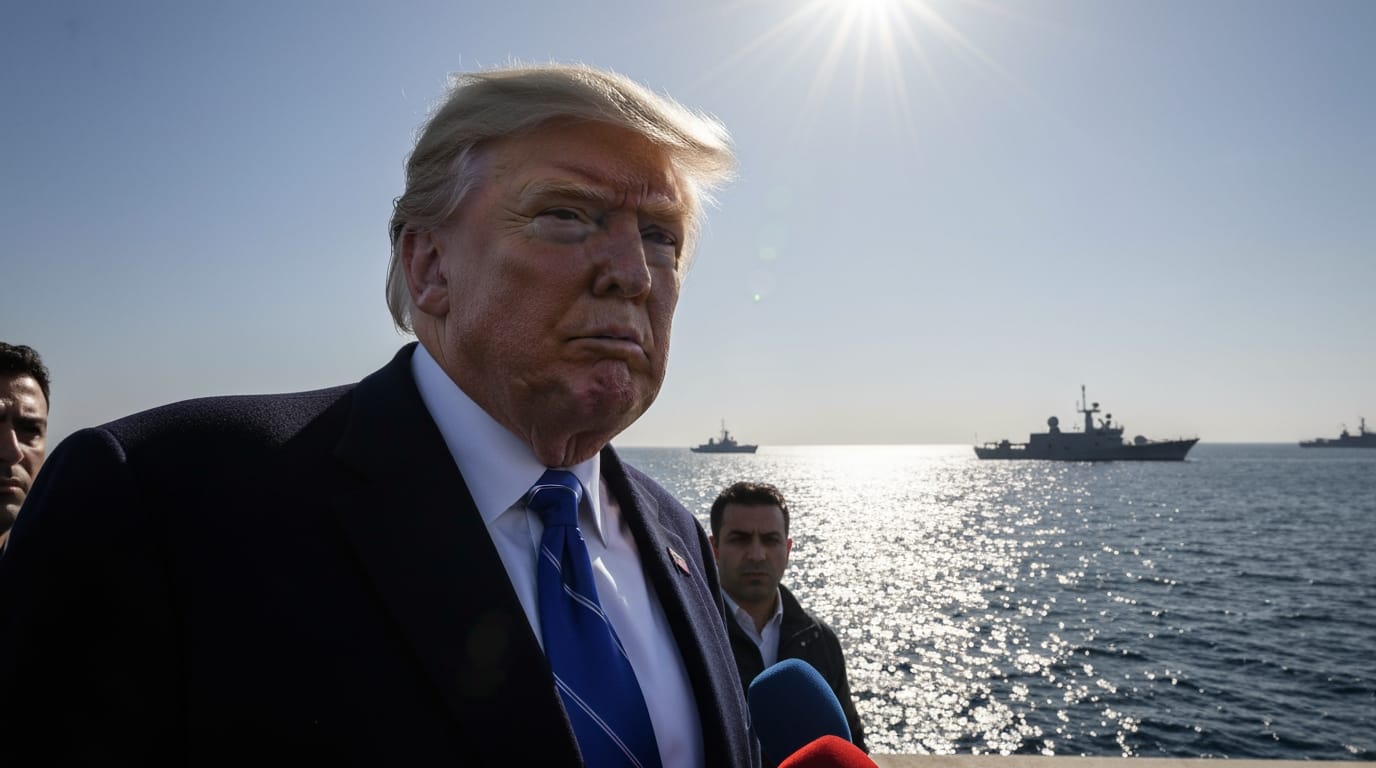
The already volatile relationship between the United States and Iran has reached a critical juncture, marked by former President Donald Trump's stark warnings against Tehran and a significant U.S. military buildup in the Middle East. These developments unfold amidst a brutal crackdown on widespread anti-government protests across Iran, which has resulted in a rapidly mounting death toll, drawing international condemnation and raising fears of a broader regional conflict. The convergence of domestic unrest, severe state repression, and aggressive international posturing has created an exceptionally precarious geopolitical landscape.
Internal Unrest Ignites International Tensions
Iran has been gripped by a wave of nationwide anti-government protests since late December, ignited by worsening economic conditions and a collapsing national currency. What began as demonstrations over economic grievances has swiftly evolved into a profound challenge to the clerical leadership, with many protestors openly calling for an end to the Islamic Republic. The Iranian government has responded with an iron fist, employing a severe crackdown that includes internet blackouts and the use of lethal force against demonstrators.
The human cost of this repression is staggering. Official Iranian state television has reported a death toll of 3,117 individuals, primarily civilians and security forces. However, human rights organizations and Western media outlets suggest the actual figures are considerably higher. Estimates from sources inside Iran and activist groups range from 2,000 to as many as 20,000 fatalities. This current wave of fatalities surpasses previous periods of unrest, including the 2019 economic protests where approximately 1,500 people were killed within a two-week span. The scale of the crackdown, with security forces reportedly firing indiscriminately into crowds, signals a regime determined to quell dissent at any cost.
U.S. Military Mobilization and Declarations
In response to the escalating violence and the rising death toll, former President Donald Trump has issued a series of forceful threats against Iran, coupling his rhetoric with observable military movements. Trump has indicated that the United States is considering "very strong options," including potential military strikes against the Iranian regime. He explicitly stated his intention to strike Iran should the Islamic Republic proceed with the execution of protesters, warning that any U.S. response could be severe and potentially exceed previous military actions against Iranian nuclear facilities.
Demonstrating this heightened state of readiness, the U.S. has significantly augmented its military presence in the Middle East. The USS Abraham Lincoln carrier strike group, comprising the aircraft carrier, destroyers, and fighter aircraft, was notably redeployed from the South China Sea and is now en route to the region. Additionally, F-15E fighter jets, supported by KC-135 tanker aircraft, have arrived in the Middle East, further enhancing U.S. air capabilities. While some forces have been withdrawn from what are considered vulnerable regional bases, including Ain Al Assad Air Base, the overall deployment signals a clear escalation in military posture. President Trump has publicly acknowledged that a "massive armada" or "big force" is moving toward Iran, emphasizing that it is positioned to respond "just in case" action is needed.
Tehran's Defiance and Regional Ripple Effects
Tehran has met the U.S. threats with staunch defiance and its own warnings of severe retaliation. Supreme Leader Ali Khamenei, while acknowledging the thousands killed in the recent protests, has squarely placed blame on the United States for inciting the unrest. Iranian officials have vehemently condemned President Trump's rhetoric, characterizing it as "offensive" and "unacceptable." They have issued unequivocal warnings that any targeted action, particularly against the Supreme Leader, would be interpreted as an act of war, triggering an "all-out war" and prompting Iran to "fire back with everything we have."
The current climate of mutual threats and military posturing raises significant concerns for regional stability. Gulf countries, historical rivals of Tehran, are reportedly expressing apprehension over the potential impact of a conflict on oil and gas flows. Even as President Trump indicated a potential de-escalation, suggesting the killings in Iran might be ending, the White House maintained that "all options remain on the table," underscoring the persistent uncertainty. The potential for miscalculation remains high, with each side's actions and declarations scrutinized for their intent and potential repercussions.
A Familiar Pattern: Historical Context of Confrontation
The current escalation evokes a turbulent history of U.S.-Iran relations, particularly during Trump's previous presidency. His administration pursued a "maximum pressure" campaign, withdrawing from the 2015 nuclear deal and imposing crippling sanctions on Iran. This period saw a series of flashpoints, including attacks on oil tankers in the Strait of Hormuz, the downing of a U.S. surveillance drone by Iran in June 2019, and the subsequent U.S. cyberattacks and sanctions.
A peak in tensions occurred in January 2020, when a U.S. drone strike ordered by Trump killed Qassem Soleimani, the commander of Iran's elite Quds Force, in Baghdad. Iran retaliated with missile strikes on U.S. bases in Iraq, which, while causing traumatic brain injuries to dozens of U.S. soldiers, were widely seen as a calibrated response to avoid further escalation. The consistent theme throughout these past confrontations has been a delicate balance of deterrence and a reluctance from both sides to fully engage in open warfare, a dynamic now being re-tested by the current surge in domestic repression and international threats.
Conclusion: A Volatile Standoff
The situation in the Middle East remains critically tense, with the crackdown on Iranian protests fueling a dangerous escalation between Tehran and Washington. Former President Trump's strong threats, coupled with the deployment of significant U.S. naval and air assets, underscore the gravity of the international community's concern over the human rights situation in Iran. While Tehran maintains a defiant posture, blaming external forces for its internal strife and vowing harsh retaliation against any perceived aggression, the rising death toll within its borders continues to draw global attention. The unfolding events represent a complex interplay of internal instability and external pressure, with the potential for miscalculation carrying severe consequences for both the region and broader international security.


