Ethiopia's Seventh Election: A Mandate Amidst Deep Divisions and Limited Contest
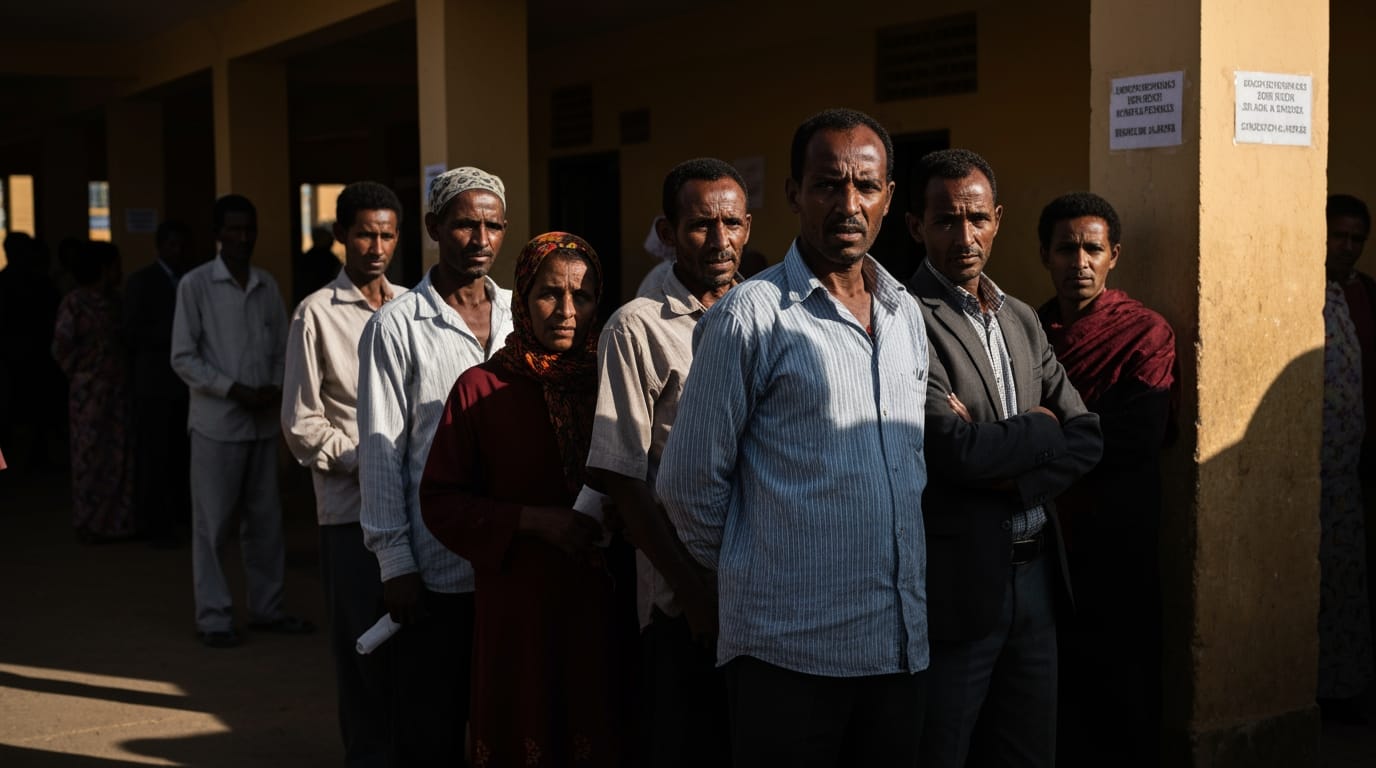
ADDIS ABABA – Ethiopia has concluded its seventh general election, held on June 3, 2026, with the ruling Prosperity Party widely anticipated to secure another dominant victory. However, the electoral exercise has unfolded against a backdrop of deeply entrenched conflicts, significant regional exclusions, and a political landscape that critics argue stifles genuine competition, raising questions about the mandate's breadth and legitimacy. This election, much like its 2021 predecessor, appears to be an affirmation of incumbent power rather than a robust contest of diverse political alternatives, leaving many Ethiopians in a state of apathy or active disenfranchisement.
The Shadow of Conflict and Exclusion
A defining characteristic of Ethiopia's 2026 general election is the uneven territorial participation, severely impacted by persistent internal conflicts. Voting did not take place across the entire Tigray region due to ongoing governance disputes and security challenges, marking a second consecutive electoral term of exclusion for the war-torn northern state. Similarly, significant portions of the Oromia and Amhara regions, pivotal administrative areas, were also partially excluded from the electoral process due to prevailing insecurity and operational challenges. These exclusions mean millions of potential voters were unable to cast ballots, fundamentally altering the national representative scope of the election. In the 2021 general election, 111 constituencies, including 38 in Tigray, also did not hold elections for security reasons, highlighting a recurring challenge to national electoral integrity. This fragmented participation undermines the notion of a truly national electoral mandate, as large swathes of the population remain unrepresented in the federal polls.
A Constrained Opposition Landscape
The limited challenge to the ruling Prosperity Party stems from a severely constrained political environment, characterized by boycotts, imprisonment of key figures, and a perceived lack of genuine choice. While the National Election Board reported over 11,000 candidates from 47 parties were contesting the 2026 election, many opposition figures are either in exile, banned, or imprisoned. This situation echoes the lead-up to the 2021 elections, when prominent opposition leaders, such as Jawar Mohammed and Bekele Gerba of the Oromo Federalist Congress (OFC), were jailed on terrorism charges, which they maintained were politically motivated. The OFC and the Oromo Liberation Front (OLF) subsequently withdrew from the 2021 contest, citing concerns about rigged results, leading to a notable absence of competition, particularly in the Oromo Region.
The ruling Prosperity Party, formed in 2019 from the dissolution of the Ethiopian People's Revolutionary Democratic Front (EPRDF) coalition, has solidified its power, with its predecessor having dominated Ethiopian politics since 1991. This historical dominance, combined with contemporary tactics, has been described by some analysts as "asymmetric electoral authoritarianism," where the ruling party effectively controls the political space and minimizes viable opposition. Critics contend that the government's approach has involved backtracking on initial promises of political and media freedoms made by Prime Minister Abiy Ahmed when he came to power in 2018.
International and Domestic Observations: Mixed Signals
International and domestic observers presented varying perspectives on the integrity and inclusivity of the 2026 election. Preliminary reports from the African Union (AU) and the Intergovernmental Authority on Development (IGAD) election observation missions provided conflicting statistics on voter registration numbers and the number of participating political parties. Crucially, the AU observer mission acknowledged that voting did not occur in Tigray and parts of Oromia and Amhara due to security and operational challenges, while the IGAD mission primarily highlighted security concerns in the Amhara region.
In 2021, the U.S. government deemed the election "significantly flawed," citing the detention of opposition figures and widespread insecurity. Conversely, the African Union described the 2021 vote as an improvement over the 2015 elections, encouraging Ethiopia to continue its commitment to democratic processes. Domestically, the National Electoral Board of Ethiopia (NEBE) declared the 2021 election as "fair, transparent, peaceful and successful despite some challenges." However, other observers noted that while voting was largely peaceful, issues such as security problems and overwhelmed polling stations were prevalent. These mixed signals underscore the contentious nature of assessing electoral fairness in a deeply fractured political environment.
Consolidation of Power and Future Trajectory
With the Prosperity Party poised for another overwhelming victory in 2026, the election's outcome will likely reinforce the incumbent government's power. Prime Minister Abiy Ahmed, who secured a five-year term following the 2021 elections, will continue to lead the country through a period marked by significant internal challenges. The consolidation of power in a context of limited opposition and excluded regions raises critical questions about Ethiopia's long-term democratic development and national unity. Some analyses suggest that such elections, rather than fostering pluralism, serve to reaffirm the government's mandate and potentially enable constitutional reforms that could further strengthen central authority.
The path forward for Ethiopia remains complex. The ongoing conflicts, particularly in Tigray, Oromia, and Amhara, continue to pose significant threats to stability and national cohesion. While the ruling party emphasizes the orderly conduct of the vote in many areas and the participation of millions of registered voters, the substantial exclusions and political curtailments mean that a significant portion of the population's voice remains muted. The 2026 election, therefore, reflects a nation grappling with its democratic aspirations amidst the harsh realities of internal strife and a political system that, for many, still struggles to offer a truly inclusive and challenging electoral landscape.


