EU Delivers Stern Rebuke to US Over Political Interference Warning, Reaffirming European Sovereignty
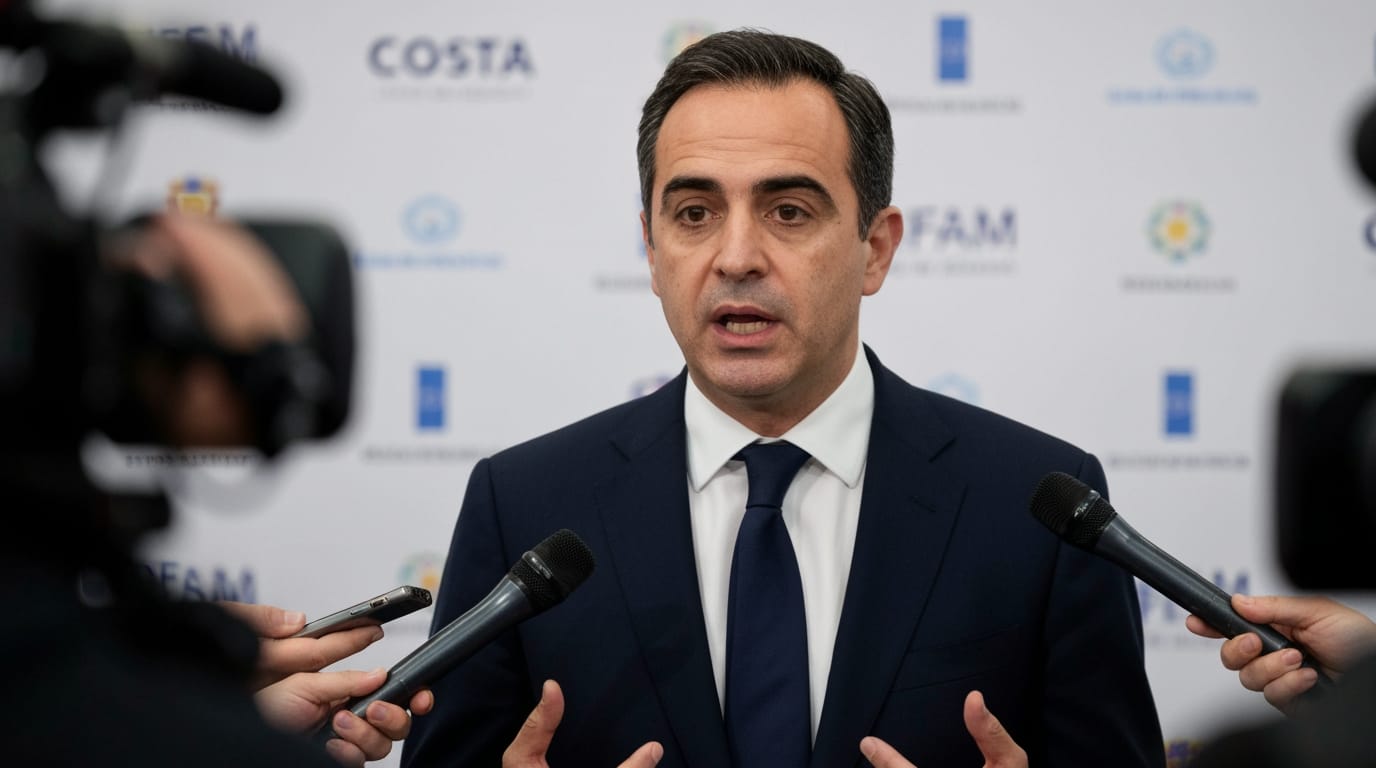
BRUSSELS – In a sharp escalation of transatlantic tensions, European Council President António Costa on Monday publicly admonished the United States, asserting that Washington must refrain from interfering in Europe's internal politics. The direct warning came in response to a recently released US National Security Strategy (NSS) that openly criticized European policies and indicated an intention to cultivate political resistance within the continent. Costa's strong remarks underscore a growing determination within the European Union to assert its sovereignty and strategic autonomy amidst what many perceive as an increasingly assertive and ideologically driven US foreign policy under the current administration.
The Provocation: A New US Strategic Outlook
The catalyst for Costa's censure was the United States' new National Security Strategy, unveiled last week. This document reportedly characterized Europe as "over-regulated," "censorious," lacking in "self-confidence," and facing "civilizational erasure" due to immigration. More controversially, the NSS explicitly outlined a strategy of "cultivating resistance to Europe's current trajectory within European nations" and expressed optimism regarding the "growing influence of patriotic European parties." This language has been interpreted by many in Brussels as a direct challenge to the EU's internal democratic processes and its core values. The strategy seemingly frames US interference as an act of benevolence, aimed at preserving a certain vision of Europe, while actively backing ideological favorites across the continent.
The US approach, particularly its praise for what it termed "patriotic parties" – often understood to be far-right movements – resonated alarmingly with EU officials. These parties frequently advocate for policies that challenge European integration and established democratic norms, creating divisions within the bloc. The strategy's implications extended beyond mere rhetoric, suggesting a proactive role for the US in shaping Europe's domestic political landscape. This perceived endorsement of anti-EU sentiments by an allied nation has led to significant concern within European capitals, sparking fears of increased political instability and a weakening of the European project.
European Sovereignty: A Red Line
President Costa, who assumed his role as President of the European Council on December 1, 2024, did not mince words in his condemnation. He emphasized that while differences in vision between the US and the EU are not uncommon, the threat of interference in Europe's internal political life is unequivocally unacceptable. Costa asserted that the United States could not arrogate to itself the right to choose which political parties are "good" or "bad" for European citizens. He further stressed that the US should not attempt to substitute its own vision for Europe's on matters such as freedom of expression.
During his remarks, Costa highlighted fundamental divergences in worldviews between the EU and the current US administration. He reiterated Europe's commitment to multilateralism, a rules-based international order, scientific evidence, and addressing global challenges like climate change. In stark contrast, he suggested the US under the current leadership no longer adheres to these principles, particularly in its approach to international cooperation and environmental policy. A particularly troubling aspect for Costa was the fact that Russia reportedly welcomed the US outlook as "largely consistent" with its own vision, a convergence that raises significant geopolitical concerns for European security. Moreover, the US strategy's stance on the war in Ukraine, which Costa noted prioritized "the end of confrontations and stable relations with Russia" over the "just and durable" peace advocated by Europe, further deepened anxieties about US intentions and alignment.
The Quest for Strategic Autonomy Intensifies
Costa's firm stance is not an isolated incident but rather a clear manifestation of the European Union's broader, evolving ambition for "strategic autonomy." This concept, which gained significant momentum during the previous US administration and has intensified following recent global events, refers to the EU's capacity to act independently and define its own future across various domains, including defense, economics, and digital policy. The goal is to reduce over-reliance on external powers, notably the United States, and to build robust internal capabilities to address complex international challenges.
The pursuit of strategic autonomy has been a long-term project for the EU, initially focused on security and defense matters. However, its scope has expanded significantly, encompassing economic dependencies, supply chain resilience, and digital sovereignty. Leaders like Costa advocate for Europe to contribute more substantially to its own security and to develop a "harder power dimension" to complement its traditional soft power. The recent US National Security Strategy, with its explicit intention to influence European internal affairs, provides further impetus for the EU to accelerate its efforts towards greater self-reliance and unified action on the global stage.
Strained Transatlantic Ties and Future Implications
The current friction represents a continuation, and indeed an intensification, of a strained period in US-EU relations, particularly since the beginning of 2025 with the re-election of Donald Trump as US President. The "America First" policy, coupled with trade disputes and differing views on global governance, has created significant rifts in what was once considered an unshakeable transatlantic alliance. The latest US National Security Strategy appears to cement these divergences, actively promoting a narrative that questions the efficacy and integrity of the European Union as an institution.
This diplomatic confrontation carries significant implications for future cooperation on a range of critical issues, from climate change and global trade to security and defense. The European Union finds itself at a critical juncture, needing to balance its foundational alliance with the United States against its deepening commitment to independent action and a distinct European identity. While EU leaders consistently affirm the importance of the US as an ally and economic partner, the latest developments suggest that the terms of this alliance are being fundamentally re-evaluated. Europe's unified response, as articulated by President Costa, signals a firm rejection of external political meddling and a clear intent to protect its democratic integrity and strategic independence as it navigates an increasingly complex and multipolar world.
The call for respect for European sovereignty comes at a time when the EU is grappling with its own internal challenges and seeking to project a more cohesive and influential voice on the world stage. Costa's unambiguous statement serves as a powerful reminder that Europe is determined to chart its own course, making its own choices, and defining its own future without undue influence from any external power, including its traditional allies.


