EU Enlargement: A Geopolitical Imperative Meets Internal Hurdles
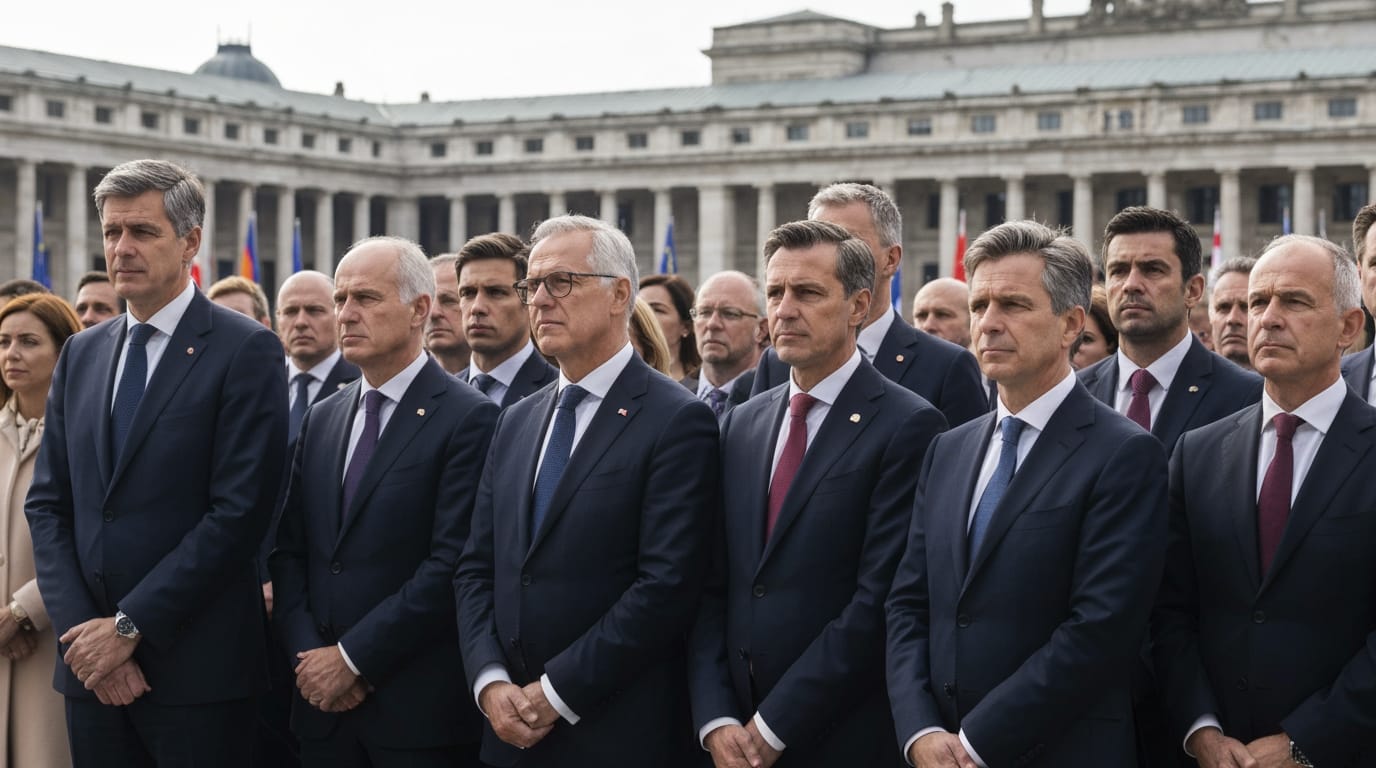
BRUSSELS — The European Union stands at a pivotal juncture, grappling with a renewed, urgent push for enlargement driven by geopolitical shifts while simultaneously confronting deep-seated questions about its own readiness to welcome new members. After years of dormancy following Croatia's accession in 2013, the bloc is once again actively considering expansion, with a target of potentially admitting several new nations by 2030. This ambitious timeline, however, pits strategic necessity against significant internal and external challenges, raising fundamental questions about the future shape and functionality of the European project.
The Geopolitical Catalyst: A New Urgency for Expansion
The war in Ukraine has dramatically reshaped the strategic landscape, injecting unprecedented momentum into the EU's enlargement agenda. What was once a slow, often bureaucratic process has transformed into a critical geopolitical imperative, aimed at strengthening Europe's defensive bulwark against aggression and fostering stability on its eastern and southeastern flanks. EU foreign policy chief Kaja Kallas has underscored this shift, stating that "geopolitical shifts make the case for enlargement clear-cut. Enlargement is not a nice-to-have; it is a necessity if we want to be a stronger player on the world stage." The European Commission's annual enlargement report for 2025 explicitly acknowledges this accelerated pace, noting that the process is "now moving faster than in the last 15 years." This renewed commitment signals a recognition that integrating aspiring democracies is vital for the security and prosperity of the entire continent, representing "the most important geopolitical investment in peace, security and prosperity."
The Path to Membership: Demanding Reforms for Aspiring Nations
For countries aspiring to join the EU, the road to membership remains arduous, demanding comprehensive and often difficult reforms. The accession process is governed by the stringent Copenhagen criteria, which mandate stable institutions guaranteeing democracy, the rule of law, human rights, and the protection of minorities. Additionally, candidates must possess a functioning market economy capable of withstanding competitive pressure within the EU, and the ability to adopt and implement the entirety of EU law.
Several nations are currently navigating this complex path. Montenegro, for instance, is seen as a frontrunner, with officials noting the country "is on track to meet this ambitious objective" of wrapping up accession talks by the end of 2026, potentially becoming the 28th EU member state by 2028. Albania is also making progress, with a potential accession by 2029. Ukraine and Moldova, whose candidacies were fast-tracked in the wake of the conflict, have also been identified as countries that could conclude accession negotiations by 2028 and join the EU by 2030. Both nations have undertaken significant reforms, particularly in the justice sector and in combating corruption, with Moldova demonstrating notable progress in reducing its dependence on Russian gas. Other hopefuls include Bosnia-Herzegovina, Georgia, Kosovo, North Macedonia, Serbia, and Turkey, each facing their own unique set of challenges in aligning with EU standards.
The Union's Internal Conundrum: Preparing for Expansion
While the political will for enlargement has surged, the European Union itself faces profound internal questions regarding its capacity and mechanisms to integrate a new wave of members. A primary concern revolves around the need for institutional reform to ensure that an expanded Union can continue to function effectively. The current system, which often requires unanimous agreement from all 27 member states on critical decisions, could become unwieldy with more members, potentially leading to increased gridlock.
The bloc's enlargement chief, Marta Kos, has highlighted the necessity for the EU to adapt its rules, stating that the "status quo" is "not an option." Proposals such as "gradual integration," which would allow candidates to phase into EU programs and policies before full membership, have been put forward to maintain momentum. However, more radical ideas, such as "reverse enlargement" – where countries might join before all key reforms are completed – have met with significant skepticism from member states due to legal complexities and fears of democratic backsliding or the potential for new members to disrupt the EU agenda. The issue of unanimous consent has already proven problematic, as evidenced by instances where individual member states have complicated the progression of candidates. The debate underscores a critical tension: how to reconcile the strategic imperative of enlargement with the practicalities of maintaining a cohesive and efficient Union.
Benefits and Risks: A High-Stakes Gamble
The potential benefits of EU enlargement are substantial and far-reaching. Historically, enlargement has been a powerful engine for spreading stability, peace, and prosperity across the continent. New member states gain political stability, access to the single market, increased funding and investment, and higher social, environmental, and consumer standards. For the existing EU, enlargement promises a stronger geopolitical voice, increased prosperity, greater cultural diversity, and a deeper investment in peace and security across Europe. It can stabilize regions, foster democratic values, and expand the single market, benefiting all.
However, the risks are equally significant. Expanding the bloc without adequate institutional reform could lead to a dilution of decision-making power, making the Union less agile and more prone to internal disputes. There are also concerns about the economic implications of integrating countries with substantial development needs, as well as worries about the potential for democratic backsliding in new member states once they are part of the Union. The sheer scale of reconstruction required for a country like Ukraine, for example, presents an unprecedented challenge. Some member states also express nervousness about importing a country still at war into the EU.
Conclusion: Navigating a Complex Future
The path to a larger European Union is fraught with both immense opportunities and formidable challenges. While the geopolitical winds are unequivocally pushing for greater integration and expansion, both current member states and aspiring nations face a demanding journey. Candidates must rigorously pursue democratic, economic, and rule-of-law reforms, while the EU must confront fundamental questions about its own institutional framework and capacity for absorption. The aspiration to welcome new members by 2030 reflects a strategic vision for a stronger, more secure European continent. However, achieving this vision will require unwavering political will, difficult compromises, and substantial reforms from all parties involved, ensuring that the next wave of enlargement strengthens, rather than strains, the European project.


