EU Faces Delicate Balancing Act in Response to Trump's Tariffs
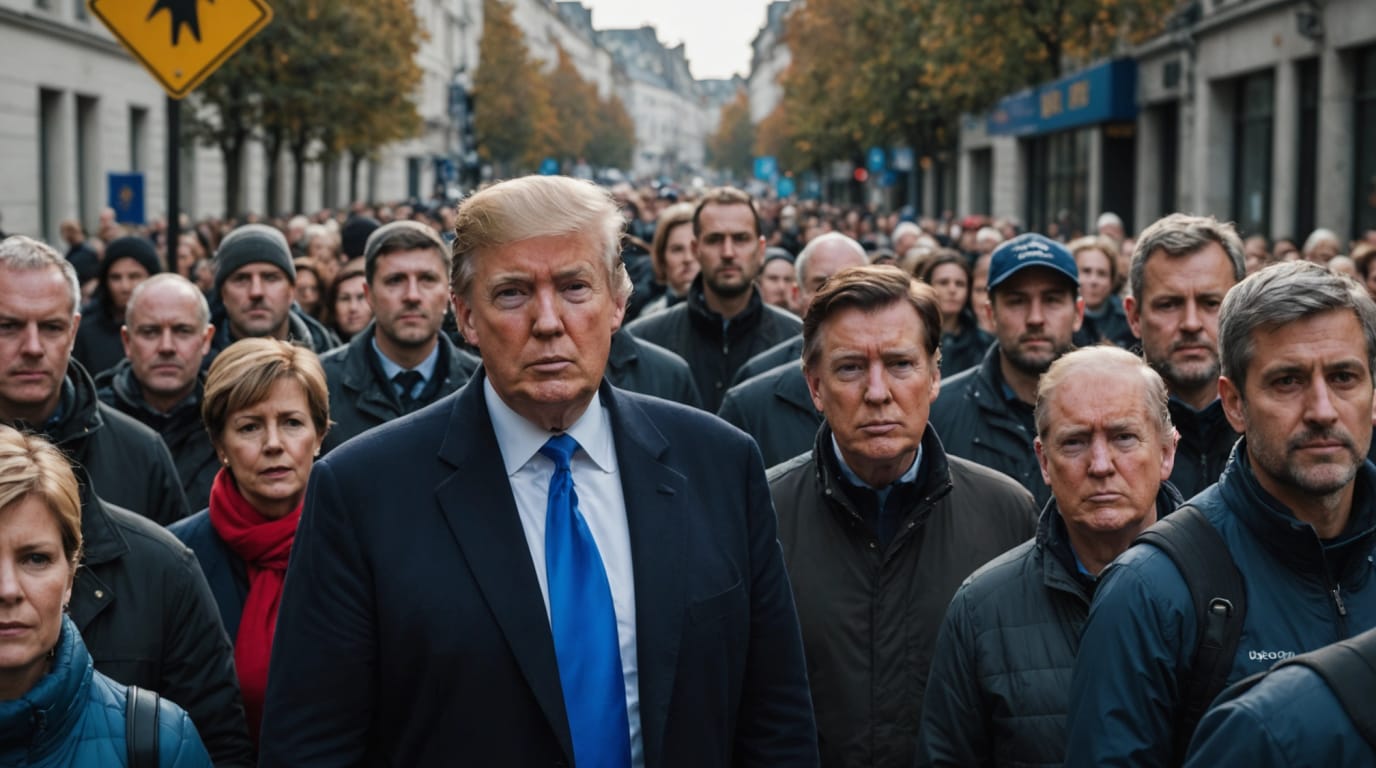
Brussels – The European Union is navigating a complex and precarious situation as it responds to a new wave of tariffs imposed by the Trump administration. The EU is striving to protect its economic interests while avoiding a full-blown trade war that could destabilize the global economy. With retaliatory measures on the table and diplomatic efforts underway, the EU's approach is a delicate balancing act.
Trump's Trade Offensive
President Donald Trump has recently implemented a series of tariffs that significantly impact the EU. These include tariffs of 25% on steel and aluminum imports, as well as a 20% tariff on a wide range of other goods. These measures cover approximately 70% of the EU's exports to the United States, which amounted to $585 billion last year. The Trump administration justifies these tariffs by claiming that the EU has unfairly taken advantage of the United States through high trade barriers. Trump has also suggested that the EU was "formed to screw the United States".
These tariffs are not entirely new. During his first term, Trump imposed similar tariffs on steel and aluminum in 2018, leading to retaliatory measures from the EU. While a temporary truce was reached under the Biden administration, the recent reimposition and expansion of tariffs have reignited trade tensions.
EU's Two-Pronged Response
The EU's response to Trump's tariffs is two-fold: a willingness to negotiate and the preparation of countermeasures. European Commission President Ursula von der Leyen has stated that the EU remains open to negotiations with the U.S. to remove trade barriers. She has also offered a "zero-for-zero" tariff pact for industrial goods, similar to what was discussed during the Transatlantic Trade and Investment Partnership (TTIP) negotiations a decade ago. This would involve eliminating all tariffs on industrial products, such as cars and chemicals.
However, the EU is also preparing to implement retaliatory tariffs on U.S. goods. The European Commission is proposing tariffs on up to $28 billion worth of U.S. imports, including products like meat, cereals, wine, wood, clothing, chewing gum, dental floss, vacuum cleaners, and toilet paper. A vote on the first round of these counter-tariffs is expected soon. The EU initially plans to reinstate tariffs originally imposed in 2018 and 2020 as a reaction to Trump's first-term metal tariffs. These measures, worth €4.5 billion in 2025 due to Brexit and reduced U.S. trade, were suspended in 2023 after negotiations with President Biden. By mid-April, the EU intends to implement additional measures targeting €18 billion of U.S. industrial and agricultural goods, including steel, aluminum, home appliances, wood products, poultry, beef, and other food imports.
Internal Divisions and Concerns
Despite the EU's efforts to present a united front, internal divisions exist regarding the best course of action. Some member states, like France, are advocating for a more aggressive response, including suspending European companies' investments in the U.S. until the situation is clarified. French President Emmanuel Macron has suggested European companies should suspend investments in the United States until "things are clarified". Other countries, such as Ireland and Italy, are urging caution, fearing the potential economic consequences of escalating trade tensions. Ireland, which sends almost a third of its exports to the U.S., has called for a considered and measured response.
One specific point of contention is the proposed 50% tariff on U.S. bourbon. This has prompted Trump to threaten a 200% counter-tariff on EU alcoholic beverages, raising concerns among wine-exporting countries like France and Italy.
Economic Implications
The imposition of tariffs by both the U.S. and the EU could have significant economic consequences. For the EU, the tariffs could lead to reduced exports, slower economic growth, and increased prices for consumers. The European Central Bank (ECB) is closely monitoring the situation, with some analysts suggesting that the trade tensions could prompt the ECB to cut interest rates to stimulate the eurozone economy.
The impact on inflation is less clear. While cheaper goods from Asia may drive some prices down, retaliatory tariffs on the U.S. will lift others. Some economists believe that a full-fledged trade war could ultimately be disinflationary for Europe in the long run.
The tariffs could also disrupt global supply chains and create uncertainty for businesses, potentially leading to reduced investment and job creation. The IMF expects that a 10% tariff imposed by the US as well as the trade policy uncertainty and the tightening of financial conditions that would ensue would take away 1 percentage point of growth in the period 2025-2026
WTO Challenges
The EU has previously challenged U.S. tariffs at the World Trade Organization (WTO), arguing that they violate international trade agreements. Senior economist Faustin Luanga says Washington's justification for tariffs on European steel and aluminum could face strong opposition under WTO rules and spark retaliation from the EU. The U.S. has defended its tariffs by invoking Section 232 of the Trade Expansion Act, which allows tariffs on national security grounds. However, this justification has been questioned by many countries, including EU members.
The WTO's dispute settlement system has been weakened in recent years, making it more difficult to resolve trade disputes effectively. The US has blocked appointments to the WTO's appellate body, rendering it unable to hear appeals.
Seeking a Way Forward
The EU's response to Trump's tariffs is a complex and multifaceted challenge. The EU is trying to balance the need to protect its economic interests with the desire to avoid a damaging trade war. While retaliatory measures are being prepared, the EU is also keeping the door open for negotiations with the U.S.
The coming weeks and months will be critical in determining the future of EU-U.S. trade relations. Whether the two sides can find a way to de-escalate tensions and reach a mutually beneficial agreement remains to be seen. The global economy is watching closely, as the outcome will have far-reaching consequences for trade, investment, and economic growth.


