EU Leaders Weigh Participation in Trump's Gaza 'Board of Peace' Amidst Complex Geopolitical Landscape
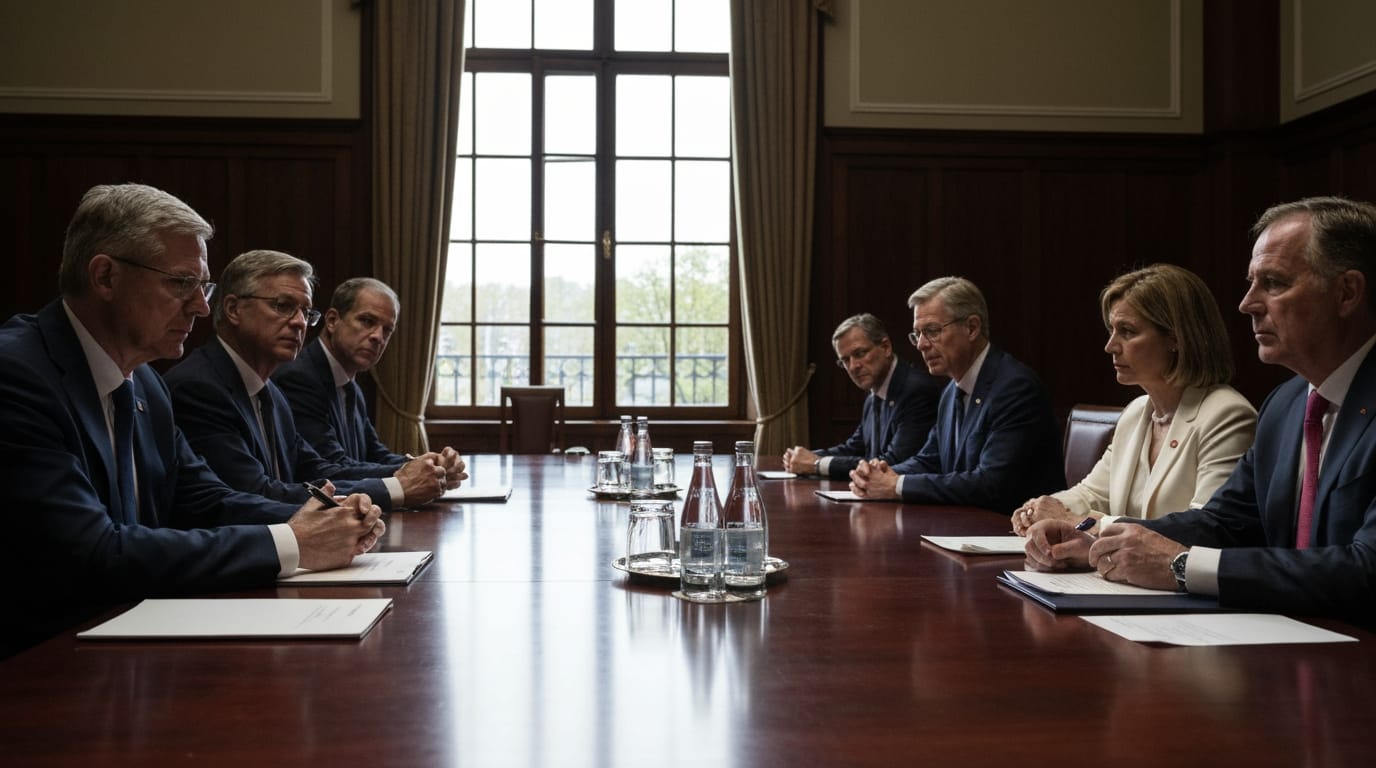
European leaders are navigating a complex diplomatic landscape as they consider invitations to join former U.S. President Donald Trump's proposed "Board of Peace" for Gaza. The initiative, part of a broader U.S.-brokered plan to stabilize the war-torn enclave, presents both an opportunity for renewed engagement in Middle East peace efforts and a potential challenge to the European Union's long-standing, albeit often divided, approach to the Israeli-Palestinian conflict. The decision to participate carries significant geopolitical implications, touching upon transatlantic relations, regional stability, and the future of Palestinian governance.
The Genesis of a New Peace Initiative
The concept of a Gaza "Board of Peace" emerged from Donald Trump's "Comprehensive Plan to End the Gaza Conflict," officially announced on September 29, 2025, and signed into effect on October 9, 2025. This 20-point peace plan aims to conclude the ongoing conflict and initiate a multi-phase reconstruction and governance process for the Gaza Strip. The "Board of Peace" is envisioned as a central oversight body, intended to supervise a yet-to-be-formed Palestinian technocratic government and manage the extensive reconstruction efforts required in Gaza.
Former President Trump is expected to chair the board, which is slated to include approximately 15 world leaders. Initial reports suggest that invitations have been extended to key nations, including European powers like the United Kingdom, Germany, France, and Italy, alongside regional actors such as Saudi Arabia, Qatar, Egypt, and Turkey. Former United Nations envoy to the Middle East, Nikolay Mladenov, has been identified as the likely representative on the ground, indicating an intention to leverage experienced international diplomacy within the new structure. This initiative follows Trump's previous Middle East peace efforts, including the Abraham Accords which normalized relations between Israel and several Arab states, and the "Deal of the Century," a 2020 proposal that largely failed to gain Palestinian acceptance.
Europe's Cautious Welcome and Internal Divisions
Initial reactions from European leaders to the broader Gaza peace plan have been largely positive, though often tempered with calls for adherence to established international principles. European Commission President Ursula von der Leyen welcomed Trump's commitment to ending the war and affirmed the EU's readiness to contribute, while reiterating that a two-state solution remains the only viable path to lasting peace. Similarly, EU foreign affairs chief Kaja Kallas hailed the plan as an "opportunity for lasting peace" and the "best immediate chance to end the war," signaling the EU's willingness to support its success. European Council President Antonio Costa urged all parties to seize the moment, emphasizing the urgent need to end hostilities and release hostages.
Individual European leaders have also expressed varying degrees of support. French President Emmanuel Macron welcomed the U.S. initiative, expecting Israel to engage resolutely and urging Hamas to comply with the plan, while also highlighting the importance of a two-state solution. Italian Prime Minister Giorgia Meloni viewed the plan as a "potential breakthrough" and expressed Italy's readiness to contribute to stabilization and reconstruction efforts. German Chancellor Friedrich Merz welcomed the plan and indicated Germany's preparedness to contribute to its implementation. Notably, British Prime Minister Keir Starmer has reportedly been offered a place on the board and is expected to accept, signaling a significant level of engagement from a major European nation, albeit outside the EU.
Despite these welcoming statements, the EU's historical stance on the Israeli-Palestinian conflict has been characterized by internal divisions. While consistently advocating for a two-state solution based on 1967 borders and deeming Israeli settlements illegal, member states have often adopted differing positions, with some leaning more towards supporting Israel and others showing greater sympathy for Palestinians. This internal divergence means that a unified and coherent EU response to active participation in Trump's board could be challenging. Spanish Prime Minister Pedro Sánchez, for instance, has stressed the importance of the EU maintaining a relationship of equality with the U.S., rather than "vassalage," hinting at a desire for independent European agency in such initiatives.
The Board's Mandate and Significant Hurdles
The "Board of Peace" is tasked with overseeing the second phase of the ceasefire deal, which includes supervising a transitional Palestinian technocratic government and managing the monumental task of Gaza's reconstruction. This phase proceeds despite Israel's insistence on the prior disarmament of Hamas, a condition not explicitly stipulated for the second phase by Trump's plan. Hamas, while rejecting unilateral disarmament, has indicated a willingness to hand over administration to a technocratic government, creating a delicate balance of expectations and demands.
The operationalization of the board and the broader peace plan face substantial hurdles. The ceasefire itself remains precarious, with reports of Israeli violations such as aid restrictions and continued airstrikes, underscoring the fragility of the agreement. Fundamental disagreements persist regarding the future governance of Gaza, the disarmament of armed groups, and the composition of any international stabilization force. The sheer scale of destruction in Gaza, with widespread displacement, casualties, and damage to infrastructure, demands an unprecedented level of coordinated international effort for reconstruction, estimated to cost tens of billions of dollars and take decades.
Furthermore, the "Board of Peace" raises questions about Palestinian self-determination. While the plan envisions a Palestinian technocratic government, the level of autonomy and decision-making power such a government would possess under international supervision remains a critical concern. Some critics have voiced concerns that European enthusiasm for participating in the management of Gaza's future could be perceived as part of a "neocolonial agenda," rather than genuinely supporting Palestinian self-determination.
Strategic Implications for the EU and the Region
For the European Union, the decision to join Trump's "Board of Peace" is laden with strategic implications. The EU holds significant leverage as Israel's largest trading partner and the biggest provider of foreign aid to Palestinians. This economic and diplomatic weight could be crucial in ensuring that all phases of the peace plan are implemented by both Israeli and Palestinian parties. Some analysts suggest that the EU must be prepared to use this leverage more decisively to encourage adherence to international law and progress towards a durable political solution.
However, the EU's participation also risks aligning it with a U.S.-led initiative that, historically, has sometimes bypassed key Palestinian concerns or adopted approaches viewed as less balanced than the EU's traditional two-state solution advocacy. The ongoing internal divisions within the EU regarding the Israeli-Palestinian conflict could be further exacerbated, making it difficult to project a unified European voice or extract meaningful concessions from all parties involved. The broader geopolitical context, including the war in Ukraine and shifting transatlantic relations, further complicates the EU's calculations, as it seeks to define a more coherent and proactive strategy in the Middle East while avoiding widening rifts with Washington.
Conclusion: A Pivotal Decision Point
The invitation to sit on Donald Trump's "Board of Peace" for Gaza presents European leaders with a pivotal decision. Participation could offer a direct pathway to influence post-conflict governance and reconstruction, aligning with the stated European desire for greater engagement in the region and supporting an immediate end to the devastating war. However, it also necessitates careful consideration of the board's mandate, the complexities of Trump's broader peace plan, and the potential impact on the EU's independent foreign policy objectives and its commitment to a two-state solution. The challenge for Europe will be to leverage its significant influence to ensure that any peace initiative truly leads to a just and lasting resolution for both Israelis and Palestinians, rather than merely overseeing a fragile, internationally managed interim period.