EU-Mercosur Megadeal Moves Toward Historic Signing Amidst Lingering Concerns
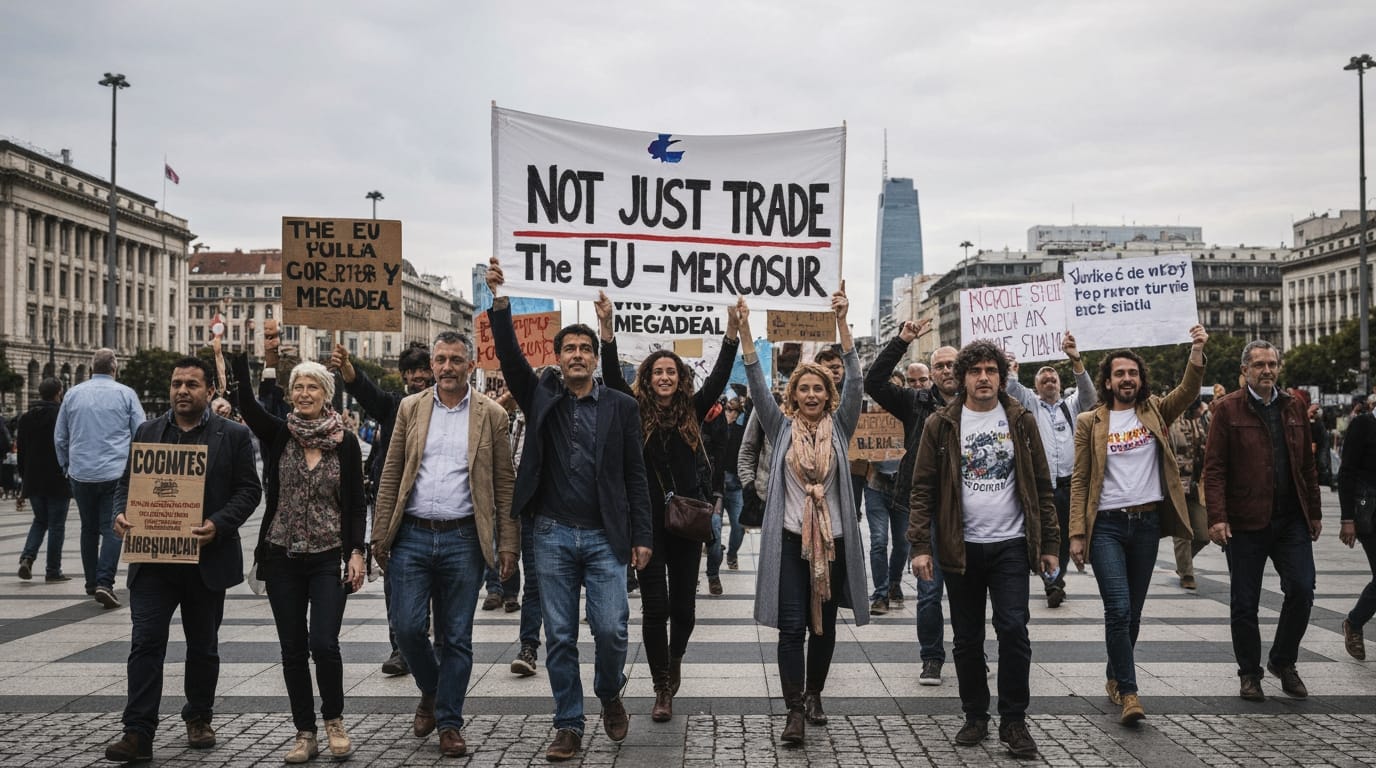
Brussels, Belgium – After more than two decades of complex negotiations, the ambitious trade agreement between the European Union and the South American trade bloc Mercosur is poised for a landmark signing today, January 17, 2026. The pact, which seeks to create one of the world's largest free trade areas encompassing over 700 million people, represents a significant step towards deeper economic and political ties across the Atlantic. However, while proponents celebrate a victory for rules-based trade, the agreement continues to face substantial opposition, particularly from European agricultural sectors and environmental advocates, underscoring a persistent tension between economic ambition and sustainable development.
A Decades-Long Endeavor Culminates in a Landmark Agreement
The journey to this pivotal moment has been protracted, with negotiations formally commencing in 2000 and reaching an agreement in principle in 2019. Over the years, the scope of the deal broadened far beyond mere tariff reductions, evolving into a comprehensive association agreement that includes pillars on political dialogue, cooperation, and sustainability. The combined economic might of the 27 EU member states and Mercosur's founding members—Argentina, Brazil, Paraguay, and Uruguay—creates a formidable market. On January 9, 2026, a qualified majority of EU member states in the Council formally greenlit the agreement for signature, with the ceremony scheduled for January 17. This approval marks a critical juncture, paving the way for the signing of both a limited Interim Trade Agreement (iTA) and the broader Partnership Agreement (EMPA).
Economic Promise: Breaking Down Barriers and Boosting Trade
At its core, the EU-Mercosur agreement is designed to substantially reduce or eliminate tariffs on a wide array of goods, potentially saving EU exporters over €4 billion annually in customs duties. Over a 10-to-15-year period, the deal aims to liberalize trade by removing duties on approximately 91-92% of exports between the blocs.
For the European Union, the agreement promises enhanced market access for key industrial sectors. Tariffs as high as 35% on automobiles and car parts, 20% on machinery, 18% on chemicals, and 14% on pharmaceuticals are slated for reduction or elimination. European agricultural products such as wine, cheese, and spirits are also expected to see improved market penetration. Conversely, Mercosur countries are set to benefit from increased access to the European market for their agricultural commodities, including beef, poultry, sugar, ethanol, juices, and fish.
Beyond direct economic gains, proponents highlight the agreement's strategic importance. It offers the EU new avenues for diversifying its trade routes, reducing reliance on major economies like the United States and China, and strengthening its presence in a resource-rich Latin American region. The deal also includes provisions for protecting 357 European geographical indications, safeguarding the branding of traditional products like "Parmigiano Reggiano." While some analyses project a modest overall economic impact, with the EU's Gross Domestic Product potentially increasing by 0.1% and Mercosur's by 0.3% by 2032, advocates emphasize the broader symbolic and geopolitical value of reinforcing open markets in an era of rising protectionism.
A Crucible of Controversy: Environmental and Agricultural Concerns
Despite its touted benefits, the EU-Mercosur agreement has been met with persistent and vocal opposition, primarily centered on environmental protection and the potential impact on European agriculture.
Environmental groups express deep concern that the deal could exacerbate deforestation, particularly in the Amazon, by increasing the demand for forest-risk commodities like beef, soy, and sugar from Mercosur countries. Critics argue that while the agreement includes commitments to the Paris Agreement and incorporates language on halting deforestation, the enforcement mechanisms may be insufficient to prevent environmental degradation. The EU has implemented measures like the EU Deforestation Regulation (EUDR) and the Corporate Sustainability Due Diligence Regulation (CSDDR) to ensure imports do not contribute to deforestation, but questions remain about their effectiveness in the context of increased trade volumes.
European farmers have been among the most vocal opponents, staging widespread protests across France, Ireland, Poland, Belgium, and Hungary. Their concerns stem from fears of unfair competition from Mercosur agricultural products, which are often produced at lower costs and under different environmental and labor standards. Specifically, the deal allows for additional, albeit limited, access for Mercosur beef (99,000 tonnes annually with a 7.5% duty) and poultry. To address these anxieties, the EU has introduced safeguards that permit the suspension of preferential tariffs if import surges or price drops for sensitive products exceed an 8% threshold. Furthermore, the European Commission has committed to additional financial support for the agricultural sector in the upcoming EU budget.
The Road Ahead: Ratification and Implementation Hurdles
While the signing ceremony marks a significant milestone, the agreement's full implementation remains a complex and potentially lengthy process. The overall deal is structured as a "mixed agreement," meaning it requires ratification not only by the European Parliament and the Council but also by all 27 individual EU member states through their national parliamentary procedures, as well as by the legislative bodies of the Mercosur countries. This multi-layered approval process can take several years, as evidenced by the EU-Canada Comprehensive Economic and Trade Agreement (CETA), which, despite being provisionally applied since 2017, has only been fully ratified by 17 of the 27 EU member states.
To mitigate potential delays, an Interim Trade Agreement (iTA) has been designed, covering only trade and investment liberalization, which could enter into force with the European Parliament's consent and Council approval. However, even the iTA faces scrutiny from various parliamentary blocs driven by ongoing environmental and agricultural concerns. Several EU member states, including France, Italy, Hungary, Poland, Austria, and Ireland, have expressed reservations or voted against the deal's approval in the Council, highlighting the political divisions that persist within the bloc.
Ultimately, the EU-Mercosur megadeal embodies the intricate balance between fostering economic growth and upholding environmental and social standards in global trade. Its journey from negotiation to full implementation will serve as a critical test of how major economic blocs can reconcile diverse interests and navigate complex geopolitical realities to forge new partnerships in a rapidly changing world.


