EU Navigates Internal Divisions to Cement Crucial Ukraine Funding
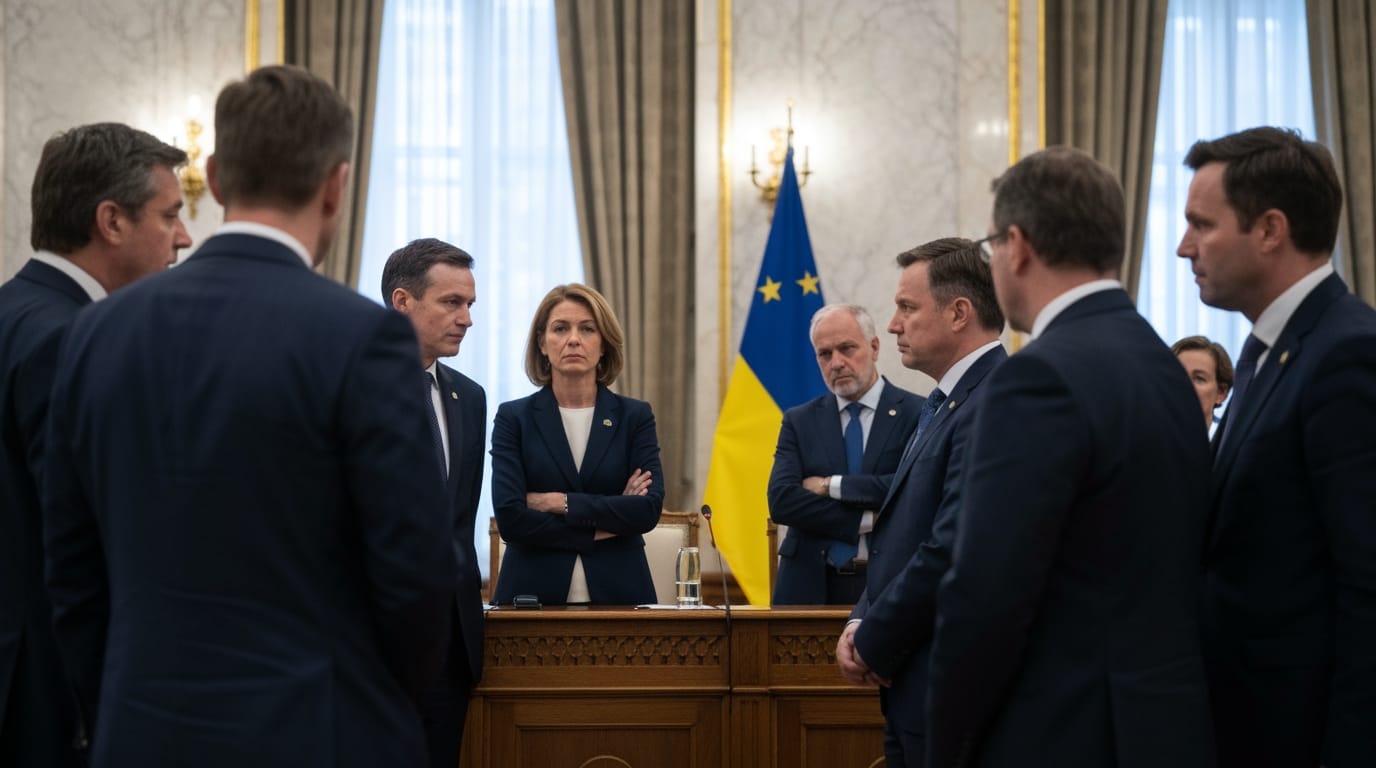
BRUSSELS — The European Union has secured vital financial commitments for Ukraine, demonstrating its unwavering support against ongoing Russian aggression, yet the process has starkly illuminated the enduring fault lines within the bloc. Recent agreements, including a €50 billion long-term facility and a subsequent €90 billion loan, underscore Europe's determination to provide Kyiv with predictable aid but also expose the persistent challenges of maintaining unity, particularly concerning national interests and the contentious issue of frozen Russian assets. The arduous negotiations, marked by Hungarian resistance and debates over funding mechanisms, reveal a Europe grappling with its collective resolve in a protracted conflict.
The €50 Billion Lifeline: A Marathon of Diplomacy
The first significant hurdle was cleared in February 2024 with the establishment of the Ukraine Facility, committing €50 billion in stable and predictable financial support for Kyiv from 2024 to 2027. This package is divided into €17 billion in grants and €33 billion in loans, earmarked for Ukraine's recovery, reconstruction, modernization efforts, and crucial reforms aligned with its EU accession path. The deal, however, did not come easily. Hungarian Prime Minister Viktor Orbán had initially vetoed the package in December 2023, plunging the EU into a period of intense diplomatic maneuvering. His objections, rooted in concerns about the funding source and broader ideological differences with Brussels, required other EU leaders to exert significant pressure, ultimately leading to his acquiescence. European Council President Charles Michel heralded the February agreement as locking in "steadfast, long-term, predictable funding for Ukraine," emphasizing Europe's leadership and responsibility. Ukrainian President Volodymyr Zelenskyy welcomed the decision as "very important" for his country's economic and financial stability, highlighting its significance alongside military assistance.
The €90 Billion Loan: A Complex Path Forward
Fast forward to December 2025, and EU leaders convened once more to address Ukraine's financing needs for 2026 and 2027. After prolonged and complex negotiations, the 27 member states agreed to provide a €90 billion loan package to Kyiv. This loan, intended to cover urgent budgetary, military, and defense needs, will be raised through collective EU borrowing on capital markets and secured by the EU budget's reserves. The agreement signals the EU's firm commitment to ensuring Ukraine's financial stability, particularly as the conflict continues and other international aid sources face uncertainties. Ukrainian President Zelenskyy expressed gratitude, noting that the "significant" investment would "truly strengthen our resilience." He also stressed the importance of Russian assets remaining immobilized, with the possibility of using them for reparations to repay the loan in the future.
The Shadow of Russian Assets and Persistent Divisions
A central and highly contentious element of the December 2025 discussions was the proposal to utilize frozen Russian state assets to finance the loan for Ukraine. Estimates place the value of these immobilized assets in the EU between €210 billion and €300 billion. While many member states, and the European Parliament, advocated for using these assets, legal and financial complexities, coupled with strong resistance from some nations, ultimately led to a different approach. Belgium, where a significant portion (€185 billion) of these assets is held through Euroclear, expressed considerable misgivings due to potential legal and financial retaliation from Russia. Critics, including Hungary and Belgium, viewed the plan as a "high-risk experiment" with the potential to destabilize Euroclear's global financial role and invite retaliatory measures. Ultimately, the EU opted for budget-backed loans, acknowledging that the asset plan was too controversial and complex for an immediate agreement, though the mandate to explore a "reparations loan" based on Russian assets was retained.
The unanimous consent typically required for EU budgetary decisions once again brought internal divisions to the forefront. While the €90 billion loan was approved, Hungary, alongside Slovakia and Czechia, chose not to participate directly in the loan mechanism. This arrangement was crucial for the agreement to proceed, as it allowed the aid to be structured without their direct financial contribution, effectively bypassing a potential veto. This solution, while pragmatic, highlights the ongoing challenge of achieving complete consensus within the bloc, especially when national interests or political alignments diverge. Prime Minister Orbán, for his part, had previously argued that Brussels should prioritize allocating financial aid to Hungary, suggesting that the European middle class suffers due to aid sent to Ukraine. His government has consistently adopted a stance of minimal financial assistance to Ukraine and maintains a partnership with Moscow.
Implications for European Unity and Future Support
The sequence of events surrounding Ukraine funding underscores a recurring pattern: the EU ultimately coalesces in support of Ukraine, but often only after overcoming significant internal resistance and navigating complex political landscapes. Each agreement, while a victory for Kyiv, has been a stress test for European unity. The explicit efforts to isolate dissenting voices, particularly Hungary's in the case of the €50 billion facility, demonstrate the bloc's commitment to collective action despite differing perspectives.
The agreements, particularly the multi-year frameworks, provide Ukraine with much-needed predictability and stability for its war-ravaged economy. They send a clear message to Moscow that Europe's resolve remains strong and that it will not succumb to "Ukraine fatigue." However, the debates over funding mechanisms, especially the reluctance to fully leverage frozen Russian assets due to legal and financial concerns, suggest that future discussions on deeper financial and strategic integration may continue to be challenging. The focus now shifts to the effective disbursement of these funds and Ukraine's implementation of necessary reforms, with the European Parliament's endorsement pending for the initial €50 billion facility. The EU’s ability to find common ground, even through compromises and carve-outs, remains central to its geopolitical standing and its capacity to act as a decisive global player.


