EU Pushes for Unified Capital Markets, Streamlined Regulations to Boost Competitiveness
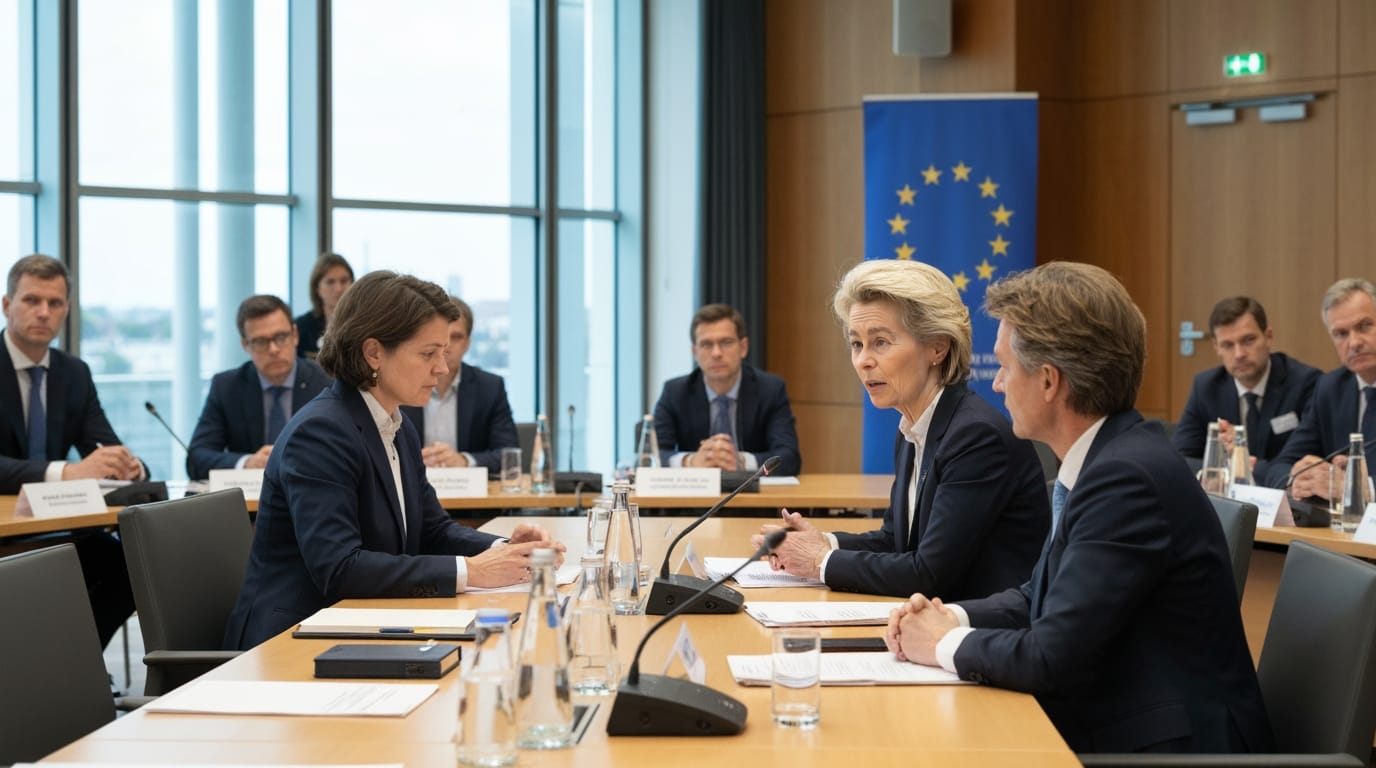
Brussels, Belgium – The European Union is embarking on a concerted effort to deepen its capital markets and simplify its regulatory landscape, a strategic initiative championed by European Commission President Ursula von der Leyen. The ambitious plan aims to unlock significant economic potential, enhance the bloc's global competitiveness, and better channel vast European savings into productive investments across member states. The move comes as the EU confronts persistent fragmentation in its financial markets, a disparity that has hindered growth and innovation when compared to global counterparts.
Europe's Fragmented Financial Landscape
For years, the European Union's capital markets have remained notably fragmented, characterized by disparate national regulations and a prevalent "home bias" among investors. This has resulted in a financial architecture that is predominantly bank-based and segmented along national lines, unlike the more integrated and liquid markets seen in other major economies, particularly the United States. Data from 2024 reveals a stark contrast: the market capitalization of stock exchanges in the EU amounted to just 73 percent of its GDP, while the figure for the US stood at a robust 270 percent. Similarly, bond markets in the Euro area are approximately three times smaller than those in the US, and EU venture capital lags significantly, reaching only one-fifth of the US level.
This fragmentation translates into tangible economic drawbacks. Companies across the EU often face an uneven playing field, with financing costs varying considerably depending on their country of incorporation. Innovative startups, particularly those with limited physical collateral, frequently struggle to secure funding, a challenge less pronounced in regions with more developed capital markets and robust venture capital ecosystems. Furthermore, limited cross-border risk sharing leaves local consumption more vulnerable to regional economic shocks. The sheer volume of legislative acts, coupled with technical standards and soft law instruments, has created an overly complex and costly regulatory environment, prompting calls for reform.
The Vision: A Unified Capital Markets Union
At the heart of the EU's strategy is the creation of a genuine Capital Markets Union (CMU), a project initiated in 2015 but now gaining renewed impetus. The overarching goal of the CMU is to facilitate the free flow of investments and savings across the EU, thereby benefiting consumers, investors, and businesses irrespective of their geographical location within the bloc. President von der Leyen has underscored the critical need for this integration to bolster the EU's global standing, foster economic growth, and enhance the resilience of its economies.
A deeper and more integrated capital market is seen as indispensable for several strategic objectives. These include fostering innovation and productivity, channeling much-needed investment into the green and digital transitions, fortifying pension savings, and diversifying financing alternatives beyond traditional bank lending. It is also viewed as essential for promoting economic convergence and strengthening stability across the EU, helping allocate capital to the most productive and innovative enterprises.
Streamlining the Regulatory Maze
Parallel to deepening capital markets, the European Commission is pushing for a substantial overhaul of its regulatory framework. Von der Leyen has called for an "unprecedented drive to simplify European legislation" and a "comprehensive regulatory deep house cleaning" to excise outdated provisions, inconsistencies, and redundant procedural requirements. This simplification effort aims to reduce compliance costs for businesses, accelerate investment, and make the day-to-day operations of companies easier.
Key proposals for regulatory streamlining include converting directives into regulations to reduce national discretion and prevent "gold-plating" – the practice where member states add their own rules on top of EU legislation. The Commission also plans to streamline "Level 2 empowerments," which are secondary regulations and implementing standards, to foster greater consistency across the EU. This approach seeks to ensure that rules are workable and predictable, encouraging stability for long-term investment.
Concrete Measures for Integration
The EU's strategy involves several concrete actions to dismantle existing barriers and integrate financial markets. A primary focus is on removing obstacles in trading, post-trading, and asset management. Proposed measures include enhancing "passporting opportunities" for regulated markets and central securities depositories (CSDs), which would allow financial service providers to operate across borders with a single license. The introduction of a "Pan-European Market Operator" (PEMO) status for trading venues is also on the table, allowing operators to consolidate multiple operations into a single entity or license.
To boost transparency and accessibility for investors, the EU is moving forward with the creation of a European Single Access Point (ESAP), a centralized digital platform providing seamless, EU-wide access to public information disclosed by companies. Efforts are also underway to streamline the cross-border distribution of investment funds. Enhancing supervision is another critical component, with discussions around potentially transferring direct supervisory competences for significant market infrastructures, such as certain trading venues and crypto-asset service providers, to the European Securities and Markets Authority (ESMA).
Potential Benefits and Lingering Concerns
The successful implementation of these reforms promises substantial benefits for the European economy. A deeper and more integrated capital market is expected to boost efficiency, reduce costs for both businesses and citizens, and foster greater competition among financial intermediaries. It could enable the mobilization of significant household savings – estimated at €37 trillion – for productive investments, driving innovation and sustainable growth. Furthermore, it would offer more diverse financing options for companies, particularly beneficial for SMEs.
Despite the clear economic rationale, the path to a fully integrated and simplified capital market is not without its challenges. Critics voice concerns that the push for "simplification" might, in some instances, amount to "deregulation by stealth," potentially blunting the EU's ability to achieve core policy objectives. The balance between making rules workable and maintaining robust standards remains a delicate one. Overcoming divergent national practices, ensuring greater supervisory convergence, and harmonizing complex areas such as insolvency laws and taxation regimes are long-term undertakings that require sustained political will and cooperation from all member states.
Conclusion
Ursula von der Leyen's impassioned call for capital market reform and regulatory simplification marks a pivotal moment for the European Union. By addressing the deep-seated fragmentation and regulatory complexities that have long characterized its financial landscape, the EU aims to create a more dynamic, resilient, and globally competitive economy. The success of this ambitious endeavor hinges on the ability of member states and institutions to collectively overcome entrenched obstacles, transforming the vision of a unified capital market into a tangible reality that benefits all European citizens and businesses.


