EU Races Against Clock to Cement US Trade Deal, Averting Looming Tariff Escalation
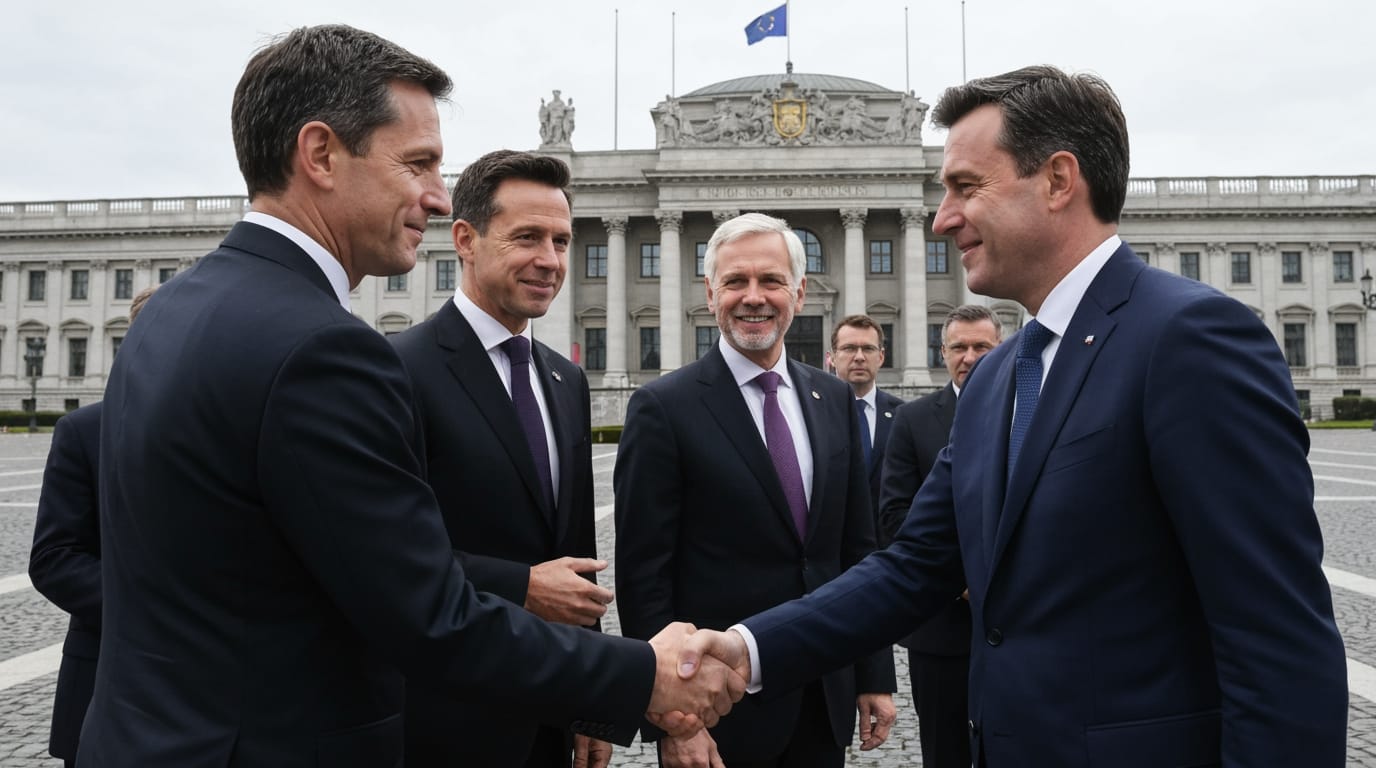
BRUSSELS — The European Union has moved to finalize a pivotal trade pact with the United States, seeking to avert the imposition of significantly higher tariffs by the Trump administration as a critical July 4 deadline approaches. The legislative push, culminating in intense negotiations among EU officials, aims to cement an agreement originally reached in July 2025, which promises to reshape transatlantic trade relations and provide a measure of stability amid persistent tensions.
The urgency stems from a direct warning from then-U.S. President Donald Trump, who threatened to unleash "much higher tariffs" on European goods, particularly automobiles, if the EU failed to implement its commitments by the Independence Day deadline. This looming threat prompted a concerted effort within the European Parliament and the Council of the European Union to iron out the remaining legislative details, striving to prevent a potential escalation that could damage industries on both sides of the Atlantic and disrupt global supply chains.
The Turnberry Accord: A Bid for Stability
The trade deal, sometimes referred to as the "Turnberry Deal" after the location in Scotland where it was negotiated between then-President Trump and European Commission President Ursula von der Leyen in July 2025, was heralded as a political agreement designed to restore stability and predictability for businesses. Under the terms of this initial understanding, the EU committed to eliminating import duties on a range of U.S. industrial products and enhancing market access for American agricultural and seafood exports. In return, the United States agreed to maintain a 15% tariff ceiling on the vast majority of European goods, a significant concession from previous threats of much higher rates.
This 15% ceiling was intended to apply to nearly all EU exports previously subject to reciprocal tariffs, including critical sectors like automobiles and automotive parts, which faced potential tariffs as high as 25%. The agreement also included commitments from the EU to procure an additional $750 billion in U.S. energy products over three years and make investments totaling $600 billion in various U.S. sectors by 2029. While this provided immediate tariff relief for some key EU industries, the agreement was widely seen as asymmetrical, with many financial institutions noting that it disproportionately benefited the U.S.
Averting a Costly Trade War
The stakes for both economies were considerable. Absent an agreement, President Trump had previously threatened tariffs of up to 30% on imports from the EU, with some reports indicating potential countermeasures from the European Commission totaling over $100 billion on U.S. goods. Such an escalation would have driven up prices for consumers and businesses, introducing significant inflationary pressures and undermining the competitiveness of industries on both continents. The Trump administration's "America First" trade policy had already led to turbulent transatlantic economic relations, characterized by tariff threats used as leverage in negotiations over issues ranging from automobiles and agriculture to technology regulation.
The potential for higher tariffs on European automobiles, from 15% to 25%, represented a particular flashpoint. European leaders had consistently sought to avoid such an escalation, which could severely impact key sectors of the European economy. The finalized deal, despite imposing a 15% baseline tariff on most EU exports, was considered preferable to a full-blown trade war and the even higher rates that were on the table.
Internal EU Hurdles and Safeguards
Despite the political agreement in 2025, the legislative process within the EU proved complex, facing repeated delays and disagreements. The European Parliament, tasked with ratifying the agreement, raised concerns about the U.S.'s compliance with its commitments and sought stronger legal protections for the bloc. Lawmakers pushed for mechanisms that would allow the EU to suspend concessions if the U.S. violated the agreement, as well as a "sunrise clause" to delay EU tariff reductions until Washington fully implemented its obligations. A "sunset clause," proposing an automatic end to the tariff reductions by March 2028 or December 2029 unless extended, was also discussed to ensure accountability.
These internal debates were influenced by broader geopolitical tensions, including the U.S. Supreme Court striking down Trump's use of an emergency-powers law to impose global tariffs, and an instance where the American president reportedly threatened to annex Greenland, a territory of EU member Denmark. While most European governments supported swift implementation to prevent renewed tensions, some worried that demanding stricter conditions could provoke further friction with Washington, creating uncertainty for businesses. Ultimately, EU officials expressed confidence that the legislation would clear the remaining hurdles in the weeks leading up to the July 4 deadline.
Steel and Aluminum: A Lingering Shadow
Even with the agreement in place, the contentious issue of U.S. tariffs on European steel and aluminum remained largely unresolved. These Section 232 tariffs, initially imposed in 2018 at rates up to 25% on steel and 10% on aluminum, and later expanded to include derivative products, continued to draw criticism from the EU. While European Commission President von der Leyen hinted at a potential solution involving a quota system to reduce these barriers, the 50% tariffs on steel were still a dramatic burden on the European steel industry.
Industry bodies like Eurofer stated that the unchanged 50% tariff on steel exports to the U.S. placed a "huge burden" on Europe's steel sector, risking the elimination of significant exports. The deal's inclusion of a 15% tariff on steel-intensive products, like vehicles, also raised concerns, as it could further diminish European automotive exports to the U.S. Despite some efforts to establish tariff rate quotas at historical levels, these specific tariffs continued to exert a substantial impact on the EU, contrasting with the minimal direct economic effect on the overall EU economy predicted for the initial steel and aluminum tariffs alone.
Looking Ahead
The European Union's concerted effort to formalize the trade pact with the U.S. ahead of the Trump administration's July 4 deadline represents a crucial step in de-escalating transatlantic trade tensions. By agreeing to a defined tariff structure and mutual concessions, both sides aimed to mitigate the risks of a full-blown trade war, securing continued access for EU exports to the U.S. market and fostering a degree of economic predictability.
However, the path forward remains complex. The lingering impact of steel and aluminum tariffs, coupled with the need for robust enforcement mechanisms within the EU, underscores the ongoing challenges in maintaining a stable and equitable transatlantic trade relationship. While the agreement signifies a commitment to cooperation over confrontation, its long-term success will depend on sustained dialogue and mutual adherence to the agreed terms, against a backdrop of evolving global trade dynamics.


