Europe Embarks on Ambitious 'Made in EU' Drive to Reshape Industrial Landscape
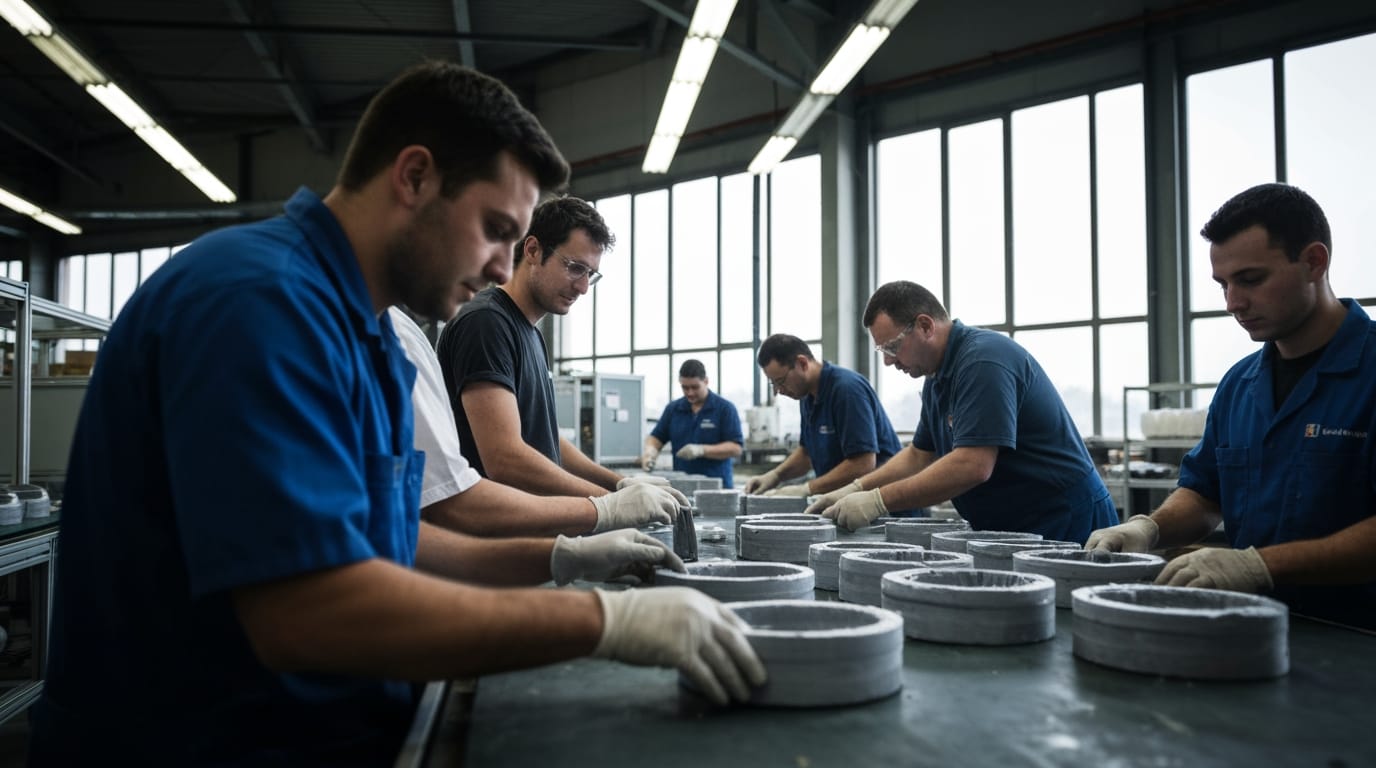
Brussels is spearheading an unprecedented industrial renaissance, launching a suite of legislative proposals aimed at revitalizing manufacturing across the European Union. At the heart of this strategy is a concerted effort to foster domestic production, enhance strategic autonomy, and bolster economic resilience in the face of escalating global competition and geopolitical uncertainties. These initiatives, notably the recently proposed Industrial Accelerator Act, alongside the established European Chips Act and the Critical Raw Materials Act, signal a fundamental shift towards prioritizing 'Made in EU' products and technologies, with ambitious targets set for key sectors like clean energy, semiconductors, and critical raw materials.
The Industrial Accelerator Act: Igniting Domestic Demand and Investment
The European Commission recently unveiled the Industrial Accelerator Act (IAA), a flagship legislative proposal designed to significantly boost the continent's manufacturing capabilities. The overarching goal is to elevate manufacturing's contribution to the EU's Gross Domestic Product (GDP) from its current 14.3% in 2024 to a robust 20% by 2035. This Act serves as a strategic response to the recommendations of the Draghi report on EU competitiveness, aiming to foster growth, create jobs, and ensure Europe's industrial future.
A core component of the IAA involves leveraging public procurement and incentives to stimulate demand for low-carbon and European-made products, particularly within strategic sectors. These sectors include energy-intensive industries such as steel, cement, and aluminum, as well as critical net-zero technologies like batteries, photovoltaics, heat pumps, wind turbines, electrolyzers, and nuclear energy. The automotive value chain is also a key focus. The Act introduces specific "Made in EU" and low-carbon criteria for public contracts, auctions, and support schemes, aiming to strengthen European production capacities and drive market demand for domestically produced clean technologies.
Furthermore, the IAA seeks to accelerate investment through streamlined and digitized permitting procedures for industrial projects, which are expected to yield substantial administrative savings. Crucially, the legislation also imposes targeted conditions on significant foreign direct investments (FDI) exceeding €100 million in strategic sectors, especially where a single third country holds over 40% of global manufacturing capacity. These conditions mandate that such investments contribute to high-quality job creation, foster innovation, ensure technology and knowledge transfer, comply with local content requirements, and guarantee a minimum of 50% European employment. The Commission projects that these measures could generate over €600 million in added value for steel, aluminum, and cement industries by 2030, and up to €10.5 billion in the automotive sector, alongside the creation of tens of thousands of jobs, including 85,000 in battery projects and 58,000 in solar manufacturing.
Strengthening the Digital Backbone: The European Chips Act
Parallel to the broader industrial acceleration, the European Union has made significant strides in bolstering its semiconductor ecosystem through the European Chips Act, which officially entered into force in September 2023. Recognizing the critical role of chips in virtually all modern electronic products and industries—from automotive to defense and telecommunications—the Act aims to reduce the EU's reliance on external suppliers and enhance its technological sovereignty.
The Act sets an ambitious target to double Europe's share of global semiconductor production from approximately 10% in 2020 to 20% by 2030, backed by over €43 billion in public and private investment. This comprehensive strategy is built on three pillars. The first, the "Chips for Europe" Initiative, focuses on fostering innovation and technological capacity building. This includes developing a cloud-based design platform, enhancing advanced pilot lines for testing next-generation chip technologies, building capabilities for quantum chips, establishing a network of competence centers, and creating a Chips Fund to support start-ups, scale-ups, and SMEs in the semiconductor value chain.
The second pillar seeks to secure supply capacity by attracting investments in new, state-of-the-art manufacturing facilities within the EU. These "first of their kind" integrated production facilities or open European foundries are eligible for state aid to finance their establishment, a crucial incentive to bring advanced chip production back to Europe. Finally, the third pillar addresses supply chain resilience and security through robust monitoring mechanisms, coordinated crisis response plans, and provisions for joint procurement and strategic stockpiling, safeguarding against future disruptions. Discussions are already underway for a potential "Chips Act 2.0," signaling the EU's ongoing commitment to this vital sector.
Powering a Sustainable Future: Net-Zero Industry and Critical Raw Materials
The EU's industrial strategy is inextricably linked to its ambitious climate goals, primarily through the Net-Zero Industry Act (NZIA) and the Critical Raw Materials Act (CRM Act). The NZIA, a key component of the Green Deal Industrial Plan, aims to scale up the manufacturing of clean technologies vital for achieving climate neutrality by 2050. By 2030, the Act targets for the EU's manufacturing capacity of strategic net-zero technologies to meet at least 40% of its annual deployment needs.
The NZIA prioritizes technologies such as solar, wind (onshore and offshore), battery storage, heat pumps, hydrogen, biogas, carbon capture and storage (CCS), and nuclear power. It simplifies regulatory frameworks, streamlines permitting processes through "one-stop shops," supports CCS projects, facilitates market access, and establishes Net-Zero Industry Academies to enhance skilled labor. The Act also mandates the inclusion of non-price criteria—such as sustainability, resilience, and cybersecurity—in public procurement processes for clean technologies, thereby further promoting EU-made products.
Complementing the NZIA, the Critical Raw Materials Act addresses the EU's vulnerabilities in securing essential raw materials for its green and digital transitions. The EU currently relies heavily on imports, with some materials like rare earths being 98% sourced from China. To mitigate these strategic dependencies, the CRM Act sets forth ambitious targets for 2030: at least 10% of the EU's annual consumption for extraction, 40% for processing, and 25% for recycling to occur within the Union. Furthermore, it stipulates that no more than 65% of the EU's annual consumption of any strategic raw material should originate from a single third country. The Act streamlines permitting procedures for critical raw material projects and aims to diversify imports through trade agreements and international partnerships, thereby bolstering the entire value chain from extraction to recycling.
A New Era of European Industrial Policy: Rationale and Challenges
These legislative initiatives collectively represent a significant reorientation of European industrial policy, moving towards a more proactive and interventionist stance. The strategy is largely a response to the lessons learned from recent global shocks, including the COVID-19 pandemic's disruption of supply chains and increasing geopolitical tensions, which highlighted Europe's strategic dependencies. The EU aims to achieve "Open Strategic Autonomy," balancing openness to global trade with the necessity of reducing critical vulnerabilities and fostering self-sufficiency in key areas.
This shift is also driven by the desire to reverse decades of deindustrialization and ensure that Europe remains competitive in the global race for green and digital technologies. However, the proposals have not been without debate. The "Made in EU" requirements, particularly within the IAA, have drawn criticism from some trade partners who view them as potentially protectionist. Internally, divisions persist among member states regarding the extent and implications of "EU preference" rules, with concerns raised about possible distortions to supply chains, increased bureaucracy, and potential retaliatory measures from other nations. The precise definition of "Made in Europe" remains a point of discussion.
Despite these challenges, the comprehensive suite of 'Made in EU' proposals underscores Europe's determination to reclaim its industrial prowess. By strategically investing in critical technologies, securing essential resources, and fostering a supportive regulatory environment, the European Union is laying the groundwork for an industrial future characterized by resilience, competitiveness, and sustainability, aiming to safeguard its economic security and global standing for decades to come.


